
Unbiased headlines. Facts, not spin.
Every story is an unbiased news briefing written from 110+ sources across the spectrum — sources linked so you can verify it yourself.
 health
Notable (6/10)
June 12, 2026 at 03:44 AM
health
Notable (6/10)
June 12, 2026 at 03:44 AM
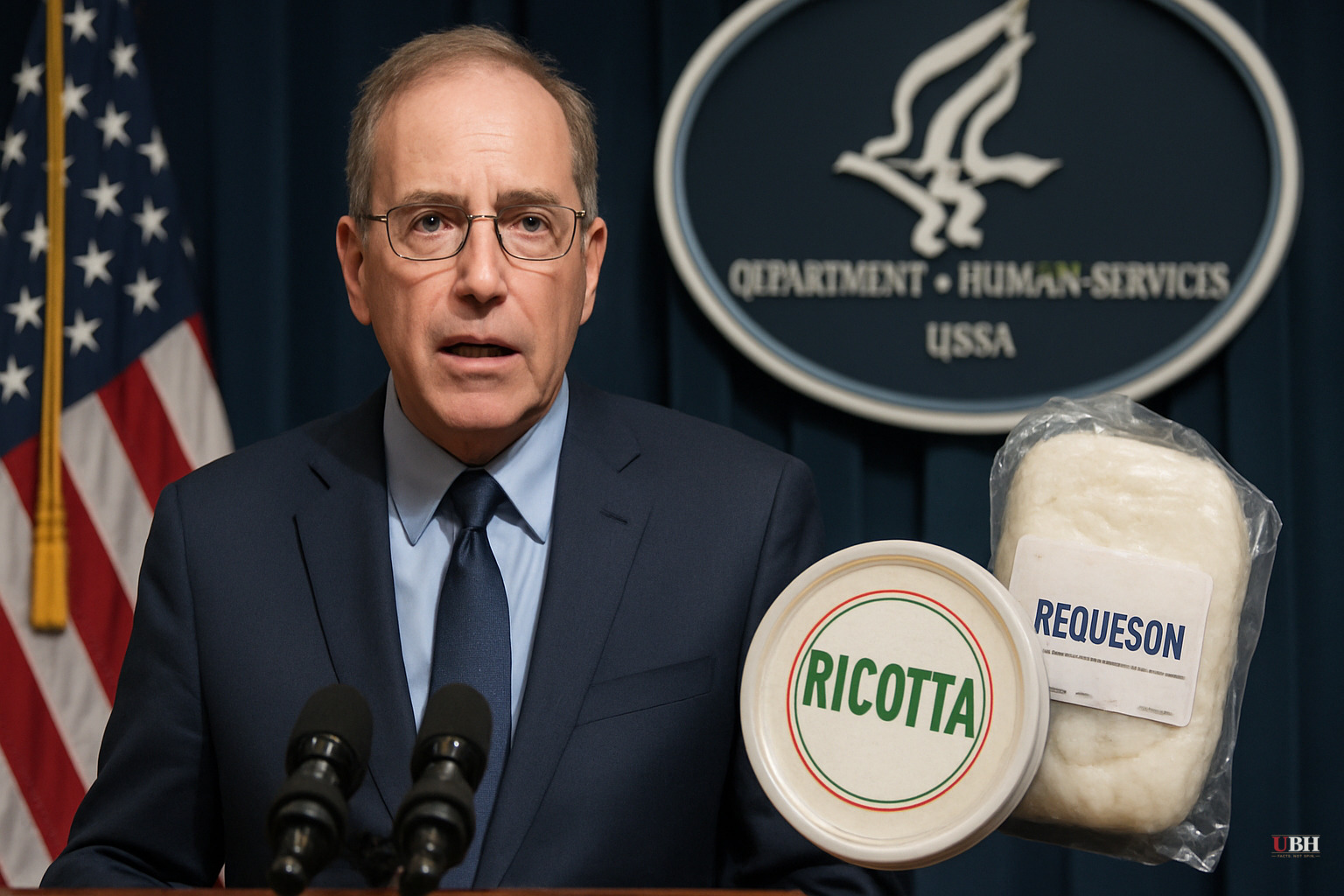
Nine Sick, One Dead in Multistate Listeria Outbreak Tied to Soft Ricotta and Requeson Cheese
What We Know
As of June 9, 2026, the CDC is tracking nine confirmed cases of Listeria infection tied to soft ricotta and requeson cheese sold across the mid-Atlantic and Northeast. Eight of the nine patients have been hospitalized. One person from Maryland has died.
Cases are split evenly across three states: three each in New York, Maryland, and Virginia. Of the eight patients who were interviewed, six reported eating soft cheese before symptoms appeared. Two specifically identified cheese from Clover Hill Dairy.
Two Recalls in Play
The primary recall involves Clover Hill Dairy, LLC of Mechanicsville, Maryland. The company recalled all soft ricotta and requeson cheese it manufactured, according to the FDA's June 9 update. Products were distributed from May 4 through May 30, 2026, reaching retail stores, farmers markets, and bulk distributors in North Carolina, New York, Virginia, Maryland, New Jersey, and Washington, DC.
Clover Hill sold its cheese in 10-, 12-, and 14-ounce clamshell containers, as well as in bulk 5-gallon and 2-gallon buckets. Those bulk buckets were repackaged by distributors under multiple brand names. The FDA specifically named: Kesso, Quesos La Ricura, Izalco, De Mi Pueblo, and Rio Lindo. Some varieties included jalapeño or other flavors. The manufacturer permit number "24-128" may appear on original Clover Hill packaging, but re-labeled products may not carry it.
A second recall was initiated on June 5 by Nelson & Isa Lacteos, LLC of Bay Shore, New York. That company recalled 1-pound packages of requeson sold in clear plastic clamshell containers at New York retail locations from May 15 to May 28, 2026. The FDA warned that this cheese was likely repacked at retail stores, meaning labels and coding vary by location.
Why This Outbreak Is Harder to Track
Listeria's incubation window runs from the same day of exposure to as long as 10 weeks later, according to the CDC. Most foodborne illnesses resolve in days. That wide window means cases from late May exposure could still be surfacing in June or beyond.
The bulk repackaging element adds real complexity. When a 5-gallon bucket of cheese is broken down and sold under a different brand at a local market, there is no clean chain of traceability for the consumer. The FDA acknowledged this directly, noting the investigation remains open and that "additional products may be impacted."
Who Is Most at Risk
The CDC is emphatic: pregnant women, adults 65 and older, and people with weakened immune systems face the greatest danger. For pregnant women, Listeria can cause miscarriage, premature birth, or life-threatening infection in newborns. The CDC recommends this group avoid soft cheeses entirely during the outbreak period, even pasteurized ones, because pasteurization does not guarantee safety once contamination occurs downstream in processing or packaging.
Healthy adults can contract Listeria but rarely develop severe illness.
A Fair Concern
Some critics of the current food safety framework argue that voluntary recalls, announced days after distribution windows close, are structurally inadequate. Clover Hill's cheese had been on shelves for nearly a month before any recall was issued. By the time consumers saw public warnings, much of the cheese had already been eaten. This concern is not unfounded: the CDC's case count is built entirely from reported illnesses, and Listeria cases are historically underreported because mild symptoms are often attributed to other causes.
The current system is doing what it is designed to do. Both the FDA and CDC published specific product descriptions, affected dates, and distributor brand names. Retailers in six states plus DC have been notified. The investigation remains open, which means additional recalls remain possible if testing implicates more products.
What to Do Right Now
The FDA's instruction is straightforward: do NOT eat, sell, or serve any recalled soft ricotta or requeson cheese. Check your refrigerator and freezer. If you have any of the affected products, throw them out or return them to the place of purchase. If you froze cheese without the original packaging and cannot confirm it is safe, throw it away.
Anyone who ate recalled cheese and develops fever, muscle aches, stiff neck, confusion, or loss of balance should contact a doctor immediately and mention the possible Listeria exposure.
The CDC and FDA have not announced an end date for the investigation. The open question, as of June 11, 2026, is whether bulk repackaging at retail locations created exposure pathways that the existing case count has not yet captured. A determination will depend on ongoing environmental testing by FDA and state partners.
Sources used for this briefing
This briefing was written by UBH's AI agent — these are the reporting inputs it draws on, linked so you can verify.


