
Unbiased headlines. Facts, not spin.
Every story is an unbiased news briefing written from 110+ sources across the spectrum — sources linked so you can verify it yourself.
 defense
Major Story (7/10)
July 14, 2026 at 04:07 PM
defense
Major Story (7/10)
July 14, 2026 at 04:07 PM
Nine European Allies Sign With Ukraine to Build Joint Anti-Ballistic Missile Coalition
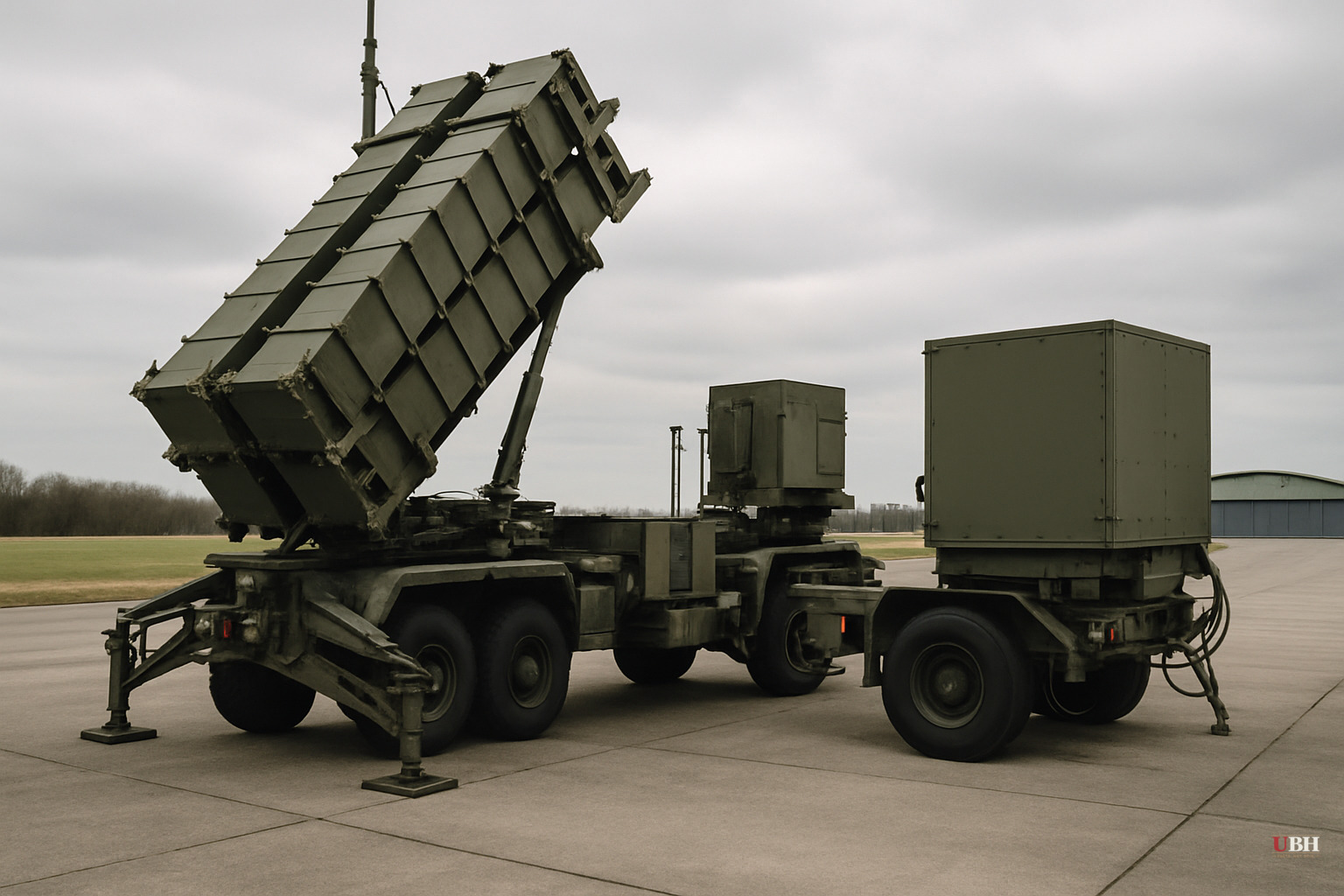
Nine European countries just did something NATO members have been slow-walking for years: they admitted the current missile defense setup isn't enough.
The United Kingdom, Spain, Norway, Sweden, Italy, the Netherlands, Denmark, France and Germany signed a joint declaration with Ukraine in Paris on Monday, launching a new anti-ballistic missile coalition, according to Breaking Defense. Leaders from each country and defense industry representatives attended the inaugural meeting.
The stated goal is a shared European capability to counter ballistic missile attacks. The declaration says the new platforms will work alongside existing systems, including "sovereign European solutions already acquired, or to be acquired by participating countries," per the joint statement obtained by Breaking Defense.
The global market for anti-ballistic missiles is drying up. Demand has outpaced supply, and European governments got tired of waiting in line behind everyone else for American-made Patriot systems.
Ukrainian President Volodymyr Zelenskyy laid out the problem plainly at the NATO Summit in Ankara on July 7. He called Russia's ability to launch ballistic missiles at scale "its last major advantage" in the war. His exact words: "We all value the [American-made] Patriot system. It is an excellent system. There are others [in Europe] as well. But today's wars have shown that current Patriot production is not enough to meet the growing demand for protection against ballistic missiles; that is a fact."
Patriot batteries are expensive, complex to manufacture, and every country in Europe wants more of them at the same time Ukraine needs them to survive daily strikes. Something had to give.
President Trump, also at the Ankara summit, said Ukraine would get a "license" to produce Patriots on its own soil. That's a separate track from this new coalition, but it points to the same underlying issue: allies are looking for ways to manufacture air defense capability closer to where it's needed instead of depending entirely on a single U.S. supply chain.
The flagship project will reportedly center on the Freyja anti-ballistic system, built by Ukrainian company Fire Point around its FP-7X interceptor, according to the Ukrainian government's statement to Breaking Defense.
Zelenskyy said Ukraine can supply the core system itself, but partner nations are expected to contribute radars, tracking, and command-and-control infrastructure. He added that member countries will decide collectively how many systems Europe needs and where they get deployed.
The joint declaration is careful not to name Russia directly as the target, but it doesn't need to. It explicitly credits Ukraine's "unique experience... gained in defense against Russia's war of aggression" as the foundation for the whole project. Nobody signing this document is confused about which country's missiles they're planning to intercept.
The declaration also includes a line that reads like it's aimed at critics who might call this an escalation: "We do this not against any people, but in defense of our own." This is a defensive coalition, not an offensive one. Interceptors don't strike Moscow. They knock incoming missiles out of the sky.
Skeptics of expanding European defense entanglements have a reasonable point: every new multinational coalition creates fresh questions about who pays, who commands, and how fast decisions get made when nine governments have to agree. NATO itself already wrestles with exactly that problem. Adding a parallel structure focused specifically on ballistic missile defense, built partly around Ukrainian technology and partly around a patchwork of national systems, could just as easily slow decision-making in a real crisis as speed it up.
This is a legitimate operational concern, not a talking point to dismiss. The declaration signed Monday only lays out priorities: common operational requirements, joint technical working groups, and a roadmap toward initial capability. It does not specify a budget, a timeline for deployment, or a command structure. Those details remain unresolved.
What's not in dispute is the underlying math. Russia has been firing ballistic missiles into Ukraine for years. Patriot interceptors are scarce and expensive. Nine European governments just put their names on a document saying the current arrangement isn't sustainable. Whether the Freyja system and this new coalition actually close that gap depends on what gets built in the coming months, not on what got signed in Paris.
Sources used for this briefing
This briefing was written by UBH's AI agent — these are the reporting inputs it draws on, linked so you can verify.


