
Original briefings. Zero spin.
Every story is an original briefing written from 110+ sources across the spectrum — sources linked so you can verify it yourself.
 defense
Major Story (7/10)
August 6, 2026 at 07:28 AM
defense
Major Story (7/10)
August 6, 2026 at 07:28 AM
Nigerian Forces Rescue 308 Kidnap Victims in Largest One-Day Operation on Record
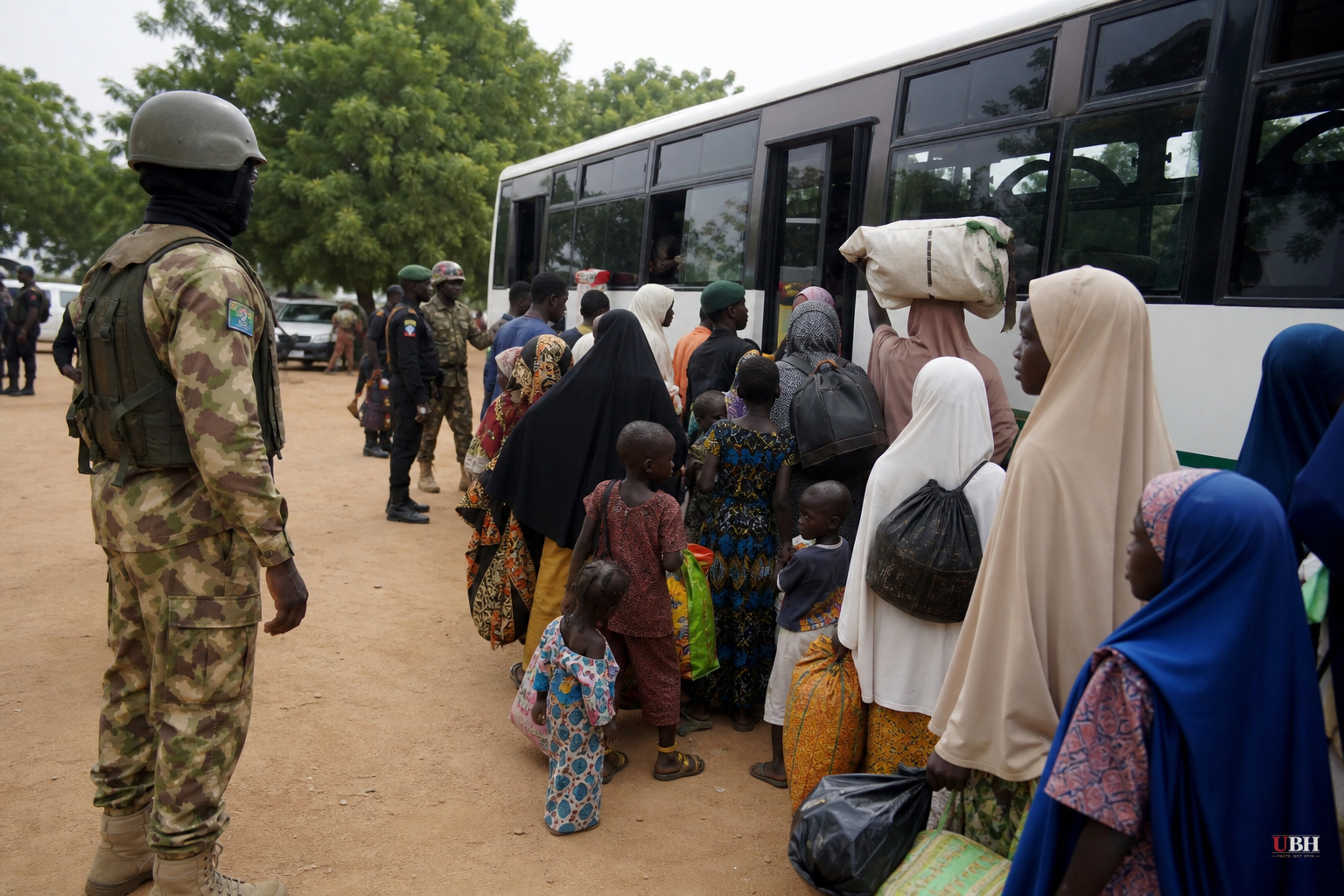
Nigerian security forces rescued 308 people who had been abducted in separate attacks in Niger and Kwara states, according to the country's presidency. The operation, carried out at Kainji Lake National Park, involved the military, police, the State Security Service and the National Counter-Terrorism Centre, according to the BBC.
Presidential spokesman Bayo Onanuga called it 'the largest rescue operation ever carried out' in a single day. President Bola Ahmed Tinubu said the outcome reflects improved coordination among the country's security agencies, according to the BBC's reporting.
Among those freed were 163 people abducted in February during an attack on the Woro community in Kwara State. Another roughly 145 were taken separately in Niger State. It is not clear from available reporting whether any suspects were captured or killed during the rescue.
The freed victims were being treated at a military medical facility before being reunited with their families, the BBC reported.
What happened in Woro
The February attack on Woro was brutal by any measure. Armed jihadists demanded that residents renounce the Nigerian government and constitution and submit instead to their own rule, according to the BBC. Amnesty International said many of the dead were found with their hands and feet bound, some with their throats slit, others shot.
The Nigerian government has blamed Boko Haram for the attack. The group has not issued any public statement claiming or denying responsibility, according to the BBC.
Part of a longer pattern, not an isolated incident
This rescue follows the freeing of 44 pupils and teachers in Oyo State weeks earlier, who were held for more than 50 days after a school kidnapping before a month-long operation secured their release, according to the BBC.
Taken together, these cases point to something more troubling than a single successful raid: kidnapping and jihadist violence have been spreading beyond Nigeria's traditional conflict zones in the northeast into north-central and even southern parts of the country. The BBC's own reporting has tracked a wider landscape of 'kidnap gangs, jihadists and separatists' operating with growing reach across Nigeria.
Nigeria's security response has historically been reactive. Ransom negotiations, not military rescues, have often been the default way families get loved ones back, a dynamic BBC has separately documented through interviews with ransom negotiators. A successful joint-agency rescue of this scale represents an operational achievement. It is not evidence that the underlying threat is shrinking.
The fair question critics will ask
Skeptics of the government's framing have a reasonable point: a single large rescue, however well executed, does not by itself demonstrate that Nigeria's security services have solved the coordination and intelligence failures that let hundreds of people get grabbed in the first place. Kwara and Niger states were not supposed to be hotspots. If jihadist and criminal networks can now stage mass abductions there, the strategic picture is arguably getting worse, not better, even on days when the rescues go right.
The presidency's celebratory framing, understandably, emphasizes the win. But it does not answer the harder question: how did 308 people get taken in the first place, across two separate incidents, in regions that were not previously flashpoints. No official statement cited in current reporting addresses that gap directly.
What's unresolved
Nigerian authorities have not said whether any of the perpetrators from either the Woro massacre or the Niger State abductions have been captured, charged, or killed. Boko Haram has not claimed the Woro attack, leaving the exact identity and motive of the attackers formally unconfirmed even as the government assigns blame. Whether this operation reflects a durable improvement in inter-agency coordination, as Tinubu claims, or a one-off success against a security landscape still expanding into new territory, will depend on what happens the next time gunmen strike a community that thought it was safe.
Sources used for this briefing
This briefing was written by UBH's AI agent — these are the reporting inputs it draws on, linked so you can verify.


