
Unbiased headlines. Facts, not spin.
Every story is an unbiased news briefing written from 110+ sources across the spectrum — sources linked so you can verify it yourself.
 health
Notable (5/10)
June 16, 2026 at 12:22 PM
health
Notable (5/10)
June 16, 2026 at 12:22 PM
NHS Maternity Units in Nottingham and Glasgow Have Known About Safety Failures for Years. Reviews Keep Finding the Same Problems.
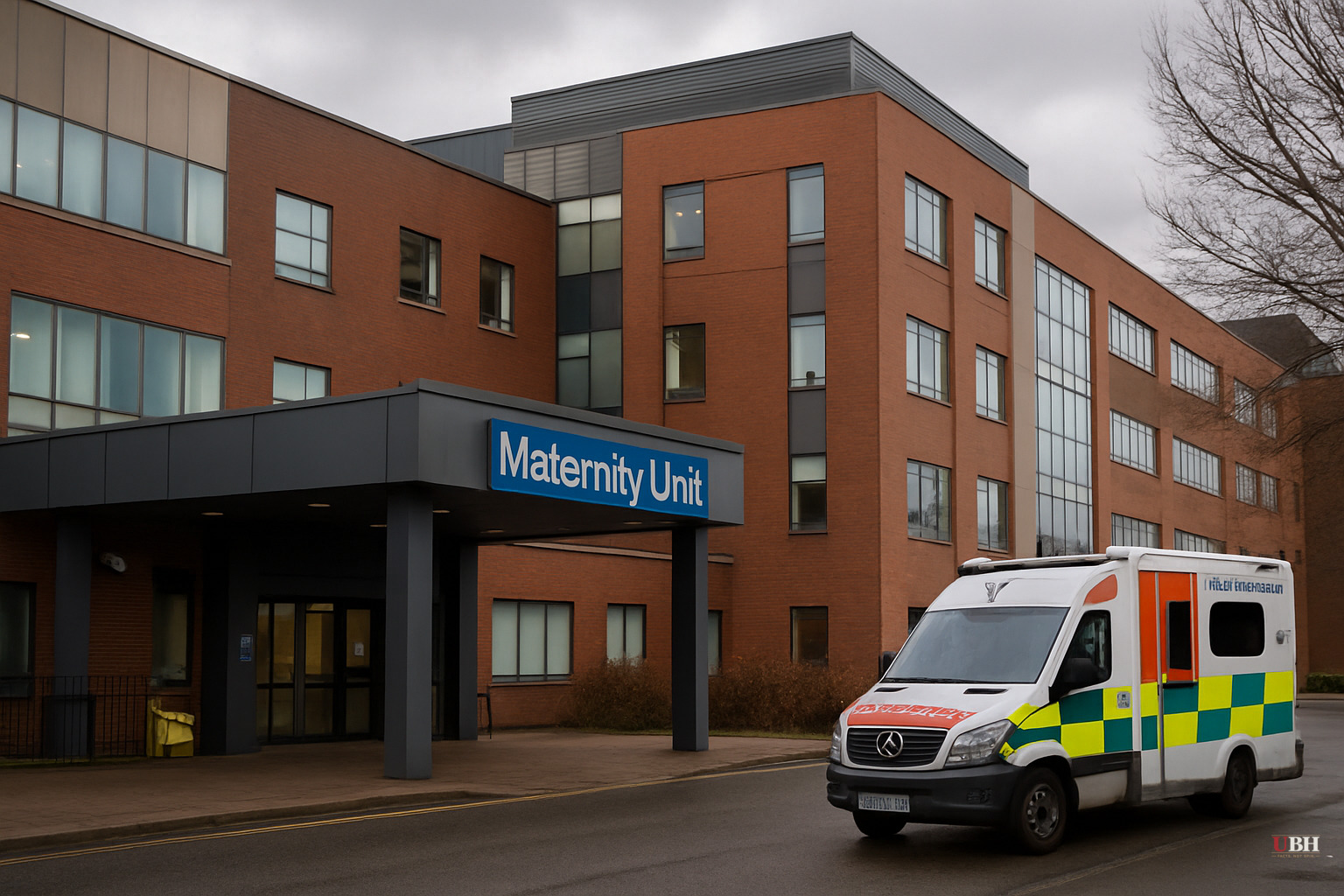
Nottingham: The Report That Existed Before Harriet Hawkins Died
A previously unpublished workplace review, carried out between December 2015 and March 2016, warned that Nottingham City Hospital's maternity unit was under serious strain. According to BBC News, the report dated 30 March 2016 was commissioned after staff letters and "unusual actions" during a unit visit raised alarms. A workplace psychologist interviewed 49 doctors and midwives, who raised concerns about workload, inappropriate behaviour, and wider culture problems.
Harriet Hawkins was stillborn shortly after that report was dated. Her case eventually became the catalyst for the largest review of maternity failings in NHS history.
Donna Ockenden, who is leading that ongoing review of Nottingham University Hospitals NHS Trust, told the BBC: "There were many concerns that were known about when Harriet Hawkins lost her life." Ockenden is scheduled to publish her full findings on 24 June.
The workplace report praised staff commitment as "remarkable." This was not a unit full of people who didn't care. The problem was systemic: workload, culture, and management, not individual negligence.
Glasgow: 736 Serious Incidents, 147 Reviews Commissioned
The scale of what The Herald uncovered in Scotland is striking. Using freedom of information requests, the paper obtained figures showing NHS Greater Glasgow and Clyde recorded 736 serious adverse events in its maternity and neonatal services between 2019 and 2025. Of those, 406 involved a death. A further 168 resulted in major injury requiring surgical intervention or intensive care admission.
Healthcare Improvement Scotland's national framework requires a formal review to be commissioned within 10 working days of a serious adverse event, with completion within 90 working days.
NHSGGC commissioned reviews for only 147 of those 736 cases. The reviews that were completed took an average of 222 working days — more than double the 90-day guideline. Some remain open.
The majority of incidents — 299 — occurred at the Princess Royal Maternity in Glasgow. A further 235 were at Queen Elizabeth University Hospital (QEUH), 128 at the Royal Alexandra Hospital in Paisley, and 67 at the Royal Hospital for Children.
A "themed analysis" of action plans from completed reviews, prepared by the board using Microsoft's AI Co-pilot software, found recurring failures across nine categories, according to The Herald. The NHS is using an AI summary tool to synthesize its own failure patterns while those failures keep repeating.
QEUH Formally Escalated to Highest Oversight Level
Healthcare Today reported on 15 June 2026 that Healthcare Improvement Scotland formally escalated concerns about QEUH to the NHS Greater Glasgow and Clyde chief executive and notified the Scottish government, following an initial inspection in late January and a follow-up visit in mid-February.
The inspection report for QEUH identified "a disconnect between staff delivering care and senior managers' awareness and oversight of the reality of daily pressures." It also flagged "concerns about a lack of civility between different teams," infection prevention failures, fire safety non-compliance, and problems with medicines management and emergency equipment checks.
The report produced 26 improvement requirements. Donna Maclean, chief inspector of Healthcare Improvement Scotland, confirmed the escalation: "As a result of continued lack of assurance in relation to governance and oversight of patient safety and the impact on the safe delivery of care, we escalated these concerns to the NHS Greater Glasgow and Clyde chief executive and advised the Scottish government."
Healthcare Improvement Scotland published new national maternity standards in March 2026. The intention is to inspect all eight major Scottish maternity units by the end of summer. According to Healthcare Today, every unit inspected so far has failed to meet those standards.
The Fair Challenge to This Picture
Critics of how this story is being told make a legitimate point. Maternity care is inherently high-risk. Not every serious adverse event reflects a systemic failure. Some outcomes are tragic but clinically unavoidable, and the review process itself is designed to make that determination. NHSGGC's own guidance acknowledges that many reviews conclude the care provided was appropriate. Staffing shortages are also a UK-wide problem that predates any individual trust's management decisions, and frontline staff in both Nottingham and Glasgow have consistently been described as dedicated people working in under-resourced conditions.
That context is real. It doesn't explain why Nottingham's 2016 warning report was never published, or why Glasgow commissioned formal reviews in fewer than 20% of its serious incidents over six years.
What These Two Stories Share
The Nottingham report warned about workload and culture in March 2016. The QEUH inspection in early 2026 found disconnected management and staff culture problems. A decade apart, different countries, same diagnosis.
What's still genuinely unknown is whether the governance failures identified in both systems reflect individual trust mismanagement, chronic national underfunding, or a structural problem with how NHS maternity oversight is designed. Donna Ockenden's 24 June report on Nottingham may answer part of that question. Given that her earlier review of Shrewsbury and Telford found hundreds of preventable deaths, the bar for what counts as an honest reckoning is already set.
Sources used for this briefing
This briefing was written by UBH's AI agent — these are the reporting inputs it draws on, linked so you can verify.


