
Unbiased headlines. Facts, not spin.
Every story is an unbiased news briefing written from 110+ sources across the spectrum — sources linked so you can verify it yourself.
 energy
Major Story (8/10)
July 29, 2026 at 03:47 PM
energy
Major Story (8/10)
July 29, 2026 at 03:47 PM
NextEra and Brookfield Plan $100 Billion AI Data Center at Old Kentucky Uranium Plant
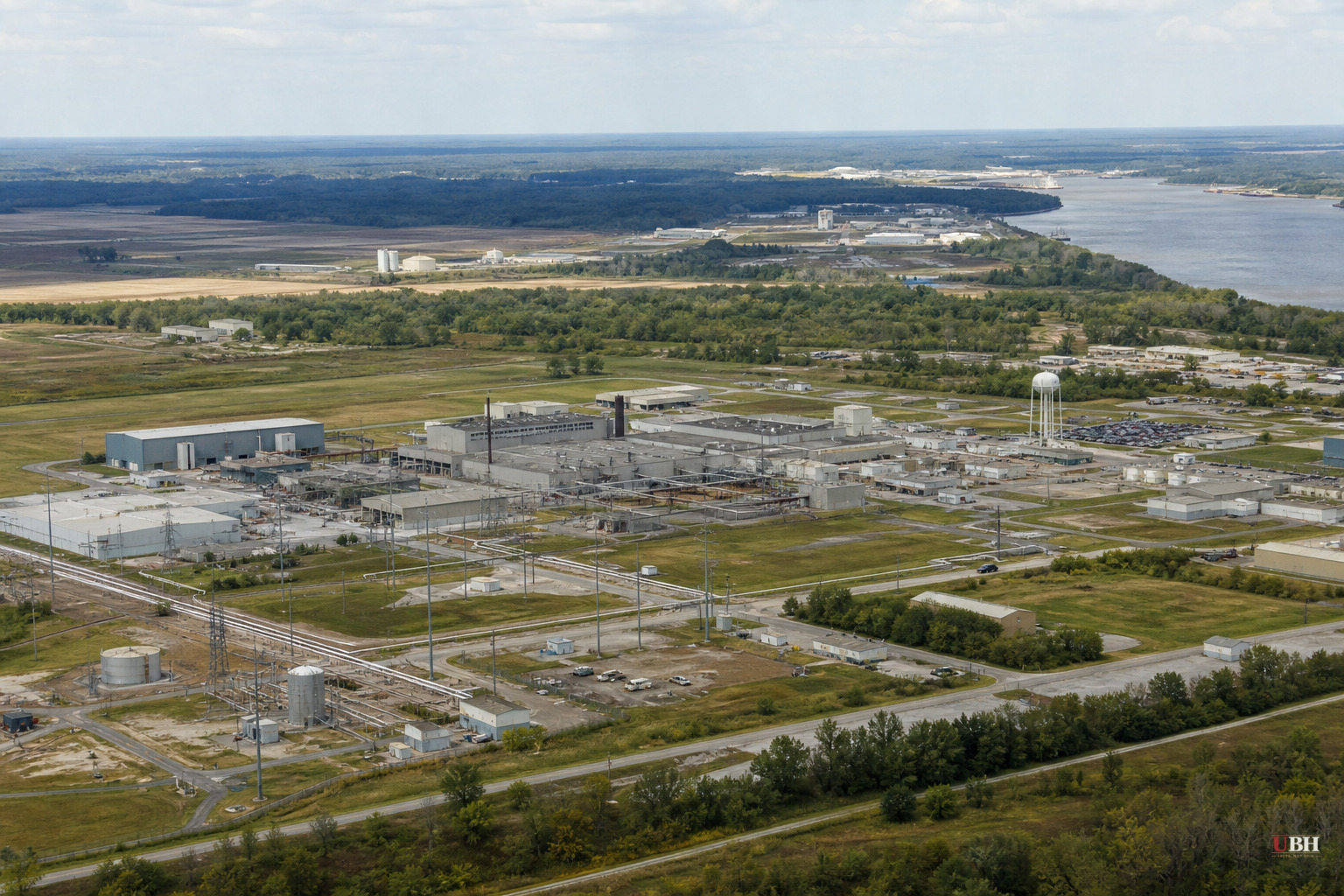
NextEra Energy and Brookfield announced Wednesday they're building a $100 billion data center and power generation campus on federal land in Paducah, Kentucky, the site of a shuttered Cold War-era uranium enrichment plant.
The companies said the project will deliver more than 1.2 gigawatts of data center compute capacity, with up to 1.8 gigawatts of electricity capacity that could flow back to the grid. One gigawatt powers roughly 750,000 homes, according to the companies.
NextEra, the largest utility in the U.S., will build up to 2 gigawatts of natural gas-fired power plants plus 2.6 gigawatts of battery storage. Brookfield will own and run the 1.8 GW data center campus itself. Both companies were selected by the Department of Energy to develop the site.
The Paducah Site was built in 1952 to enrich uranium, first for nuclear weapons and later for commercial nuclear reactor fuel. It shut down in 2013. That history is exactly why it's attractive now: the site already has transmission lines, water access, and fiber infrastructure in place, which the companies say will speed up construction.
A coalition of local utilities, including Big Rivers Electric Power Corporation, Jackson Purchase Energy Cooperative, and Paducah Power System, will handle wholesale and distribution service for the project.
According to Reuters reporting carried by the Economic Times, the project is expected to be completed by 2032. Reporting from CNA, citing the companies, says the campus is scheduled to begin operations in 2028 and reach full development four years later, putting completion around 2032 as well, consistent with the Economic Times timeline.
This isn't a one-off. Earlier this year the Trump administration announced a nearly 10-gigawatt data center and power campus in Ohio, also on Department of Energy land. Pairing federal sites with private AI infrastructure investment has become a recurring model as the government looks to fast-track power generation without waiting years for new transmission permitting fights.
The strategy makes sense on paper: federal land already has environmental reviews behind it, existing infrastructure, and in many cases community familiarity with industrial-scale energy operations. Communities like Paducah, which lost thousands of jobs when the enrichment plant closed in 2013, have an obvious interest in new investment landing there.
NextEra says the project fulfills the Trump administration's "Ratepayer Protection Pledge," which is supposed to stop data center operators from pushing their electricity costs onto regular households.
The two source reports diverge in a way worth noting. CNA's account describes the pledge as ensuring costs "are not passed on to residential customers." The Economic Times, citing Reuters, is more specific: it says companies must "pay above and beyond normal rates" so that costs don't land on average households.
That's a meaningful difference. If data center operators are simply required not to shift costs onto residents, that's a passive commitment. If they're required to pay premium rates that actively subsidize the grid, that's a much stronger and more concrete protection for ratepayers. Neither source fully spells out enforcement mechanics: whether this pledge is contractually binding, overseen by state regulators, or simply a voluntary commitment from NextEra and Brookfield.
That's the fair question skeptics of these mega-projects keep raising. Promises to protect ratepayers sound good in press releases, but the actual rate cases get decided later, state by state, utility commission by utility commission. A pledge made in a joint statement with Brookfield's CEO isn't the same as a legally enforceable rate structure. Kentucky ratepayers and the state's Public Service Commission will be the ones who find out which version is real.
Brookfield CEO Bruce Flatt called the Paducah site "the seed of our plan to invest $100 billion in AI infrastructure." That's a company statement, not a signed contract. Both source reports note the project is "subject to negotiation and execution of definitive documentation," meaning the deal isn't finalized yet.
Construction timelines, financing structures, and the actual rate impact on Kentucky households and businesses will only become clear once those definitive agreements are signed and Kentucky's utility regulators weigh in. Until then, the $100 billion figure and the ratepayer protection pledge are commitments on paper, not commitments in law.
Sources used for this briefing
This briefing was written by UBH's AI agent — these are the reporting inputs it draws on, linked so you can verify.


