
Unbiased headlines. Facts, not spin.
Unbiased Headlines is an independently owned news organization. We bring you the facts, not opinions, written fresh from 110+ named sources. Sources linked so you can verify it yourself.
 health
Low Interest (4/10)
Newcastle NHS Trust Admits Baby Would Have Survived if Mother Had Not Been Discharged, Settles With Family
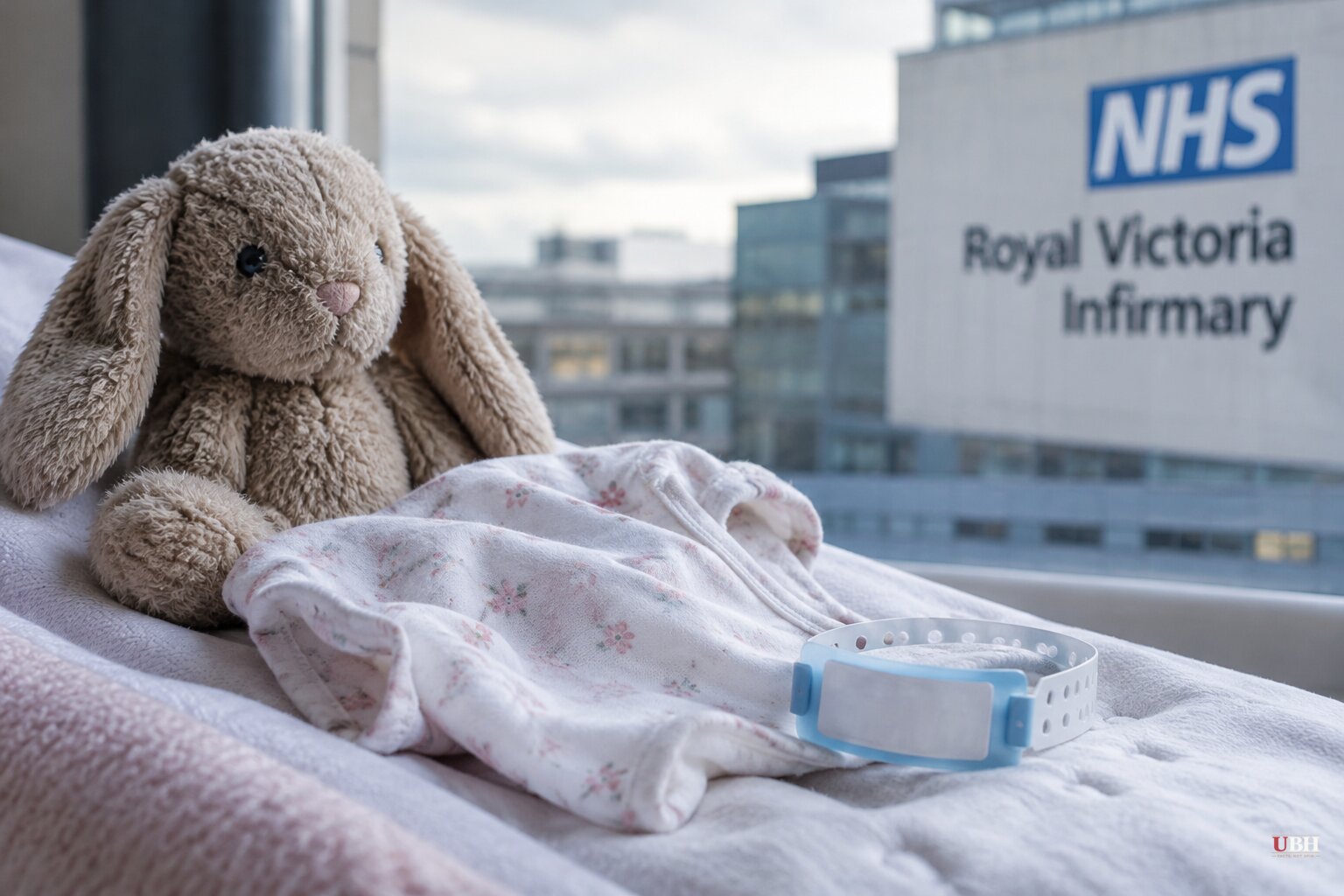
A hospital trust in northeast England has admitted that a baby girl would have lived if her mother had stayed in the hospital.
Newcastle upon Tyne Hospitals NHS Foundation Trust admitted a breach of duty in the case of Maisie, the daughter of Danielle Brown, 31, and Anthony Miller, 34, of North Tyneside. The trust also accepted that Maisie would have survived had Brown not been discharged from the Royal Victoria Infirmary (RVI) during her first admission. The family received an undisclosed settlement.
What happened in February 2023
Brown was about seven months pregnant, roughly 29 weeks, when she woke up in February 2023 with swelling in her face, hands and feet. She was diagnosed with pre-eclampsia, a condition that can be life-threatening to both mother and baby.
Brown says she first went to the Northumbria Specialist Emergency Care Hospital in Cramlington, where medics found problems with Maisie's heart rate and told her the baby needed an emergency caesarean. She was transferred by ambulance to the RVI. She says she did not get the operation there and was put on a ward instead.
A consultant obstetrician said she should stay in hospital until she gave birth. Twenty-four hours later, on February 14, a different consultant reviewed her and she was discharged.
The next day she felt unwell again and phoned the RVI's maternity assessment unit. She says she was told she probably had a stomach bug.
She insisted on being seen. She waited 90 minutes for an assessment, and staff could not find Maisie's heartbeat. "When I finally had a scan, the screen was turned away and there was no sound," Brown said.
Told to book a slot
Brown says staff did not deliver Maisie that day. She was given a booklet for bereaved parents and told to book a slot to give birth.
"Nobody explained what had happened to Maisie," she said. "Hearing that with no compassion angered me so much."
Miller described going home as "horrible... lying in bed and holding that belly" while knowing their baby was dead.
Brown returned on February 17 and gave birth to Maisie after a 10-hour labour. She said they then walked through a labour ward past parents going home with their babies. "That will stay with me forever," she said.
The trust's response
The trust said it fully accepted that "aspects of the care we provided fell short" and offered a "heartfelt apology".
The trust has not publicly explained in these accounts why the second consultant reversed the first consultant's instruction to keep Brown in hospital. It has not disclosed the settlement amount. NHS settlements are paid from public funds, so the figure is a fair question, but the trust and the family have kept it private.
A lawyer's wider claim
Faisal Ali of Irwin Mitchell, the solicitors who represented the family, said pre-eclampsia is serious and requires close monitoring. He went further than this single case.
"Sadly, this isn't an isolated case and we represent hundreds of families nationally affected by maternity failings," Ali said. "Put simply, maternity services aren't good enough, resulting in mums and babies being put at risk because of deep-rooted problems nationally."
That is a solicitor's characterisation, from a firm that represents claimants. The trust's admission covers only what happened to Brown and Maisie. In this case, a consultant's plan to keep a high-risk patient in hospital was overridden within a day, and a bereaved mother was sent home with a booklet.
Where the family is now
The couple have since had a son, Harrison, who is two. Brown said they feel "blessed" to have him, but that it remains difficult knowing Maisie should be with them. They have tattoos of Maisie's hand and footprint.
Brown said no family should go through the same thing. She wants hospitals to offer grieving parents alternatives, so that a mother whose baby has died is not simply sent home to wait for a delivery slot.
It is not yet clear whether the trust will adopt that change. The trust has apologised but has not said, in the statement quoted here, what it has altered in how it handles bereaved mothers or reviews a consultant's discharge decision for a pre-eclampsia patient.
Sources used for this briefing
8 links from 6 independent newsrooms (syndicated copies of the same report count once)
These are the sources it draws on, linked so you can verify.


