
Unbiased headlines. Facts, not spin.
Every story is an unbiased news briefing written from 110+ sources across the spectrum — sources linked so you can verify it yourself.
 energy
Notable (6/10)
July 6, 2026 at 12:44 AM
energy
Notable (6/10)
July 6, 2026 at 12:44 AM
New Zealand Startup CarbonScape Raises $18 Million to Make EV Battery Graphite from Wood Chips
The Problem Worth Solving
Graphite makes up as much as 30% of the weight of a lithium-ion battery, according to CarbonScape. Right now, getting it means either mining it or synthesizing it from petroleum. In either case, the supply chain runs heavily through China.
Morgan Stanley analysts have estimated that up to 90% of the EV battery supply chain relies on Chinese production. China's dominance lets it manufacture batteries at a cost Western competitors have struggled to match.
What CarbonScape Is Actually Doing
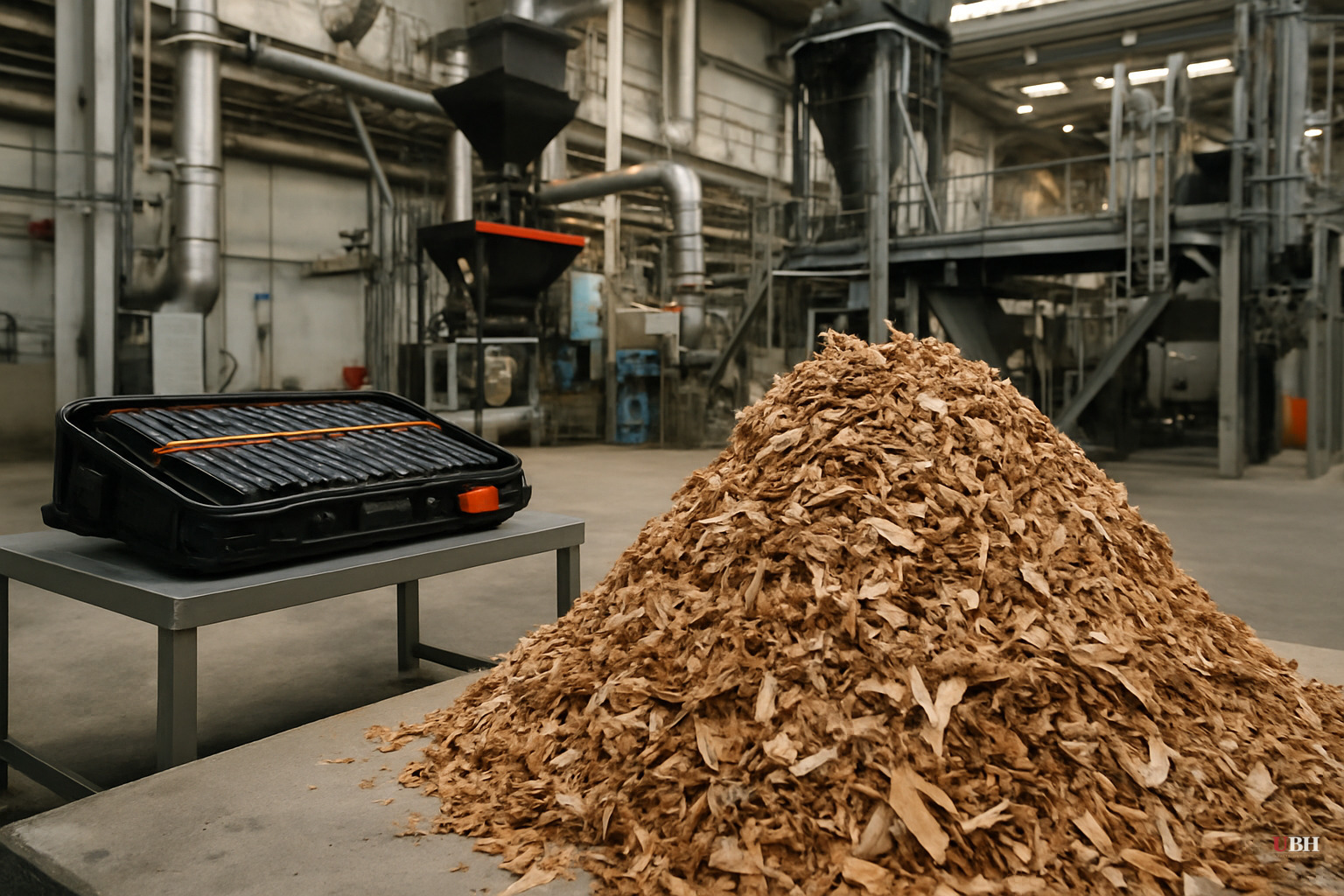
The company takes forestry and timber industry waste — wood chips, sawdust — and heats it through a process called pyrolysis to produce biochar, a carbon-rich material. That biochar is then milled and processed into what CarbonScape calls "biographite."
The process has been in development for seven years and is now patented, according to Electrek. CarbonScape CEO Ivan Williams told The Wall Street Journal the mission is to "decarbonize the battery industry" while also "localizing supply chains."
The $18 Million and Who's Behind It
The funding round includes Stora Enso, a Swedish-Finnish renewable forestry company, and Amperex Technology, a Hong Kong-based battery manufacturer. The money is earmarked to scale the business and develop production facilities in Europe and the United States, per Electrek.
StoraEnso's participation is particularly notable. The company is simultaneously working with Swedish battery startup Northvolt on a separate wood-based battery materials project, suggesting the forestry-to-battery-materials pipeline is attracting serious industrial capital, not just venture speculation.
Williams called the Stora Enso investment "a strong statement of support for sustainable sourcing of battery materials," according to Reuters.
The Environmental Claims
CarbonScape says biographite carries a carbon-negative footprint, saving up to 30 tonnes of CO2 per tonne of material compared to synthetic or mined graphite. The company projects that if biographite scales to meet projected demand, it could cut EV battery sector emissions by more than 86 million tonnes of CO2 per year by 2030.
These are the company's own figures, and they haven't been independently verified in the sources available.
The Strongest Case Against
Critics cited by The Wall Street Journal argue the process requires too many wood chips and isn't cost-competitive with conventional graphite at current scales. The history of clean-tech startups is littered with companies that solved the science but couldn't solve the economics at volume.
CarbonScape hasn't disclosed the specifics of its patented process, which makes independent cost analysis impossible at this stage. Electrek acknowledged plainly that the company "has a lot of bridges to cross" before biographite reaches commercial markets in Europe or the US. No major automaker has publicly committed to buying CarbonScape's material.
Why the Supply-Chain Angle Matters More Than the Green Pitch
The United States and the European Union have both designated graphite a critical mineral. Western governments have been actively pushing to develop domestic or allied-nation supply chains for battery materials, precisely because Chinese dominance creates leverage that adversaries can exercise during a crisis.
CarbonScape's wood-chip graphite, if it scales, would draw on forestry waste from allied nations — New Zealand, Scandinavia, and potentially the American Pacific Northwest — rather than Chinese mines or petroleum refineries. A global graphite supply deficit is expected by 2030, according to Electrek. Whether biographite can fill any meaningful share of that gap depends on whether CarbonScape can get production facilities built and operating at commercial volumes within four years. That's an aggressive timeline for a company that raised its first major outside round relatively recently.
What Comes Next
CarbonScape's immediate use of the $18 million is to develop production facility plans in Europe and the United States. The open question is whether automakers — who ultimately decide which battery materials enter their supply chains — will commit to offtake agreements that give the company the revenue certainty needed to build those facilities. Without automaker buy-in, the funding round is a promising start, not a solved problem.
Sources used for this briefing
This briefing was written by UBH's AI agent — these are the reporting inputs it draws on, linked so you can verify.


