
Unbiased headlines. Facts, not spin.
Every story is an unbiased news briefing written from 110+ sources across the spectrum — sources linked so you can verify it yourself.
 energy
Low Interest (4/10)
July 12, 2026 at 07:49 PM
energy
Low Interest (4/10)
July 12, 2026 at 07:49 PM
New Zealand Picks Two Bidders for $1 Billion LNG Terminal to Backstop Hydropower
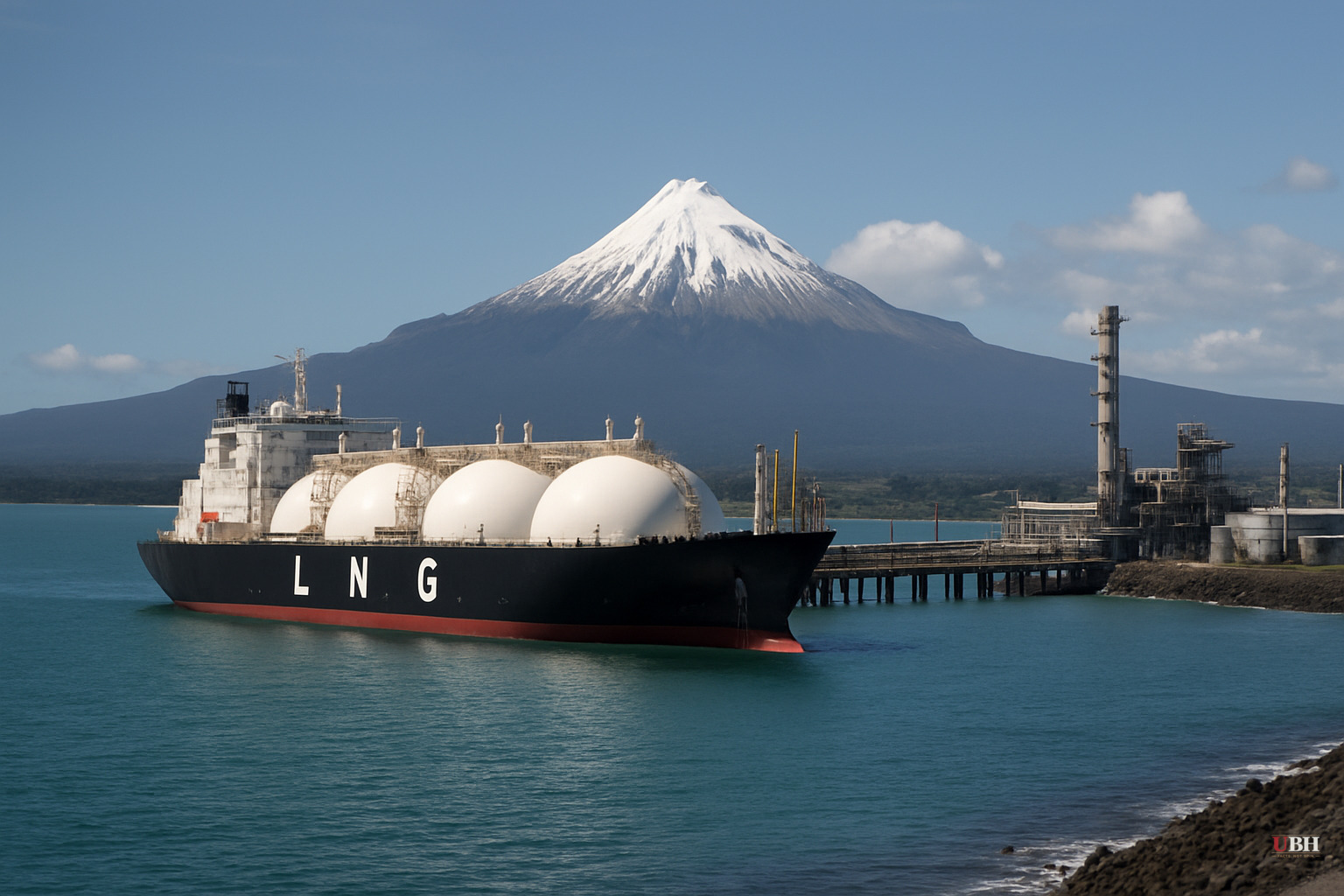
The Backup Plan for a Grid That Runs on Rain
New Zealand gets roughly 60% of its electricity from hydropower, according to a government statement issued June 9. That's clean and cheap, until the rain doesn't show up.
When a 'dry year' hits, the country has historically leaned on gas and coal to keep the lights on. Problem: domestic gas production is collapsing. The government's own statement put it bluntly: "All of New Zealand's major gas fields are in decline and coal can't fill the gap on its own."
That's the backdrop for Energy Minister Simeon Brown's announcement, delivered in a speech at the Auckland Business Chamber, that the government has shortlisted two providers for a planned LNG import terminal at Port Taranaki, according to interest.co.nz. The two companies haven't been named publicly.
Brown said the two bidders are moving into a formal Request for Proposal stage, with a contract for a preferred provider expected to be signed later in 2026. Asked directly by reporters whether that deal would be signed before New Zealand's November election, Brown said: "Absolutely before the election," per interest.co.nz.
The facility itself is projected to start operating in 2028, according to both interest.co.nz and Reuters reporting cited by Enerdata.
The Funding Fight
When the government first announced the Taranaki LNG plan back in February, the plan was to pay for the infrastructure, estimated to cost "north of $1 billion," through a levy on electricity bills, according to interest.co.nz.
Brown reversed that in his June speech: "it will not be funded by a levy on power bills," he said. Instead, he's directed the Ministry of Business, Innovation and Employment (MBIE) and the National Infrastructure Funding and Financing agency (NIFFCO) to work out a funding model with the "gentailers," New Zealand's major generator-retailer power companies. Brown said he'll "have more to say in due course."
If households aren't paying through a direct levy, gentailers could still pass costs through to consumers via wholesale electricity pricing or gas-user charges, the same outcome under a different label. Brown's own comments partially address this: he said the cost of importing LNG itself will be paid by users of gas produced from the facility, which is a form of direct cost recovery, just not a blanket household levy.
Brown pointed to wholesale electricity price data as evidence the strategy is already working. He said wholesale prices for 2028 and 2029 delivery have fallen by roughly $20 per megawatt-hour since the February announcement, which he estimated could translate into up to $800 million in annual savings.
Politics of Energy Costs
Maritime Logistics News framed the terminal bluntly as election-year politics: "The rising cost of energy in New Zealand has been a drag for the economy, and inflation has risen. These are both key issues before the November election." New Zealand's centre-right National-led government is selling this project as proof it's doing something concrete about power prices heading into a competitive vote.
A reasonable critic on the other side would point out that committing over $1 billion to fossil fuel import infrastructure locks New Zealand into LNG dependence for decades, at odds with the country's broader decarbonization goals. The funding uncertainty also means nobody, gentailers included, has actually agreed to eat the cost yet. The physical math the government laid out remains: hydro lakes run dry, gas fields are declining, and coal plants don't have spare capacity to burn more fuel. Something has to fill that gap by 2028, and nothing in these sources suggests a faster or cheaper domestic alternative is on the table.
Reliability Rules on the Way
The terminal isn't a standalone fix. MBIE opened a consultation, described by both Enerdata and Reuters, on a new Winter Energy Reliability Obligation. It would force major electricity buyers to secure backup supply ahead of forecast dry winters and require generators to prove they have firm fuel access when hydro storage runs low.
Brown also told the Auckland Business Chamber the government plans to amend the Electricity Industry Act to impose "real consequences" on power companies, though the specifics of that enforcement mechanism weren't detailed in available reporting.
What's still unresolved as of this month: the identities of the two shortlisted Port Taranaki bidders, the actual funding mechanism MBIE and NIFFCO are negotiating with gentailers, and whether a signed contract materializes before November's election as Brown promised. Voters will find out on at least one of those questions well before ballots are cast.
Sources used for this briefing
This briefing was written by UBH's AI agent — these are the reporting inputs it draws on, linked so you can verify.


