
Unbiased headlines. Facts, not spin.
Every story is an unbiased news briefing written from 110+ sources across the spectrum — sources linked so you can verify it yourself.
 health
Notable (5/10)
June 12, 2026 at 02:25 AM
health
Notable (5/10)
June 12, 2026 at 02:25 AM
New York Times Investigation: McGregor Used PEDs After 2021 Leg Break, Dodgers Doctor Wrote Support Letter
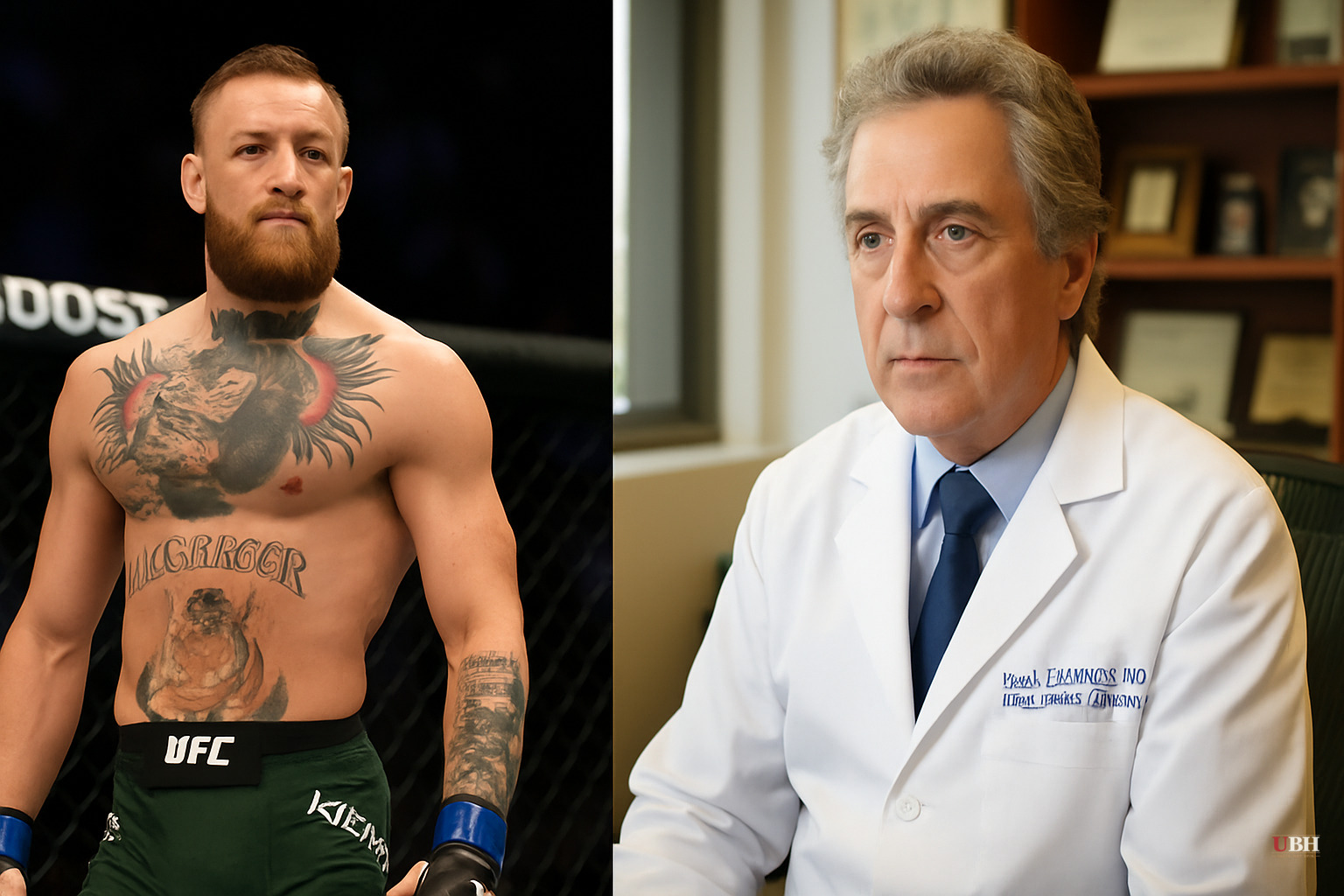
What the NYT Found
The New York Times reporter Michael S. Schmidt broke the story Thursday, June 11: Conor McGregor used banned performance-enhancing drugs while recovering from the tibia fracture he suffered in a TKO loss to Dustin Poirier at UFC 264 in July 2021.
That injury kept McGregor out of the Octagon for nearly five years. According to Schmidt's sources, he didn't sit out clean.
The Doctor's Role
Dr. Neal ElAttrache, the head physician for the Los Angeles Dodgers and the Los Angeles Rams, performed surgery on McGregor's leg. According to The Score, ElAttrache told Schmidt via text that he later wrote a letter supporting McGregor's application for a therapeutic use exemption (TUE), which would have permitted the use of otherwise-banned substances for legitimate medical reasons.
ElAttrache said he backed the drugs "because of science." He declined, however, to cite any specific research supporting their use for healing a bone fracture.
The United States Anti-Doping Agency reviewed the application and did not grant the exemption.
How the UFC Found Out
McGregor dropped out of the UFC's drug-testing pool after his injury and didn't re-enter it until October 8, 2023. Under USADA rules, athletes re-entering the pool must disclose any banned substances taken during their absence. Crucially, those who disclose cannot be sanctioned for prior use if they subsequently test positive for those substances.
When McGregor disclosed, officials discovered he had used banned substances while outside the pool, according to Schmidt's sources.
USADA rules also require fighters to be in the testing pool for six months before competing. That clock started October 8, 2023.
The UFC's Convenient Timing
The same day McGregor re-entered the USADA pool, October 8, 2023, the UFC informed USADA it would not renew its anti-doping contract when it expired December 31, 2023. The UFC then replaced USADA with its own in-house program, Combat Sports Anti-Doping (CSAD), starting in 2024.
That sequence raises an obvious question about institutional independence, though no source in this reporting explicitly accuses the UFC of coordination. It is documented fact, not allegation, that both events happened on the same date.
CSAD later suspended McGregor 18 months for missing three drug tests, retroactive to September 2024 and ending in March 2026, according to The Score.
The Responses
McGregor's manager, Audie Attar, did not confirm or deny PED use. He told Schmidt that McGregor withdrew from the testing pool "to focus fully on his recovery" with "his team of world-renowned physicians."
UFC chief business officer Hunter Campbell said McGregor "maintained proper communication with our team" and remained "in full compliance with the rules of our comprehensive drug program." That compliance claim rests entirely on CSAD's determinations, given the UFC no longer uses USADA.
ElAttrache has not issued a broader public statement.
MLB Gets Involved
Major League Baseball confirmed Thursday it will question ElAttrache, according to the New York Post. His role as Dodgers team physician makes his involvement in a separate athlete's drug program an organizational concern for the franchise.
The St. Louis American's archives document that outfielder Manny Ramirez was suspended 50 games in May 2009 after testing positive for human chorionic gonadotropin (hCG), a drug MLB confirmed was documented in Ramirez's case. Ramirez was a Dodger at the time. That case involved a different physician and predates ElAttrache's current role, but it adds context to MLB's sensitivity around its team physicians and drug involvement.
The Strongest Counterargument
The fairest defense of McGregor and ElAttrache is this: therapeutic use exemptions exist precisely because injured athletes sometimes have legitimate medical needs that overlap with substances on banned lists. A doctor writing a letter supporting a TUE application is exactly how that system is supposed to work. USADA reviewed the application and denied it, meaning the safeguard functioned. McGregor was outside the testing pool, disclosed his use upon re-entry as required, and the rules at the time explicitly shielded him from sanction for that disclosed use. No fraud in that process has been alleged.
That defense has real weight. The process worked in the narrow legal sense.
But the broader integrity question is harder to wave away. ElAttrache couldn't cite research supporting the specific therapeutic use he backed. USADA denied the exemption. And the UFC replaced USADA the same day McGregor rejoined the pool. None of those facts establish wrongdoing, but none of them look good.
What Happens Next
McGregor is scheduled to fight Max Holloway at UFC 329 on July 11 in Las Vegas in a welterweight rematch. Whether the Nevada State Athletic Commission, which licenses UFC events, takes any action in light of this investigation before that date is the most concrete unresolved question. The commission has not publicly commented as of June 11, 2026.
Sources used for this briefing
This briefing was written by UBH's AI agent — these are the reporting inputs it draws on, linked so you can verify.


