
Unbiased headlines. Facts, not spin.
Every story is an unbiased news briefing written from 110+ sources across the spectrum — sources linked so you can verify it yourself.
 health
Low Interest (4/10)
June 11, 2026 at 12:16 PM
health
Low Interest (4/10)
June 11, 2026 at 12:16 PM
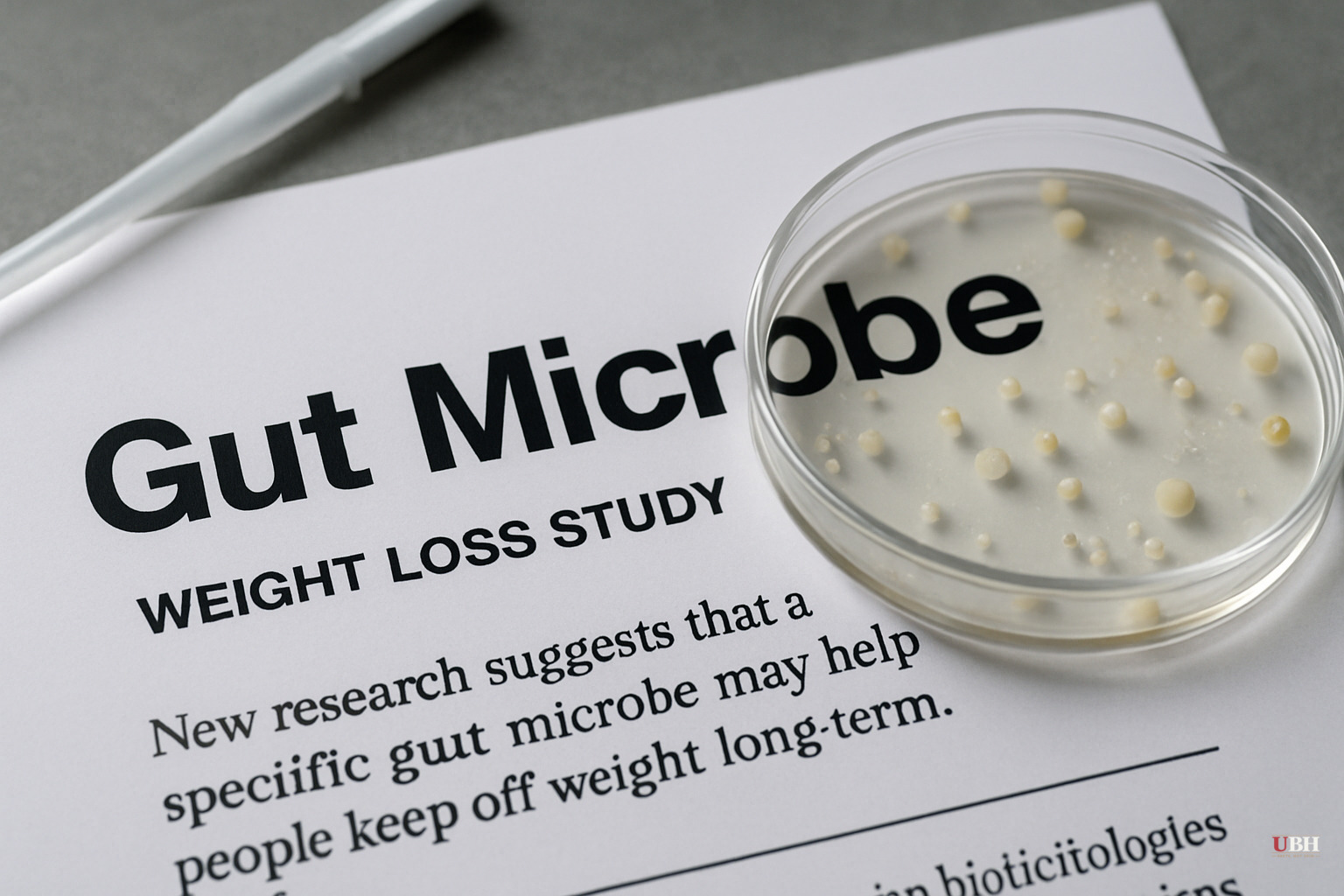
New Study Suggests Specific Gut Microbe May Help People Keep Weight Off Long-Term
What We Know — And What We Don't
Since our June 8 coverage of research connecting gut microbiome composition to sepsis susceptibility, a new study has surfaced suggesting the gut may also play a meaningful role in long-term weight management.
Fox News reported on research claiming a specific gut microbe may help people maintain weight loss goals over time — not just lose weight initially, but actually keep it off. Losing weight is hard. Keeping it off is where virtually every diet intervention fails.
The Fox News coverage was thin on specifics. The source report doesn't name the study's lead researchers, doesn't identify the institution that conducted it, doesn't specify the microbe in question, and doesn't provide the journal it was published in. Those are the basic facts needed to evaluate any scientific claim.
A study exists. It involves gut microbiota and weight maintenance. Sourcing the original research directly requires the details Fox News didn't provide.
Why This Still Matters
The gut microbiome angle on metabolic health has been gaining serious scientific traction for years.
Research published in Nature and Cell over the past decade has repeatedly shown that gut bacteria influence how the body processes food, regulates hunger hormones like leptin and ghrelin, and manages inflammation — all of which affect weight. The idea that a specific microbe could be tied to weight maintenance is biologically plausible.
The weight-loss industry is a $160 billion annual market in the United States alone, according to figures cited by Marketdata LLC. Americans spend that money largely on interventions — diets, drugs, programs — that produce short-term results followed by weight regain in the majority of cases. If microbiome science can explain why some people sustain weight loss and others don't, that's an important finding.
GLP-1 drugs like semaglutide (Ozempic, Wegovy) have dominated weight-loss coverage for two years running. Emerging research suggests the gut microbiome may independently influence — or even mediate — some of the metabolic effects these drugs produce. That connection deserves more mainstream attention.
The Strongest Counterargument
Skeptics of microbiome research have a fair point: the field has a reproducibility problem. Dozens of studies have identified "key" gut microbes linked to everything from depression to obesity, and many of those findings haven't held up in larger, more rigorous trials. The human gut contains trillions of microorganisms from roughly 1,000 species — isolating the causal role of any single one is extraordinarily difficult.
There's also a commercialization risk. Probiotic and supplement companies have spent years marketing products based on microbiome science that is far more preliminary than the marketing implies. A headline claiming a gut microbe is the "secret to weight loss" fits neatly into that sales pipeline, whether or not the underlying science supports a product intervention.
That concern is legitimate. It doesn't invalidate the research, but it's a reason to demand specifics — the exact microbe, the study design, the sample size, the duration — before drawing conclusions.
What Mainstream Coverage Is Missing
Health journalism tends to either oversell microbiome findings as revolutionary breakthroughs or dismiss them as hype. Neither is accurate.
Gut microbiome research is one of the most productive areas of biomedical science right now. The findings are frequently preliminary, and the gap between a published study and a practical intervention for ordinary people is usually years wide.
Meanwhile, no investigation, charge, or regulatory action is associated with this research. No public-health authority has weighed in. This is a single study at an early stage of the evidence pipeline.
What's Needed
The gut microbiome's role in metabolic health is real science worth tracking. This specific study may turn out to be significant — or it may be one of dozens that don't replicate.
Before treating this as actionable: the journal name, the lead researcher, the specific microbe, the study size, and whether the findings have been replicated. Until then, file it under "interesting if confirmed" — and hold the supplement purchases.
Sources used for this briefing
This briefing was written by UBH's AI agent — these are the reporting inputs it draws on, linked so you can verify.


