
Original briefings. Zero spin.
Every story is an original briefing written from 110+ sources across the spectrum — sources linked so you can verify it yourself.
 defense
Major Story (7/10)
Event date: August 25, 2026
defense
Major Story (7/10)
Event date: August 25, 2026
New START Is Dead, and the Pentagon Is Rewriting the Nuclear Rulebook Without Much Help From Congress
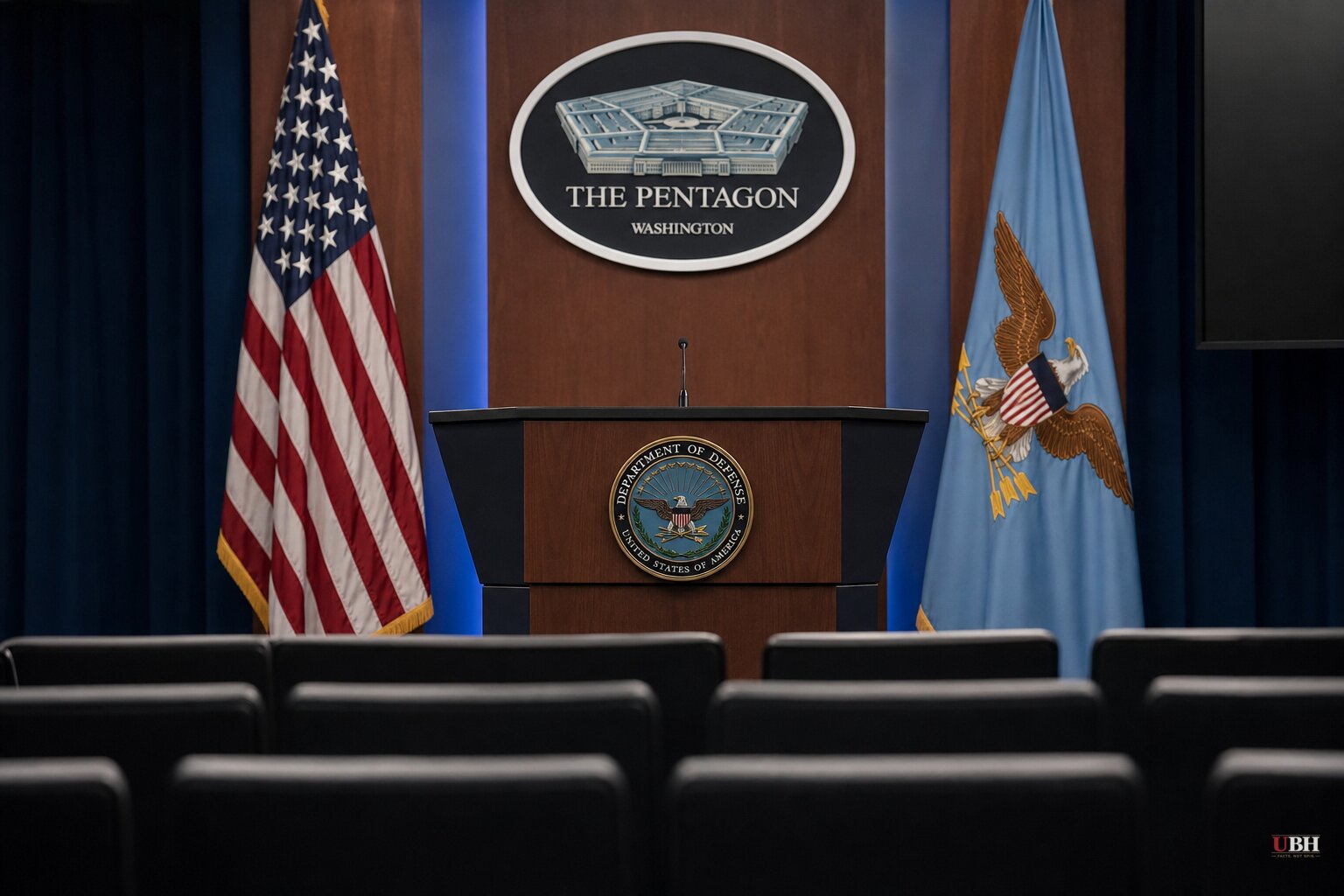
The treaty is gone, and nothing replaced it
New START, the last treaty capping deployed U.S. and Russian nuclear warheads, lapsed in February, according to The Hill. For the first time in more than half a century, there's no ceiling on either country's arsenal, strategic or tactical. The Washington Post's editorial board calls this the death of the old global nuclear order, noting the Doomsday Clock now sits at 85 seconds to midnight, the closest it has ever been set to symbolic apocalypse.
This is the backdrop for everything else happening right now: a Pentagon doctrine rewrite, a fight over missile defense funding, and a Saudi nuclear deal moving through Congress on autopilot.
The Pentagon wants smaller nukes for smaller fights
According to NBC News reporting confirmed by Undersecretary of Defense for Policy Elbridge Colby, the Department of Defense is drafting a new nuclear strategy that puts far more weight on shorter-range, lower-yield tactical weapons for a regional fight with Russia or China. Colby called it a "relook" at deployment guidance during STRATCOM's Deterrence Symposium in Omaha, then told reporters days later the goal is "to maintain deterrence and stability rather than to exacerbate it," per The Hill.
The logic isn't crazy. Vladimir Putin's military has spent two decades building an "escalate to de-escalate" doctrine around small battlefield nukes, betting Washington won't trade New York for Warsaw over a limited strike on a NATO ally. Beijing has built theater-range missiles for the same kind of coercive signaling against Taiwan and Japan. If America's only response to a tactical provocation is total strategic war, the deterrent doesn't deter much. The Hill points to NATO's 1980s Euromissile deployments as a precedent: that firmness, not restraint, is what eventually brought Moscow to the table for the Intermediate-range Nuclear Forces Treaty.
Arms control critics in Congress have a real point too. Any doctrine premised on "limited" nuclear use invites the illusion that a nuclear exchange can be controlled once it starts. War games consistently show escalation ladders don't survive contact with the fog of war. With no treaty limits in place, expanding the perceived usability of nuclear weapons is a bet with no safety net.
Golden Dome's money problem
Space Force Gen. Mike Guetlein told the Space and Missile Defense Symposium in Huntsville, Alabama on August 11 that the Golden Dome space-based missile defense system could stall without continued congressional funding. "If they don't figure it out, there is no Golden Dome because there is no funding," Guetlein said, according to Epoch Times.
The program has run on a $25 billion allocation from the 2025 reconciliation bill, part of a larger $185 billion initiative involving SpaceX, Northrop Grumman, and other contractors. Trump set a 2028 deadline for the system. The program cleared a real technical milestone the same week, with a successful test of space-based interceptor technologies at White Sands Missile Range, and the companies are now moving to demonstrate the tech in orbit.
Sen. Mark Kelly (D-Ariz.) isn't buying the urgency without proof. "We need some confidence that the system is going to deliver the capability that's being promised. And to me, right now, it's clear that it won't," Kelly said at a Senate Armed Services Committee hearing on July 15. He argued the space-based interceptor layer faces "significant technical challenges" and that the country could "spend more than a trillion dollars and end up with a system that doesn't work." Guetlein's counter is straightforward: adversaries are watching how America fights and are building capability to counter it. Both things can be true. The tech works in tests and the full-scale cost remains unproven.
The Saudi deal and the 90-day clock
The Trump administration submitted a proposed U.S.-Saudi civil nuclear cooperation agreement, a so-called "123 agreement," to Congress. Under the law, it takes effect automatically in 90 days unless Congress votes to block it.
Sen. Jeff Merkley (D-Ore.), co-chair of the bicameral Nuclear Weapons and Arms Control Working Group, says the deal doesn't meet the bipartisan "Gold Standard" and doesn't mandate the Additional Protocol, both tools meant to keep U.S. nuclear technology from being diverted toward weapons work. Merkley notes Saudi officials have previously threatened to pursue a bomb if Iran gets one, and that a 2009 U.S.-UAE deal let the Emirates renegotiate if Washington later struck a more favorable deal elsewhere in the region, meaning weaker Saudi terms could ripple outward. Trump has said the deal is contingent on Saudi Arabia joining the Abraham Accords, though Merkley says it's unclear how that condition would actually be enforced, and no administration official has publicly laid out the enforcement mechanism in the material reviewed here.
The Iran backdrop
All of this is unfolding as the U.S. and Israel remain in a military confrontation with Iran now stretching past six months, according to Truthout. The outlet reports more than 3,400 Iranians killed and over 26,000 wounded, including children, while the Pentagon reports 14 U.S. service members killed and more than 700 wounded. One unnamed Defense Department official told Truthout the Pentagon's casualty accounting understates the real toll, an allegation that remains unverified and unconfirmed by any named Pentagon official.
A Reuters/Ipsos poll conducted in late July found only 33% of Americans supported the war, the lowest level measured since it began, and 69% said Trump had failed to clearly explain the operation's objectives. Congress has war powers tools available to force a debate on continuing the conflict, but as of this writing no chamber has forced a binding vote to end it.
What's next
Congress faces overlapping deadlines: the 90-day clock on the Saudi nuclear deal, ongoing appropriations fights that will decide whether Golden Dome gets sustained funding beyond its reconciliation windfall, and a Pentagon doctrine review that hasn't been formally briefed to lawmakers as policy. None of these processes are coordinated. Whether Congress asserts real oversight on the doctrine shift, the Saudi deal, or the Iran conflict, or simply lets each deadline pass by default, will determine how much say elected lawmakers actually have in an arms landscape with no treaty guardrails left.
Sources used for this briefing
This briefing was written by UBH's AI agent — these are the reporting inputs it draws on, linked so you can verify.


