
Unbiased headlines. Facts, not spin.
Every story is an unbiased news briefing written from 110+ sources across the spectrum — sources linked so you can verify it yourself.
 energy
Major Story (8/10)
July 15, 2026 at 02:27 PM
energy
Major Story (8/10)
July 15, 2026 at 02:27 PM
New Sanctions Bill on Russian Oil Introduced Same Week EU Set Record for Russian LNG Imports
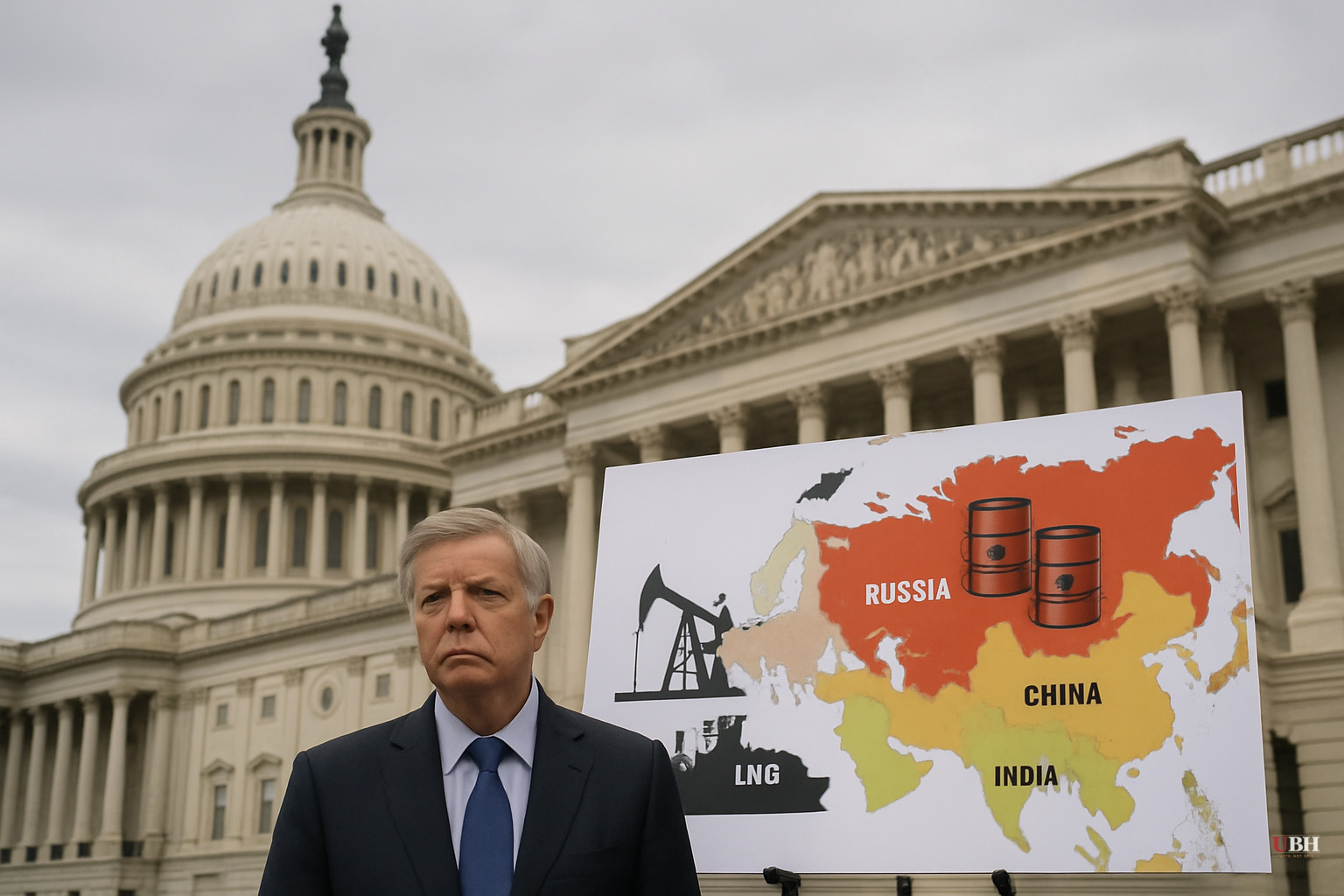
Since our July 15 report on the EU's record Russian LNG imports in the first half of 2026, a new bipartisan push in the Senate aims to punish exactly the kind of buying Europe just did, though the bill's tariffs are aimed at China and India, not the EU.
On July 14, a bipartisan group of senators introduced the Sanctioning Russia Act of 2026, according to OilPrice.com. The bill has more than 26 co-sponsors, with backers expecting that number to keep climbing.
The legislation carries extra weight because Senator Lindsey Graham of South Carolina, one of its chief architects, died over the weekend. Graham had reportedly returned from Ukraine shortly before his death and told colleagues he'd struck a deal with the Trump administration on key provisions just one day earlier. Democratic Senator Richard Blumenthal of Connecticut, Graham's Democratic co-sponsor, said Graham was "absolutely ecstatic" about the White House coming aboard, adding, "I've never heard him quite as exuberant."
Senate Democratic Leader Chuck Schumer called for an immediate floor vote "in honor of Lindsey." Senate Majority Leader John Thune said he's "hopeful we can make that happen." Blumenthal said he supports naming the bill after Graham as "part of his legacy."
What the Bill Actually Does
The new version is narrower than earlier drafts that drew fire from allies over sweeping 500% tariffs. Instead, it authorizes tariffs up to 100% on the top five buyers of Russian oil and gas, a group sponsors say includes China and India, according to OilPrice.com.
Countries buying less than 15% of Russia's annual natural gas exports get an exemption, as long as they're taking "significant steps" to cut Russian energy dependence. A Senate aide described the bill as narrowly targeted at Russia's main revenue stream: "The vast majority of Russia's income, particularly used toward its war of aggression in Ukraine, is made up from its exports of Russian oil and gas."
Beyond tariffs, the bill mandates sanctions within 30 days of enactment on Vladimir Putin, senior Russian political and military leaders, state-owned enterprises, financial institutions, energy projects, oligarchs, and foreign companies backing Russia's defense industrial base.
The Europe Problem the Bill Doesn't Touch
The bill goes after China and India while Europe just posted its own record.
According to Kpler data reported by ZeroHedge via OilPrice.com, the EU imported 9.97 million metric tons of LNG worth roughly $6.82 billion from Russia's Yamal LNG facility in the first half of 2026, a 16% jump over the same period in 2025. European buyers absorbed more than 97% of Yamal's total output during that stretch. Overall EU imports of Russian LNG rose 11% year-over-year, and pipeline gas imports rose 7%.
France, Belgium, and Spain are the largest buyers of that LNG. Hungary leads on pipeline gas via TurkStream. The EU's short-term LNG import ban took effect April 25, 2026, but exemptions in the REPowerEU Gas Regulation let buyers keep loading up, or even accelerate purchases, ahead of the full ban on January 1, 2027. Legacy short-term pipeline contracts got a deadline of June 17, 2026, while long-term pipeline gas stays legal until September 30, 2027.
Some of this front-loading has a real supply excuse. Blockades in the Strait of Hormuz and damage to Qatari infrastructure squeezed Middle East gas flows, pushing European buyers toward readily available Arctic LNG. That's a legitimate operational constraint, not just an excuse to keep funding Moscow.
Hungary and Slovakia, meanwhile, still receive Russian crude through the Druzhba pipeline's southern branch under official temporary exemptions from the EU's seaborne oil embargo. A Russian airstrike knocked out that pipeline for nearly three months, forcing both countries onto emergency reserves and Croatia's Adria pipeline. They've now agreed to build a new 127-kilometer pipeline for refined product transport.
The fair criticism here isn't that Europe is acting in bad faith. It's that a war-financing squeeze aimed at Beijing and New Delhi ignores that European allies, the ones asking Washington to sanction Russia harder, are themselves Russia's largest LNG customer by volume. This contradiction is evident in the trade data.
Where This Goes Next
The Sanctioning Russia Act still needs a floor vote in the Senate, which Thune has signaled support for but hasn't scheduled. If it passes, the real test is whether the White House, which reportedly signed off on the revised terms with Graham just before his death, follows through on designating China and India as top-five targets, and whether the 15% exemption threshold ends up shielding EU countries that are, on paper, still Russia's biggest LNG customer.
No tariffs have been imposed yet. No sanctions have been mandated yet. The bill is a proposal, not law, as of July 15, 2026.
Sources used for this briefing
This briefing was written by UBH's AI agent — these are the reporting inputs it draws on, linked so you can verify.


