
Original briefings. Zero spin.
Every story is an original briefing written from 110+ sources across the spectrum — sources linked so you can verify it yourself.
 health
Notable (6/10)
Event date: September 2, 2026
health
Notable (6/10)
Event date: September 2, 2026
New Nature Study: Semaglutide Extended Mouse Lifespan 12%, But Human Longevity Claims Remain Unproven
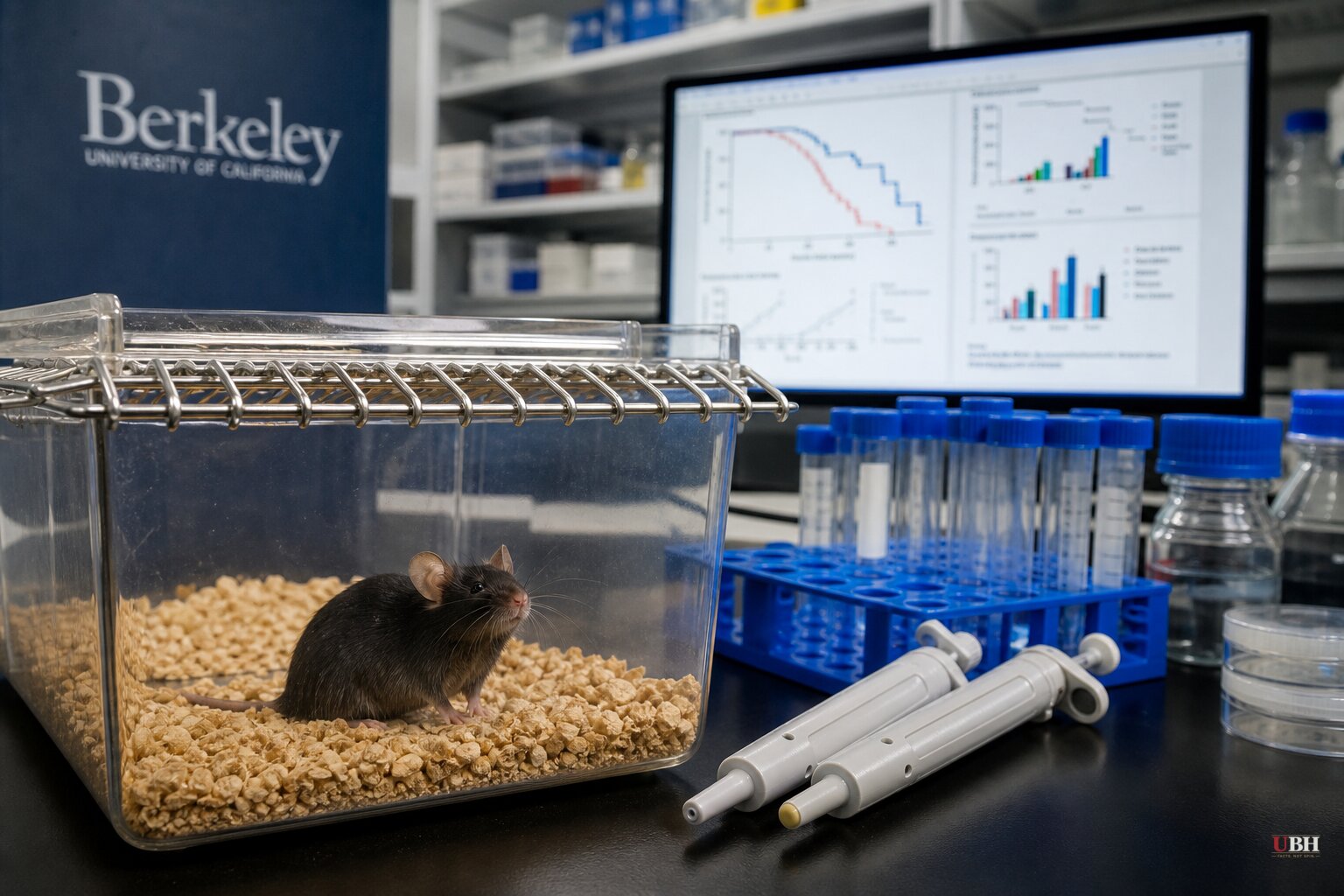
Since ABC News reported on August 19 that the University of Texas Medical Branch in Galveston had begun enrolling adults in a trial testing whether tirzepatide can slow biological aging, and Fox News's Dr. Marc Siegel discussed early biological-aging signals from a University of California San Diego study on August 24, the strongest data yet on the question has arrived: a mouse study out of UC Berkeley, published in Nature on September 2.
The study, led by longevity researcher Danica Chen, gave daily semaglutide injections to female mice starting at 20 months old, roughly the mouse equivalent of a woman in her 60s, according to Scientific American and the American Chemical Society's C&EN. Mice getting saline shots lived a median of 742 days. Mice on semaglutide lived a median of 834 days, a 12% increase, Medical Xpress reported based on the NIH-funded research.
The treated mice weren't just living longer. They explored more, balanced longer on a rotating rod, ran farther on a treadmill and solved mazes faster than untreated controls, according to Scientific American. Chen's team also compared semaglutide directly against a 24%-calorie-restricted diet matched to the drug group's reduced eating. On several measures the drug won outright: treated mice showed better exploratory behavior, spatial memory and blood-sugar control than the calorie-restricted mice, Medical Xpress reported, and their metabolic rate stayed largely stable while the diet group's dropped.
Calorie restriction is the gold standard for extending lifespan in animal research, but almost impossible for humans to sustain. "Because the GLP-1 medicines reduce food intake, it's sort of natural for us to ask if GLP-1 medicines actually function as calorie-restriction mimetics to slow aging and extend lifespan," Chen told C&EN. Her surprise finding was that semaglutide appeared to outperform that baseline. "To me, it's not just slowing aging but reversing aging-associated decline," she said.
Outside researchers were impressed but measured. Tim Rhoads, an aging researcher at the University of Wisconsin-Madison who wasn't involved in the work, called semaglutide "probably the best caloric-restriction mimetic I have seen," per C&EN, while noting the treated mice ate on a normal schedule instead of showing the hunger-driven foraging typical of calorie-restricted animals. Rafael de Cabo of the NIH's National Institute on Aging, who wrote a commentary on the study, said the mouse findings could help explain why GLP-1 drugs seem to help with so many unrelated conditions: "Most chronic diseases are deeply rooted in the aging process. If GLP-1 agonists do indeed slow it down, then a wide range of clinical benefits is exactly what you'd expect to see."
The human data lags far behind the mouse data. A separate analysis by Michael Corley of UC San Diego and colleagues, covered by ABC News, looked at 84 adults with HIV-associated abnormal fat buildup who took semaglutide for 32 weeks in a placebo-controlled trial. DNA-methylation "aging clocks" shifted in a younger direction, with one pace-of-aging measure slowing about 9%. Corley was blunt about the limits: "This was really kind of the first look to say, hey, in this scenario, which has a lot of limitations, there essentially was a signal here that warranted future study."
An evidence review from trellisvitality pushed back harder on how that finding got covered, noting the shift was in sick patients, not healthy people, and that DNA-methylation clocks are surrogate statistical markers, not proof of a longer or healthier life. The review flagged that a national morning-show segment on the topic in August was syndicated widely within a day, spreading the headline while dropping the caveat carried in the same original report: there is currently no scientific evidence that healthy people should take GLP-1 medications for longevity.
Given who stands to gain if that caveat gets lost, it deserves attention. Novo Nordisk and Eli Lilly already sell billions of dollars worth of semaglutide and tirzepatide for diabetes and obesity; an approved longevity indication would open an enormous new market. None of the sources here suggest anyone at those companies is making that claim yet, but it's the kind of commercial upside that should make readers want harder proof before treating mouse data as a green light for off-label use in healthy 60-year-olds.
The UTMB trial led by Dr. Thomas Blackwell, following adults ages 55 to 70 on tirzepatide, is still enrolling and has produced no results, according to ABC News. Blackwell told the network he hopes to show a 10-15% slowing of biological aging: "Wait till we prove that it also slows your aging process. Everybody's going to want to take a GLP-1." Until that trial reports actual data, the honest answer is that mice have a real result, sick humans have a preliminary signal, and healthy humans have nothing yet.
Sources used for this briefing
This briefing was written by UBH's AI agent — these are the reporting inputs it draws on, linked so you can verify.


