
Original briefings. Zero spin.
Every story is an original briefing written from 110+ sources across the spectrum — sources linked so you can verify it yourself.
 health
Major Story (7/10)
September 3, 2026 at 08:32 PM
health
Major Story (7/10)
September 3, 2026 at 08:32 PM
FDA Says No Estrogen Patch Shortage Exists While Women Report Empty Pharmacy Shelves
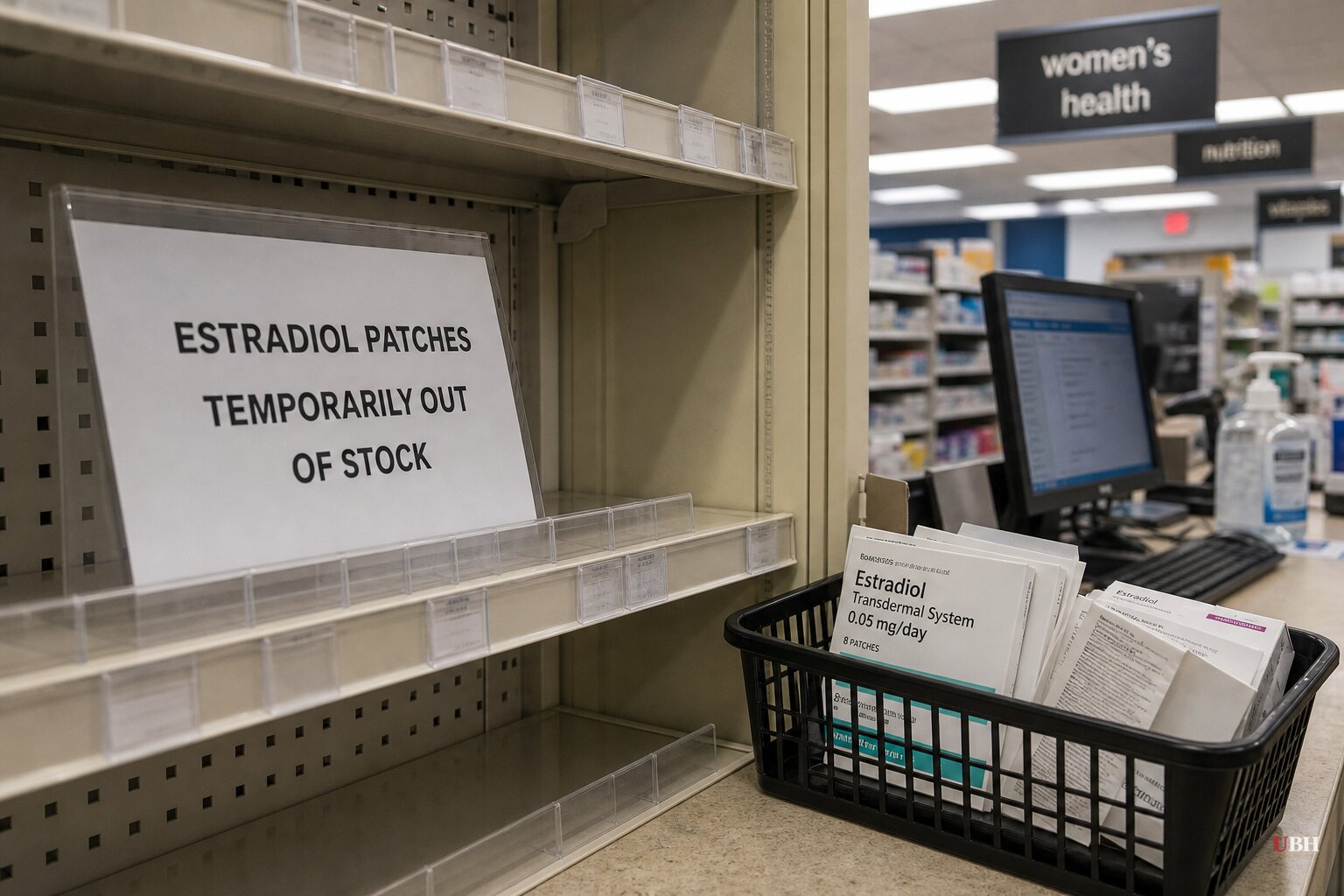
Women managing menopause symptoms are calling pharmacy after pharmacy trying to find estrogen patches, and many are coming up empty. The Food and Drug Administration says there's no shortage. The people standing at the counter say otherwise.
Diane Harris, a Los Angeles mother of three, told CBS News she spent weeks calling pharmacies to refill her estradiol patch prescription, which she's supposed to replace twice a week. She eventually drove more than 25 miles to find one that had it in stock, and said she considered looking in Canada.
"It's a real problem that it's not available," Harris told CBS News. "People can't get it. The pharmacies don't have it. They don't know when it's going to come and they don't know when the shortage is going to end."
Demand nearly tripled
The squeeze traces back to a regulatory change. CBS News reported the FDA removed a decades-old black box warning from many hormone replacement therapy products in February, a warning that had flagged risks like cardiovascular disease and cancer. A Change.org petition pushing the FDA to declare a formal shortage places that decision in November 2025 and says FDA leadership itself now calls the original warning based on "outdated, misread" data. Either way, the effect was the same: doctors and patients who'd avoided hormone therapy for two decades started using it again.
The numbers back that up. According to nationwide data from HealthVerity cited by CBS News, estrogen patch prescriptions jumped from about 594,000 in June 2024 to 1.6 million in May 2026, nearly triple in under two years. More than 1 million U.S. women begin menopause every year, according to the FDA, cited by Reuters.
Dr. Suzanne Hackenmiller, an OB-GYN in Arizona, told CBS News the warning's removal made both patients and doctors more comfortable. She argues estrogen started early in perimenopause can reduce risk of cardiovascular disease, osteoporosis and colon cancer, calling it "medically necessary" for many women, not a lifestyle drug.
FDA acknowledges a supply crunch, stops short of "shortage"
On Thursday, the FDA said it's working with all six manufacturers of estradiol transdermal patches to increase supply, according to Reuters. The agency said companies are adding manufacturing shifts, expanding production capacity, increasing batch sizes and adding equipment, and that it's expediting review of submissions tied to boosting supply.
But the FDA has not designated the patches as officially in shortage. Its position, per Reuters, is that availability of specific brands may vary by pharmacy but the drug class overall remains available. Patients and doctors are frustrated by this distinction.
Data from the American Society of Health-System Pharmacists, an independent tracking group, shows patches made by Sandoz, Viatris, Noven and Zydus are currently listed as in shortage. Reuters named Amneal, Sandoz, Noven, Zydus and Viatris among the main manufacturers selling estradiol patches in the U.S.
A Sandoz spokesperson told Reuters the patches are "highly complex to manufacture and increasing capacity is therefore challenging," and said the company has allocated additional supply to U.S. states in the interim. The other named manufacturers did not respond to Reuters' request for comment.
Why the FDA's shortage label matters
Hackenmiller has started a petition urging the FDA to formally declare a shortage, and a separate Change.org petition started by Giovanna DiBiasi had gathered 388 verified signatures as of this week, seeking 500. Hackenmiller told CBS News a formal designation could push manufacturers to ramp up production faster and potentially draw new companies into the market. She said it could also affect what patients pay out of pocket.
Patients and some doctors say the FDA's own shortage database doesn't reflect what's happening at the pharmacy counter, and they want the paperwork to catch up to reality. The FDA's position, that overall availability remains intact even if specific brands are tight in specific places, is a real distinction. A shortage of one manufacturer's product isn't automatically a shortage of the drug class. Whether that distinction matters to a woman who's been rationing her twice-weekly patch is a separate question.
One menopause-focused telehealth company, TeltraCare, which markets pharmacy-fulfillment services to employers, argued in a blog post that the access gap is already showing up as absenteeism and turnover among women in the workforce. The underlying complaint, that supply problems don't show up cleanly in official statistics until they've already cost people time and money, tracks with what patients like Harris describe.
The FDA has not set a timeline for when supply is expected to stabilize. Whether the agency moves from "working with manufacturers" to an actual shortage declaration remains to be seen, and that regulatory step is what patients, petition organizers and at least one prescribing physician say would change how fast this gets fixed.
Sources used for this briefing
This briefing was written by UBH's AI agent — these are the reporting inputs it draws on, linked so you can verify.


