
Original briefings. Zero spin.
Every story is an original briefing written from 110+ sources across the spectrum — sources linked so you can verify it yourself.
 health
Notable (6/10)
Event date: September 2, 2026
health
Notable (6/10)
Event date: September 2, 2026
FDA Approves First Oral Drug for Dermatomyositis, a Rare Muscle and Skin Disease
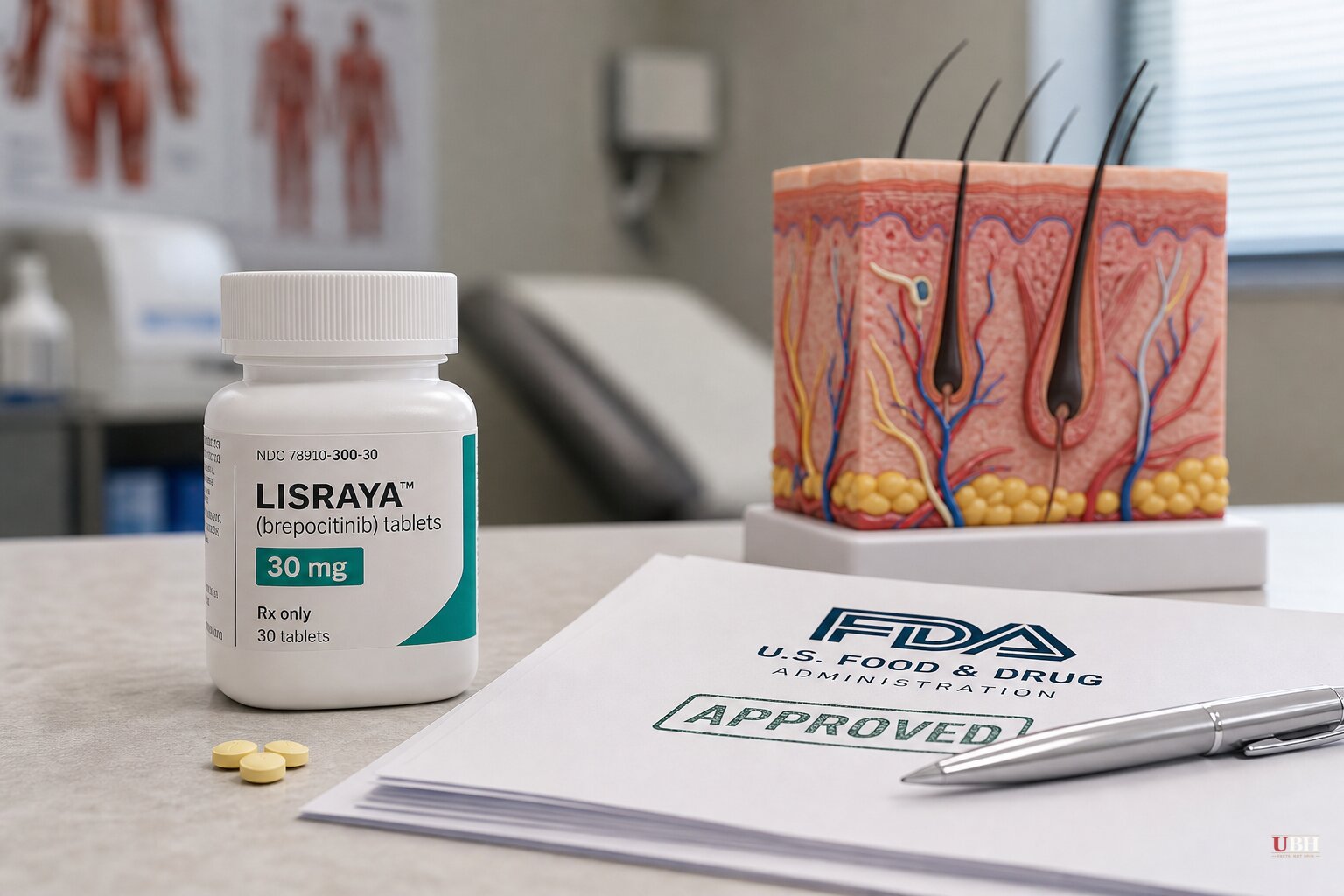
The FDA approved Lisraya (brepocitinib) tablets on Tuesday, September 1, as the first oral drug specifically indicated for dermatomyositis in adults, according to an FDA news release. The approval went to Priovant Therapeutics, a subsidiary of Roivant Sciences, according to Drugs.com and PatientWorthy. The compound was originally discovered by Pfizer before Priovant advanced it through late-stage trials, PatientWorthy reported.
Dermatomyositis is a rare autoimmune disease where the immune system attacks small blood vessels in the skin and muscle, causing progressive muscle weakness, distinctive rashes around the eyelids and joints, and often severe itch, according to CheckRare and the FDA. Left untreated, muscle weakness worsens over time and can lead to stiff joints and muscle wasting, CheckRare reported.
For decades the only tools available were corticosteroids, antimalarials, broad immunosuppressants like methotrexate, and intravenous immunoglobulin, or IVIG. "The only approved drug for dermatomyositis up until now has been IVIG, which is a pretty cumbersome treatment," Victoria Werth, MD, of the University of Pennsylvania, told MedPage Today. "This is a pill. It's a lot easier, and it works rather quickly."
Trial results
The approval rests on the Phase 3 VALOR trial, a randomized, double-blind, placebo-controlled study of 241 adults over 52 weeks, comparing brepocitinib 30 mg, 15 mg, and placebo, according to the FDA and CheckRare. Primary results ran in the New England Journal of Medicine in March 2026, with skin-specific secondary results published later in JAMA Dermatology.
On the trial's main measure, the Total Improvement Score, the 30 mg group averaged 46.5 points versus 31.2 for placebo, according to EMJ Reviews. Sixty-eight percent of the 30 mg group hit at least a moderate response on that score, compared with 44% on placebo, EMJ reported, and nearly half of treated patients reached a major-improvement threshold.
Steroid tapering was a key secondary goal. Among patients who started the trial on any baseline oral corticosteroid, 62% in the 30 mg group cut their prednisone-equivalent dose to 2.5 mg or less by week 52, and 42% eliminated oral steroids entirely, according to EMJ Reviews. Looking specifically at patients who started on higher doses, at least 7.5 mg a day, CheckRare reported 62% tapered to minimal or no steroid use and 45% came off steroids completely, versus 29% on placebo.
Skin disease, long an under-treated part of the illness, showed some of the clearest gains. Nearly half of patients with moderate-to-severe skin involvement at baseline reached "clear" or "almost clear" skin after a year, compared with 22% on placebo, according to MedPage Today, citing lead investigator Ruth Ann Vleugels, MD, of Mass General Brigham. EMJ Reviews put the complete-remission figure on a validated skin severity index at 44%. Three-fourths of patients with moderate itch reported meaningful relief by week 52, versus a third on placebo, MedPage reported.
"These benefits were observed in a population with substantial baseline skin involvement despite ongoing use of standard-of-care therapies, underscoring the persistent, unmet need for more effective, targeted treatment options," Vleugels and co-authors wrote in JAMA Dermatology.
Safety and side effects
Brepocitinib is a dual TYK2/JAK1 inhibitor, meaning it dampens a broad set of inflammatory signals rather than shutting down the immune system indiscriminately, according to the FDA and EMJ Reviews. The drug carries a boxed warning.
The FDA's label lists serious infections, increased all-cause mortality, malignancies, and major adverse cardiovascular events as boxed risks, mirroring warnings already required on other approved JAK inhibitor drugs. Dermatomyositis often strikes people who already carry cardiovascular risk factors or take other immune-suppressing drugs. EMJ Reviews noted serious infections occurred more often in the 30 mg group than placebo during the trial, though those infections resolved with standard care and no deaths in VALOR were attributed to the drug.
Outside the boxed warning, the most common side effects were upper respiratory infections, headache, fatigue, urinary tract infections, nausea, bronchitis, joint pain, diarrhea, back pain, falls, flu, and acne, according to CheckRare. Discontinuation due to side effects was actually lower on the 30 mg dose than on placebo, 6% versus 11%, according to the FDA and Drugs.com, suggesting the drug was tolerated at least as well as the placebo arm over a full year.
"Today's approval is a meaningful step forward, giving patients and their health care providers an approved oral therapy proven to help manage this rare and debilitating disease," Nikolay Nikolov, MD, director of the FDA's Office of Immunology and Inflammation, said in the agency's release.
Neither Priovant nor Roivant have disclosed a list price for Lisraya in any of the available materials. A targeted daily pill beats a steroid regimen or IVIG infusions on convenience, but whether insurers cover it broadly and what patients pay out of pocket will determine how many of dermatomyositis's estimated small patient population actually get access to it.
Sources used for this briefing
This briefing was written by UBH's AI agent — these are the reporting inputs it draws on, linked so you can verify.


