
Original briefings. Zero spin.
Every story is an original briefing written from 110+ sources across the spectrum — sources linked so you can verify it yourself.
 health
Notable (5/10)
September 3, 2026 at 07:45 PM
health
Notable (5/10)
September 3, 2026 at 07:45 PM
Mouse Study Finds Psilocybin May Prevent Nerve Damage From Chemotherapy
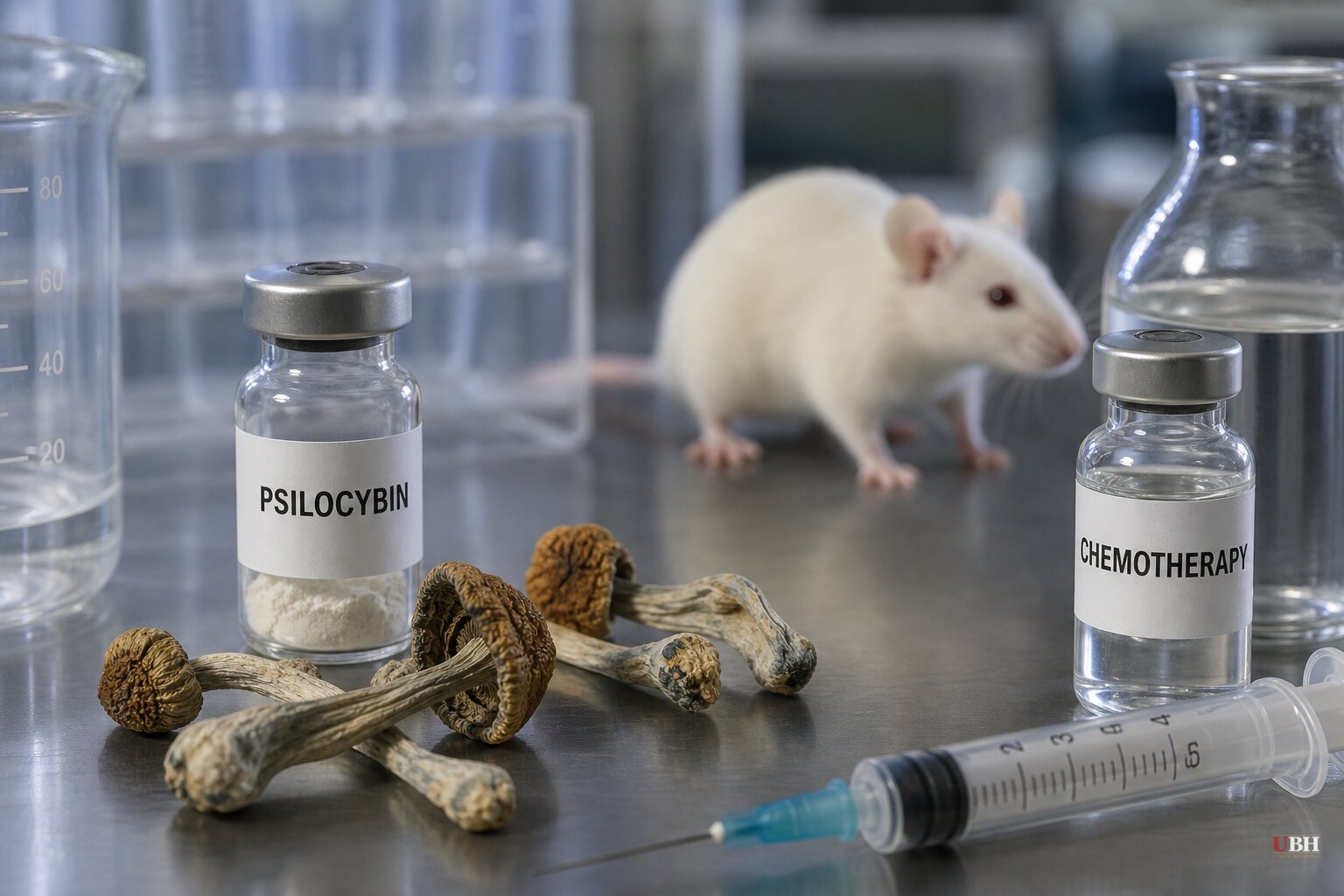
Chemotherapy patients often walk away from treatment with a lasting injury nobody warned them enough about: peripheral neuropathy. Tingling, numbness, cold sensitivity and pain in the hands and feet, sometimes for life. Right now doctors manage it with ice packs, painkillers or opioids. There's no real way to stop it before it starts.
A new study out of The University of Texas MD Anderson Cancer Center, published Thursday, September 3, 2026 in the journal Science, suggests psilocybin, the active compound in magic mushrooms, might change that. In mice, two doses of psilocybin given before chemotherapy protected against nerve damage across as many as six treatment cycles, according to Scientific American.
The researchers say it's the first evidence that psilocybin can prevent this kind of nerve injury rather than just treat it after the damage is done.
How they found it
The discovery started almost by accident. Moran Amit, a co-author of the paper and assistant professor and neuroscientist at MD Anderson, said a colleague noticed something odd: mice given psilocybin weren't developing the expected nerve damage after chemo. Amit didn't buy it at first.
"Do it again," he recalled telling her, according to Scientific American. She did. Then she did it again, and again. "We did it so many times with tumor, without tumor, different types of chemotherapy," Amit said. "And consistently, we did not see the development of neuro[pathy]."
According to Medical Xpress, which cited the university's own release, the researchers eventually traced the effect to serotonin 5-HT2A receptors. As few as two doses of psilocybin given before chemo prevented hypersensitivity to cold, protected sensory nerve endings and preserved touch sensation in the preclinical models, without blunting chemotherapy's ability to kill tumors.
Patrick Dougherty, a co-author and professor at MD Anderson, called it a first at a press conference ahead of the paper's release: "This is the first time where psilocybin has been used as a neuroprotective agent," Dougherty said, according to Scientific American. Amit added that the study is significant because it shows psilocybin preventing a physical symptom, not just a psychiatric one. "For the first time, we're looking at pain, a somatic symptom, and we're actually showing a really significant efficacy, not in treating that but in preventing that," he said.
Amit told Medical Xpress the goal now is a treatment that stops nerve injury "without interfering with lifesaving chemotherapy," calling existing options for established nerve damage limited and often permanent once the injury sets in.
The bigger psilocybin push at MD Anderson
This isn't the only psilocybin research underway at the cancer center. Separately, MD Anderson is running clinical trials called TRIP and TRIPS using psilocybin-assisted psychotherapy for cancer-related anxiety and depression, according to Gregory Jones, an assistant professor of psychiatry at MD Anderson, cited by Clinical Research News Online. Jones said psilocybin already has two positive Phase 3 trials behind it for treatment-resistant depression and is under review by the Food and Drug Administration, with the agency granting fast-track priority review vouchers to two psilocybin drugs for depression in April 2026. Jones said he's hopeful for an approval "in the next calendar year."
That depression research is a different indication, a different mechanism of action, and a different regulatory track than the neuropathy findings published this week. Psilocybin remains a Schedule I controlled substance federally, with zero FDA approvals for any use as of today. Nothing in the neuropathy study changes that status, and nothing in it means a cancer patient can walk into an infusion center and ask for psilocybin before chemo.
What's actually unresolved
The obvious next question is whether the protective effect holds up in humans, and at what dose, without unacceptable psychiatric side effects during active cancer treatment. MD Anderson's paper doesn't answer that. Human safety and efficacy trials specifically for chemotherapy-induced neuropathy have not been announced. Until they run, and until the FDA weighs in, this is a promising mouse result, not a treatment.
Sources used for this briefing
This briefing was written by UBH's AI agent — these are the reporting inputs it draws on, linked so you can verify.


