
Original briefings. Zero spin.
Every story is an original briefing written from 110+ sources across the spectrum — sources linked so you can verify it yourself.
 health
Notable (6/10)
Event date: September 1, 2026
health
Notable (6/10)
Event date: September 1, 2026
Large NIH-Funded Trial Finds Paxlovid Doesn't Help Long COVID, Even With a 25-Day Course
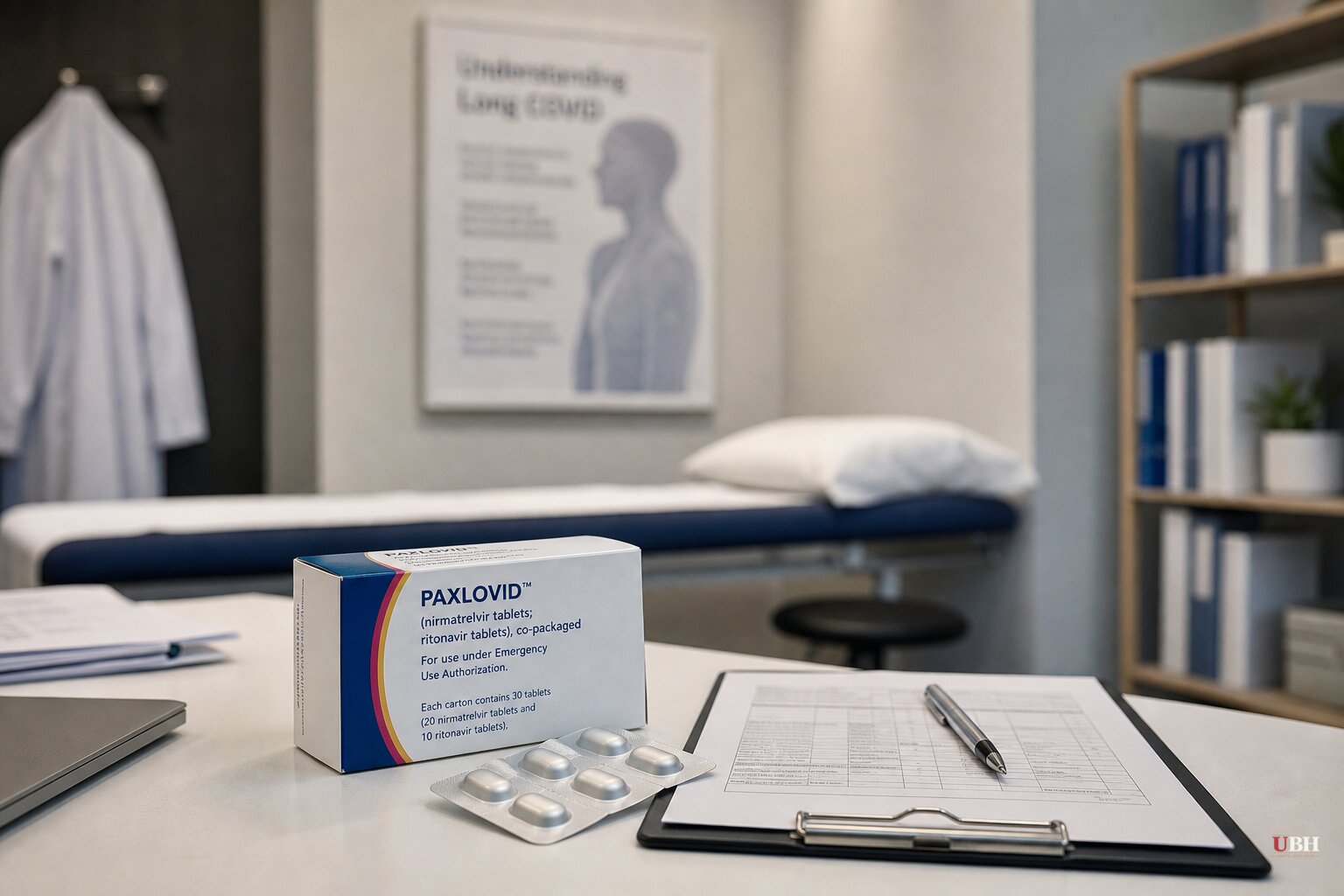
A nearly thousand-patient clinical trial has delivered a clear verdict: Paxlovid does not treat long COVID.
The RECOVER-VITAL trial, published in The Lancet Infectious Diseases and funded by the National Institutes of Health, tested whether the antiviral drug nirmatrelvir-ritonavir (sold as Paxlovid) could reduce long COVID symptoms. It couldn't. Not at 15 days. Not at 25 days. Not for any of the three symptom types studied.
What the trial actually tested
Researchers led by Lindsey Baden, MD, of Mass General Brigham and Harvard Medical School enrolled 959 adults from 69 sites in 27 states between July 2023 and early 2025, according to Medical Xpress and News Medical. Participants had symptoms lasting at least 12 weeks after a SARS-CoV-2 infection and were sorted into three groups of roughly 320 each: cognitive dysfunction (brain fog), autonomic dysfunction (dizziness, rapid heart rate, blood pressure swings), and exercise intolerance.
Each person was randomly assigned to one of three arms: 15 days of Paxlovid followed by 10 days of placebo, a full 25 days of Paxlovid, or 25 days of placebo paired with low-dose ritonavir. That ritonavir pairing wasn't an accident. Ritonavir has a distinctive taste, so researchers gave it to the placebo group specifically to keep patients from figuring out which arm they were in, according to MedPage Today.
The primary question: did patients show meaningful improvement at 90 days? According to numbers reported by Dr. Kumar Discovery, the answer was no across the board. The 25-day cognitive group came out only 3.2 percentage points ahead of placebo, a gap the trial's own statistics say has roughly a 65-in-100 chance of being pure noise. The autonomic group actually did 6.4 points worse on the drug than placebo, and the exercise-intolerance group came in 7.8 points worse. Every one of those differences falls inside the range of chance.
Why this trial matters more than the small ones before it
Earlier, smaller studies had already suggested five days of Paxlovid didn't help long COVID. RECOVER-VITAL was designed specifically to close the loopholes critics raised about those studies, doubling the treatment course to 25 days on the theory that a longer run might finally clear out lingering virus, according to CIDRAP.
Unlike the smaller uncontrolled studies, this one had a real placebo arm, which turned out to matter. Baden and colleagues noted that a large share of placebo patients reported meaningful improvement anyway, especially on self-reported questionnaires versus objective performance tests. That's consistent with the Hawthorne effect, where people report doing better simply because they're being watched and cared for in a structured trial, CIDRAP reported. The researchers wrote that this pattern "cautions against overinterpretation of uncontrolled observations" and underscores why placebo-controlled design is non-negotiable in long COVID research.
Doubling the drug course to 25 days didn't cause new safety problems, according to Medical Xpress.
Where coverage oversteps
The UK-based ME Association, in comments from Dr. Charles Shepherd, went further than the trial itself, stating it's now "increasingly unlikely that Long Covid can be effectively treated with antiviral drugs" in general. One trial of one drug cannot support that broader claim. Baden's own team was more careful, writing that the question of whether nirmatrelvir-ritonavir helps patients who have confirmed evidence of active viral persistence in their bodies at the start of treatment "remains unanswered," because RECOVER-VITAL didn't require that evidence for enrollment. Long COVID sufferers who believe an ongoing infection is driving their symptoms haven't had that specific hypothesis tested yet, only the broader question of whether the drug helps long COVID patients generally.
The taxpayer angle
This was NIH money, run through the RECOVER initiative, a program that has faced criticism for spending hundreds of millions of dollars on long COVID research with few actionable treatments to show for it. A well-designed, unambiguous negative result is not a failure of that spending. It's the system working: a rigorous trial that tells doctors and patients to stop wasting money on a drug that isn't helping, and tells researchers where not to look next.
What's unresolved
Dr. Kumar Discovery flagged a real limitation: the trial population was 78% White, so the findings may not generalize as cleanly to other demographic groups. And the core viral-persistence hypothesis, tested only in patients without confirmed active infection, hasn't been ruled out for the subset of long COVID patients who do show measurable signs of lingering virus. Whether the RECOVER initiative funds a follow-up trial targeting that narrower group is the open question researchers left on the table.
Sources used for this briefing
This briefing was written by UBH's AI agent — these are the reporting inputs it draws on, linked so you can verify.


