
Unbiased headlines. Facts, not spin.
Every story is an unbiased news briefing written from 110+ sources across the spectrum — sources linked so you can verify it yourself.
 energy
Major Story (7/10)
July 16, 2026 at 11:08 PM
energy
Major Story (7/10)
July 16, 2026 at 11:08 PM
New Middle East Pipelines Won't Stop Iran From Choking Oil Exports, Analysts Warn
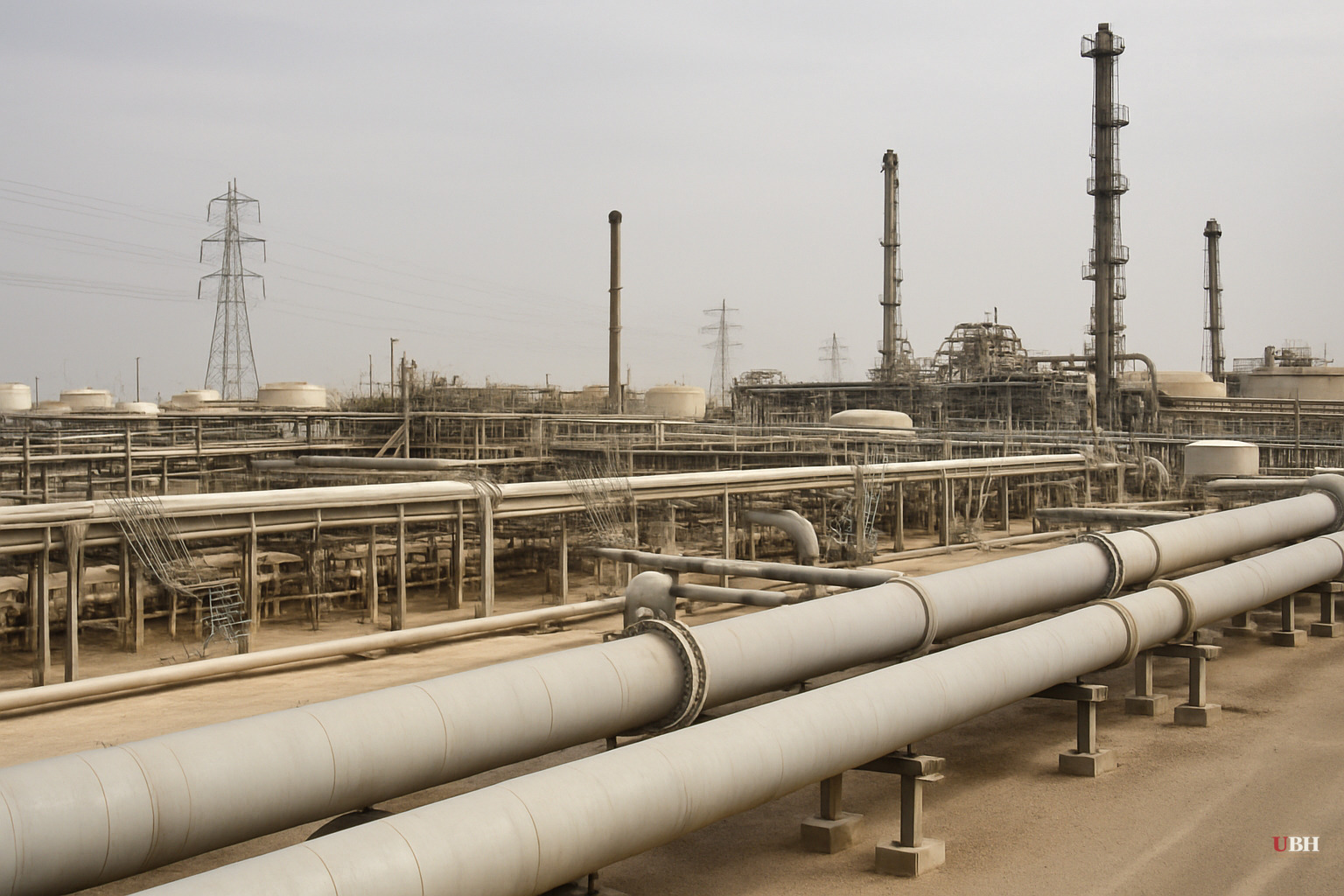
Since the State Department confirmed Wednesday that Washington is backing Iraq's effort to revive the Kirkuk-Baniyas pipeline, the bigger picture has come into focus: the whole region is racing to build around the Strait of Hormuz, and none of it fully solves the problem.
Goldman Sachs analysts said in a note Sunday that seven pipeline projects across the Middle East are either under construction or in planning. If all of them get built, regional pipeline capacity could hit more than 14 million barrels per day by the end of 2028, according to Goldman. That's over 60% of the seven Gulf states' pre-war export volume of 23 million bpd, the bank said.
Iraq is bleeding output right now
Iraq's production dropped more than 50% in June, down to 1.9 million barrels a day from 4.2 million bpd back in February, before the U.S. and Israel launched their war against Iran, according to CNBC. OPEC's second-largest producer exports almost entirely through Basra in the south, with few alternatives when Hormuz gets dangerous.
That's why the Kirkuk-Baniyas revival matters. The pipeline runs from northern Iraq through Syria to the Mediterranean, and U.S. companies are expected to help build it, a State Department official told CNBC. It gives Baghdad an export route that never touches the Persian Gulf at all.
The UAE and Saudi Arabia are hedging too
The UAE is doubling its export capacity outside Hormuz with a second pipeline to the Port of Fujairah on the Gulf of Oman. Saudi Arabia is looking at expanding its existing pipeline to the Red Sea by 2 million bpd by 2028, people close to the matter told Reuters last week.
Both countries already leaned hard on their existing bypass routes once the shooting started. The UAE's West-East pipeline and Saudi's East-West pipeline to the Red Sea have functioned as pressure valves during the Iran war, letting Abu Dhabi and Riyadh reroute millions of barrels a day around the strait.
Here's the catch: pipelines aren't safe either
Iran hit a pumping station on the Saudi Red Sea pipeline back in April, and that single strike cut throughput by 700,000 barrels a day, according to Rystad Energy's Jennifer Li. Pipelines have pumping stations, terminals, and storage facilities sitting exposed on land, and all of it is a target.
Bob McNally, founder of Rapidan Energy, put it plainly on CNBC's "Power Lunch" Monday: "The problem isn't the waterway. It's that Iran can use weapons to attack loading facilities, pumping stations, the end stations, these terminals, and the storage units of these pipelines."
Hormuz gets the headlines because tankers getting hit or seized makes for dramatic video. But a drone strike on a Saudi pumping station does the same economic damage without a single ship involved. Building more pipelines spreads out the risk. It doesn't eliminate it.
A new front is opening in the Red Sea
Iran's Houthi allies in Yemen are now threatening to disrupt oil shipments through the Red Sea too, according to CNBC, with a senior Houthi political official named Mohammed reportedly signaling the threat. If that materializes, it undercuts the entire rationale for building pipelines to Red Sea ports like Fujairah and Yanbu. You can't dodge Hormuz by routing oil into a different chokepoint that's just as exposed.
Gulf states are spending billions to diversify export routes, but if Iran and its proxies can strike any fixed target on land or any waterway regardless of geography, the diversification only raises the cost of disruption for Tehran. It doesn't remove the disruption option.
What this doesn't fix
No pipeline currently under construction or in planning fully replaces Gulf seaborne exports. Even Goldman's optimistic 14-million-bpd capacity estimate for 2028 falls short of pre-war volumes, and that number assumes every one of the seven projects gets finished on schedule, which isn't guaranteed in a war zone.
The open question is whether Washington's bet on projects like Kirkuk-Baniyas actually reduces Iran's leverage over global oil markets, or just gives Tehran more targets and more ways to demonstrate it can hit them. Iran's April strike on the Saudi pipeline suggests it's already testing the second theory. Whether the U.S., Saudi Arabia, and the UAE can build pipeline security fast enough to outpace Iranian and Houthi strike capability is the thing markets will be watching through 2028, not the ribbon-cuttings on new pipeline segments.
Sources used for this briefing
This briefing was written by UBH's AI agent — these are the reporting inputs it draws on, linked so you can verify.


