
Unbiased headlines. Facts, not spin.
Every story is an unbiased news briefing written from 110+ sources across the spectrum — sources linked so you can verify it yourself.
 energy
Notable (6/10)
July 17, 2026 at 12:47 AM
energy
Notable (6/10)
July 17, 2026 at 12:47 AM
New Jersey Signs $24 Billion Nuclear Law, Two Companies Already Look Like the Favorites
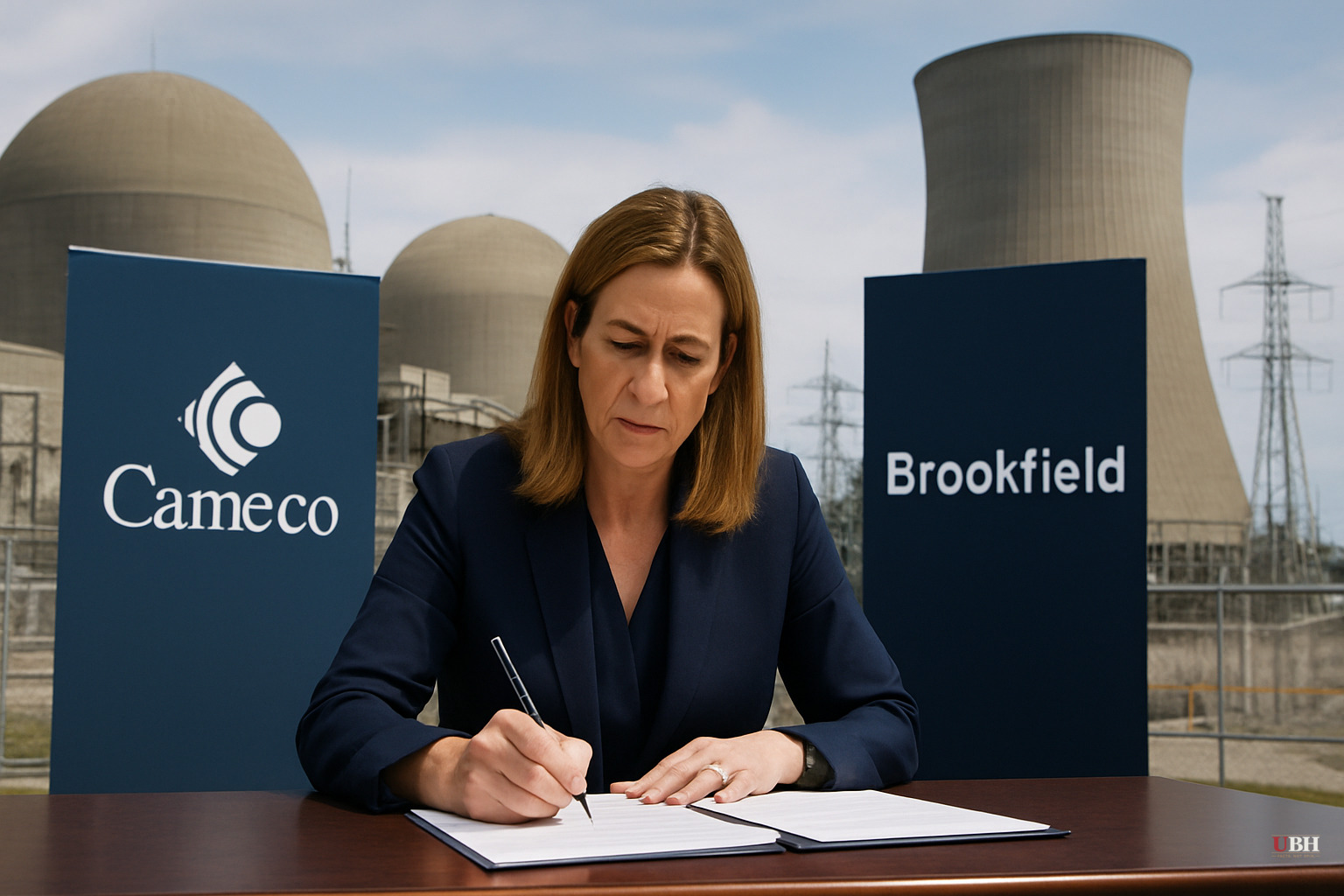
New Jersey Governor Mikie Sherrill signed the Power New Jersey Act this week, directing the state's energy regulators to start a competitive procurement process for new nuclear power. The law cleared both chambers of the legislature by unanimous votes last month, according to a report picked up by Ground News from New Jersey outlets.
The target: at least 1,100 megawatts of new nuclear capacity at pre-approved sites. The price tag: roughly $24 billion, according to state Sen. John Burzichelli (D-NJ), a prime sponsor of the bill, who put it bluntly to Benzinga: the state needs "someone to come up with about $24 billion" to get this built.
That amount represents the GDP of a small country going into steel, concrete, and turbines in one state.
Who's Positioned to Win
Two companies keep coming up: Cameco Corp (NYSE: CCJ) and Brookfield Asset Management (NYSE: BAM). Together they control Westinghouse Electric, and Westinghouse makes the AP1000, the only large-scale reactor design in the country that's actually ready to break ground without years of design review, according to Benzinga.
A state official emphasized New Jersey's preparedness, saying "what you're seeing here are the lessons that we've learned so that we can move very quickly," per Benzinga's reporting. That signals an effort to avoid Vogtle-style cost blowouts and decade-long delays.
The federal government is a major player here too. Federal financing programs, including the Department of Energy's Energy Dominance Financing Office, can guarantee or cover up to 80% of project costs, according to the governor's office as cited by Benzinga. That's an enormous public backstop for a private build.
ZeroHedge, which has tracked the broader federal nuclear push since last fall, reported that Cameco, Brookfield, and the U.S. government are already tied together through an $80 billion strategic partnership aimed at building up to 10 Westinghouse AP1000 reactors nationally. Cameco leadership has reportedly floated that the combined opportunity across Commerce and Energy Department channels could stretch to as many as 20 AP1000 units, per ZeroHedge.
The Bigger Number Behind the Official Number
New Jersey's procurement documents describe the target as 1,100 MW, roughly one AP1000 reactor. But ZeroHedge argues the real project could end up bigger, pointing out that the existing PSEG Early Site Permit already authorizes two units at the site in question, and that reactor costs tend to drop sharply on the third and fourth unit built, a point ZeroHedge attributes to Cameco and MIT research.
That's a reasonable inference from public documents, not a confirmed plan. Nobody in these sources has stated New Jersey is secretly building two reactors instead of one. It's speculation grounded in economics and existing permits, and readers should treat it as exactly that: an informed guess about where the negotiation could land, not an announced outcome.
The Fair Concern: Is This a Rigged Bid?
A reasonable skeptic would ask: if only one company has a reactor design ready to deploy, is "competitive procurement" just theater? If Westinghouse is the only shovel-ready option, smaller players and newer entrants like Oklo Inc (NYSE: OKLO) or NuScale-style small modular reactor developers never really get a shot at the big contract.
That's a legitimate structural question. Big, capital-intensive infrastructure procurement tends to favor whoever already has a finished product and the balance sheet to finance a $24 billion build. That's not evidence of favoritism baked into the law itself, it's just what happens when the field narrows to whoever can actually deliver on the deadline the state wants. New Jersey hasn't announced a winner. The process is a competitive one on paper, and smaller reactor companies are free to bid.
Market Reaction Has Been Muted, Not Euphoric
Despite the size of the opportunity, neither CCJ nor BAM stock exploded on the news. According to Benzinga, Cameco closed 6.03% lower at $690.20 on the Monday the bill was signed, though it ticked up slightly premarket the next day. Brookfield closed essentially flat, down 0.19% at $46.63 the same day. Both stocks are actually down over the past month, by Benzinga's numbers, 10.66% for Cameco and 1.06% for Brookfield.
This matters because it undercuts any narrative that Wall Street is treating this as a guaranteed windfall. If this were a lock, you'd expect the stocks to be ripping. They're not. The market is treating this as one opportunity among many, not a sure thing.
What Happens Next
New Jersey's Board of Public Utilities now has to run the actual procurement process, evaluate bids, and decide site allocation. The law reportedly delays cost pass-throughs to ratepayers until plants actually deliver power, according to the Ground News summary of the bill's provisions, which shields residents from paying for construction delays or cancellations up front.
The open question is timeline. Federal financing packages, environmental review, supply chain readiness for long-lead components like reactor vessels, and the sheer scale of a $24 billion capital raise all have to line up before shovels hit dirt. Nobody in these sources has put a hard date on groundbreaking.
Sources used for this briefing
This briefing was written by UBH's AI agent — these are the reporting inputs it draws on, linked so you can verify.


