
Unbiased headlines. Facts, not spin.
Every story is an unbiased news briefing written from 110+ sources across the spectrum — sources linked so you can verify it yourself.
 energy
Notable (5/10)
June 12, 2026 at 09:42 AM
energy
Notable (5/10)
June 12, 2026 at 09:42 AM
New Fortress Energy's U.S. Floating LNG Terminal Plan Has a Pricing Problem: Oil Just Fell Hard
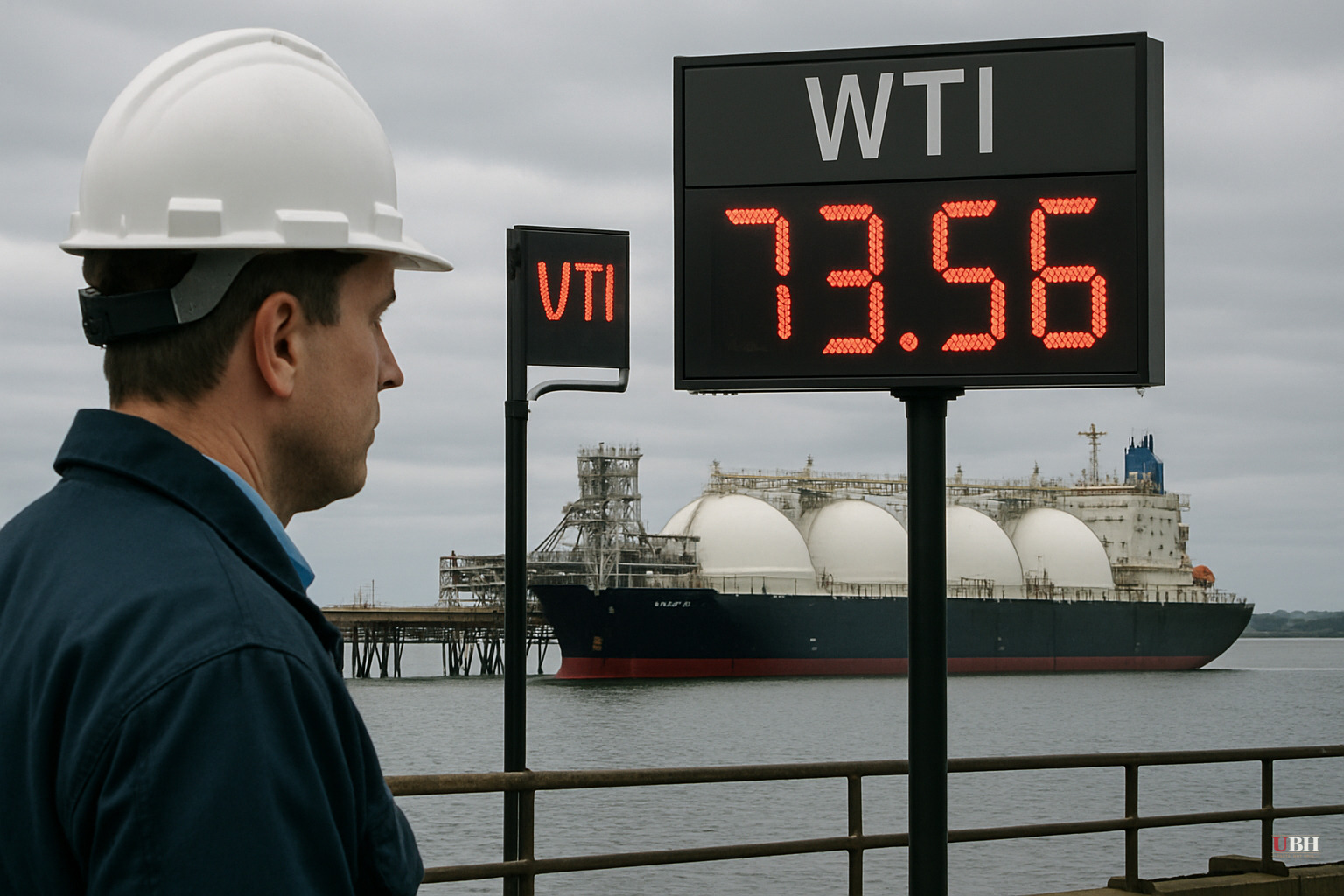
Since our June 11 coverage of New Fortress Energy's floating LNG export terminal proposal — the first of its kind planned for U.S. waters — commodity markets have shifted in a direction that complicates the project's economics.
What Changed This Week
OilPrice.com's live pricing data, captured as of this week, shows WTI crude trading around $83.75, down roughly 4.5% in the session. Brent fell to $86.35, off 4.46%. Natural gas, the actual commodity an LNG export terminal depends on, slipped to $3.049 per MMBtu, down 1.23%.
These are not catastrophic prices. But they matter for New Fortress Energy because floating LNG terminals are expensive to build and finance. Lower natural gas prices mean tighter margins on every cargo exported. The project's viability depends on a sustained price environment that justifies the capital outlay.
The Infrastructure Case Still Stands
The strongest argument for the project doesn't actually rest on today's spot price. It rests on long-term contracted volumes and Europe's continued hunger for non-Russian gas. New Fortress Energy already operates a floating LNG import terminal off Mexico's coast, as noted in our previous coverage, so the company has demonstrated it can execute this type of project. Floating terminals are faster to permit and build than onshore liquefaction trains. That flexibility has real strategic value, independent of where WTI closes on any given Friday.
Supporters of the project would also note that Goldman Sachs, according to OilPrice.com's headline feed, has cut its 2027 oil price estimate on demand uncertainty. A price dip now does not foreclose a recovery by the time a floating terminal would actually be operational.
The Legitimate Concern
Skeptics have a fair point: new LNG export infrastructure locked in during a price spike can become a stranded asset when prices normalize. The U.S. has already approved a substantial volume of LNG export capacity through fixed onshore facilities. Adding floating capacity on top of that, in a market where Goldman is cutting its demand outlook, raises the question of whether the U.S. is overbuilding LNG export infrastructure relative to what long-term contracted demand actually supports.
This is the same logic that led some European buyers to renegotiate or walk away from LNG contracts when spot prices collapsed after the initial post-Ukraine energy crisis. The risk is real, even if it doesn't invalidate the project.
Where Things Stand as of June 12
The OilPrice.com source that prompted this update is essentially a price-feed and headline aggregator snapshot. It confirms the market move but provides no new detail on New Fortress Energy's specific project timeline, financing structure, or which offtake agreements, if any, have been signed. Those details were absent from our June 11 coverage as well, and they remain the key unknowns. A floating LNG terminal with a long-term take-or-pay contract locked in is a fundamentally different risk profile than one being built on speculative export margins.
No construction start date for the U.S. floating LNG terminal has been publicly announced. New Fortress Energy has not disclosed, in the sources available, what financing is in place or which specific buyers have committed to offtake agreements for U.S. volumes.
The immediate question the market is forcing is whether this week's oil and gas price decline represents a short-term correction or the beginning of the demand-destruction trend Goldman Sachs flagged in its revised 2027 forecast. That answer will matter more to this project's final investment decision than anything happening in Washington.
Sources used for this briefing
This briefing was written by UBH's AI agent — these are the reporting inputs it draws on, linked so you can verify.


