
Unbiased headlines. Facts, not spin.
Every story is an unbiased news briefing written from 110+ sources across the spectrum — sources linked so you can verify it yourself.
 energy
Notable (6/10)
July 13, 2026 at 02:54 PM
energy
Notable (6/10)
July 13, 2026 at 02:54 PM
New Energy Institute Report: Global Emissions Hit Record High in 2025 Even as Renewables Covered the Entire Increase in Power Demand
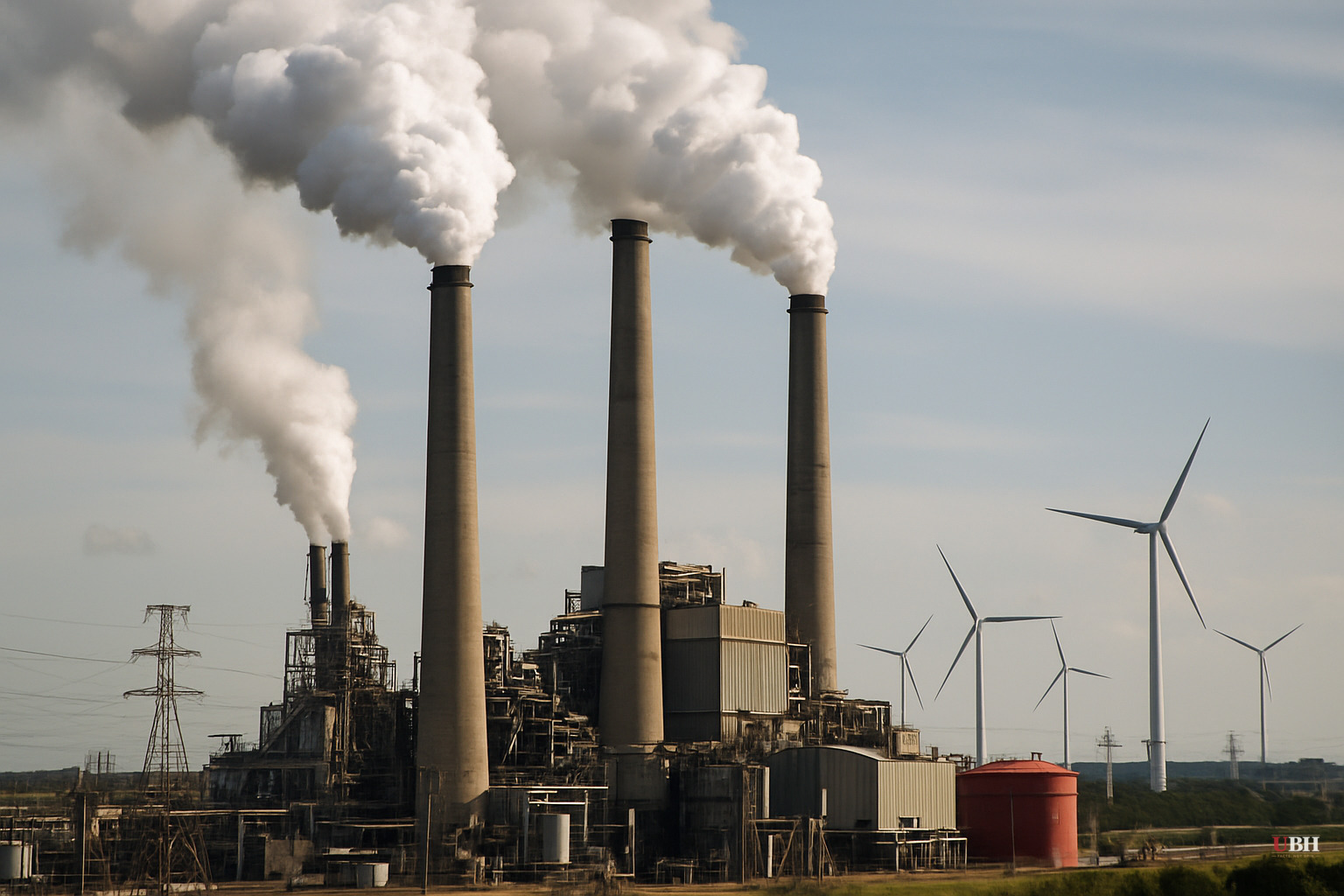
Emissions Set a Record. Again.
Global greenhouse gas emissions hit 41.0 billion metric tons in 2025, up from 40.7 billion metric tons in 2024, according to the 2026 Statistical Review of World Energy from the Energy Institute, published in partnership with Ember and with KPMG and Kearney. That's an increase of roughly 331 million metric tons.
On the report's adjusted basis, emissions rose 1.1% for the year. That's above the 10-year average annual growth rate of 0.9%, according to the Statistical Review.
This marks the fourth consecutive record year. The world set new emissions highs in 2022, 2023, 2024, and now 2025, per the report.
The Statistical Review has tracked global energy data for more than 70 years, originally published by BP before the Energy Institute took over stewardship. It remains one of the most cited annual references in the energy world.
Renewables Grew Faster Than Demand. Emissions Rose Anyway.
Global electricity generation rose by about 855 terawatt-hours in 2025. Renewable generation alone rose by roughly 861 terawatt-hours, according to the Statistical Review. Solar and wind more than covered the entire net increase in global electricity demand.
Coal-fired generation actually fell by about 59 terawatt-hours globally. Natural gas rose only modestly, by about 22 terawatt-hours. Oil-fired generation declined too.
So the power sector, on the numbers in this report, moved in the right direction for anyone worried about emissions. And total global emissions still went up.
That's a fair point for clean energy advocates to make. Without the renewable buildout, the emissions increase would have been larger, because fossil generation would have had to fill the entire demand gap instead of losing ground to coal and gas. The Statistical Review's own data backs that argument.
But it doesn't change the headline number. Emissions went up, not down, in a year when renewables did exactly what they were supposed to do in the power sector.
So Where Did the Extra Emissions Come From?
The Statistical Review's emissions figure is broader than just power plants. It includes energy-related CO2, industrial process emissions, flaring, and methane tied to fossil fuel production, transport, and distribution.
That means the story isn't really about electricity at all. It's about transportation fuels, industrial output, methane leaks, and flaring. Areas where the clean energy transition has made far less progress than in power generation.
North America accounted for 47.1% of the global increase in emissions in 2025, despite representing only 15.6% of total global emissions, according to the Statistical Review. That's a massive, disproportionate share of the year's growth coming from one region.
The report doesn't spell out exactly which sectors in North America drove that jump. That's a real gap in the available data and a legitimate open question heading into next year's review.
The Data So Far
Governments and companies have poured enormous sums into solar, wind, batteries, and EVs over the past decade, and the Statistical Review confirms that buildout accelerated again in 2025. That's real progress in the power sector specifically.
But the headline climate metric, total global emissions, keeps climbing anyway. Four straight record years is not a rounding error. It's a trend.
Anyone selling the idea that renewables alone will solve the emissions problem needs to reckon with this report. The power sector is decarbonizing at the margins. Transportation, industry, and methane are not keeping pace, and the data says so plainly.
The unresolved question is what, specifically, is driving North America's outsized 47.1% share of the global increase. The Energy Institute's full dataset, available through its website, breaks down regional and sectoral detail that could answer that question. It's worth watching whether next year's review shows that share shrinking or growing further.
Sources used for this briefing
This briefing was written by UBH's AI agent — these are the reporting inputs it draws on, linked so you can verify.


