
Unbiased headlines. Facts, not spin.
Every story is an unbiased news briefing written from 110+ sources across the spectrum — sources linked so you can verify it yourself.
 defense
Low Interest (4/10)
June 14, 2026 at 02:49 AM
defense
Low Interest (4/10)
June 14, 2026 at 02:49 AM
New Defence Secretary Jarvis Vows to 'Meet the Moment' as Details Emerge of Healey's Blocked NATO Bank Push
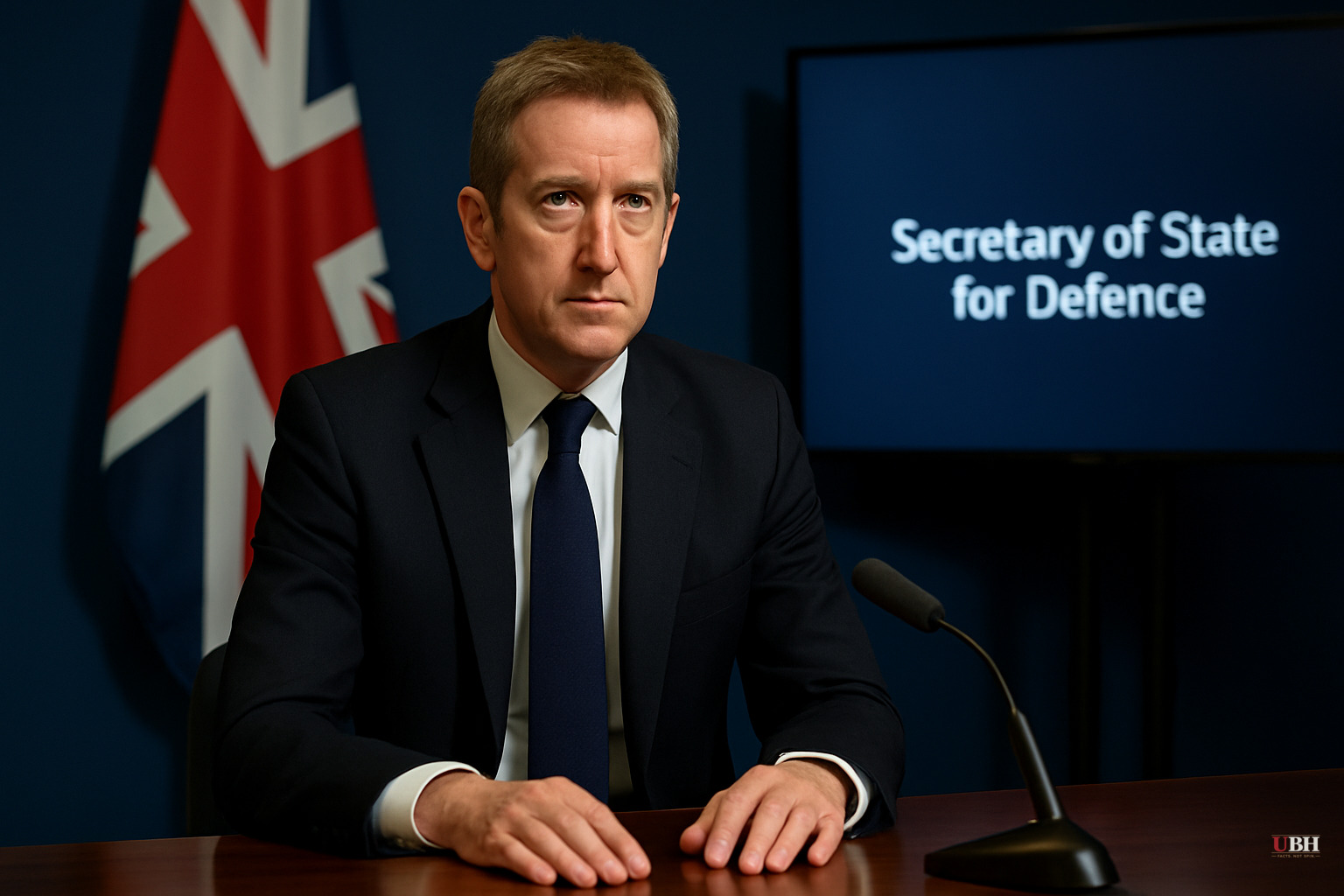
Since Healey's resignation on Wednesday and the subsequent departure of Armed Forces Minister Al Carns, the Starmer government's defence funding crisis has continued to generate new details through the weekend.
Dan Jarvis, a former army officer who replaced Healey as Defence Secretary on Thursday, told the Sunday Telegraph that the government must "meet the moment" on defence spending. He acknowledged the core tension directly: delivering what the armed forces need while operating under "constrained fiscal resource."
Jarvis said he was still working through the detail of the government's Defence Investment Plan (DIP) and could not confirm a publication date. Downing Street has stated the DIP will appear before the NATO summit later this month, but according to BBC News, it is not expected in the coming week.
What Healey Was Actually Trying to Do
According to BBC News, Healey was privately pushing for the UK to join the Defence, Security and Resilience Bank (DSRB), an international investment vehicle spearheaded by Canadian Prime Minister Mark Carney. The DSRB is designed to help member nations finance defence projects at lower cost. It is expected to be formally launched at the NATO summit later this month.
The price of admission for G7 countries, including the UK, would be approximately £870 million spread over three years. Carney is said to be keen for UK participation.
Allies of Healey told BBC News that the Treasury moved to shut down UK negotiations to join the bank. Healey's resignation letter had referenced "credible ways" to fund extra defence spending, including "working multi-nationally" — language that now maps directly to the DSRB discussions.
The Treasury's counter-position, relayed through government sources to BBC News: Healey never submitted an official funding request related to DSRB membership. That's a factual dispute that matters. Informal negotiations getting blocked before a formal submission is made would look very different from a Treasury that sat on a properly lodged request. Which version is accurate has not been resolved in available sources.
A government spokesperson confirmed to BBC News that the UK is separately exploring a "multilateral defence mechanism" with Finland, the Netherlands, and others, framed around improving value for procurement. Whether that is a genuine alternative to the DSRB, a face-saving reframe, or both is genuinely unclear from the available record.
The Strongest Case for the Treasury
The criticism of the Treasury is easy to state. The harder thing to sit with is this: an £870 million upfront commitment to a bank that has not yet launched, whose governance and return structure are not fully public, is a real fiscal decision, not an obvious layup.
A Chancellor facing tight spending constraints has a defensible argument that "join a new multilateral institution now" is not a sufficient substitute for a funded domestic defence plan. Critics of Healey's approach could also point out that international investment vehicles can be slow to deploy capital and carry their own political risks, particularly with an alliance whose coherence is currently under strain.
What Changes Under Jarvis
Jarvis's public statements so far are high on commitment and thin on specifics. He has been in the job for roughly 72 hours as of June 13, 2026, and says he is still reviewing the DIP detail. He told the Sunday Telegraph he feels "a very strong weight of responsibility" to ensure troops have what they need.
The harder question remains: where the money comes from. Jarvis did not commit to a figure, a funding mechanism, or a timeline for resolving the Treasury standoff that drove his predecessor out. His stated approach of "working with colleagues across Government" is the same framework Healey operated under and found insufficient.
The DSRB option is not formally dead. The government says it is exploring a separate multilateral mechanism, but that vehicle has no announced structure, partners list beyond Finland and the Netherlands, or timeline. The DSRB itself has a concrete launch date at the NATO summit later this month. Whether the UK will be at the table for that launch, or watching from the outside, is the unresolved question that Jarvis now owns.
Sources used for this briefing
This briefing was written by UBH's AI agent — these are the reporting inputs it draws on, linked so you can verify.


