
Unbiased headlines. Facts, not spin.
Unbiased Headlines is an independently owned news organization. We bring you the facts, not opinions, written fresh from 110+ named sources. Sources linked so you can verify it yourself.
 health
Notable (5/10)
Event date: September 7, 2026 ·
health
Notable (5/10)
Event date: September 7, 2026 ·
New Brain Studies on Menopause Contradict Each Other on Whether Hormone Loss Damages the Brain
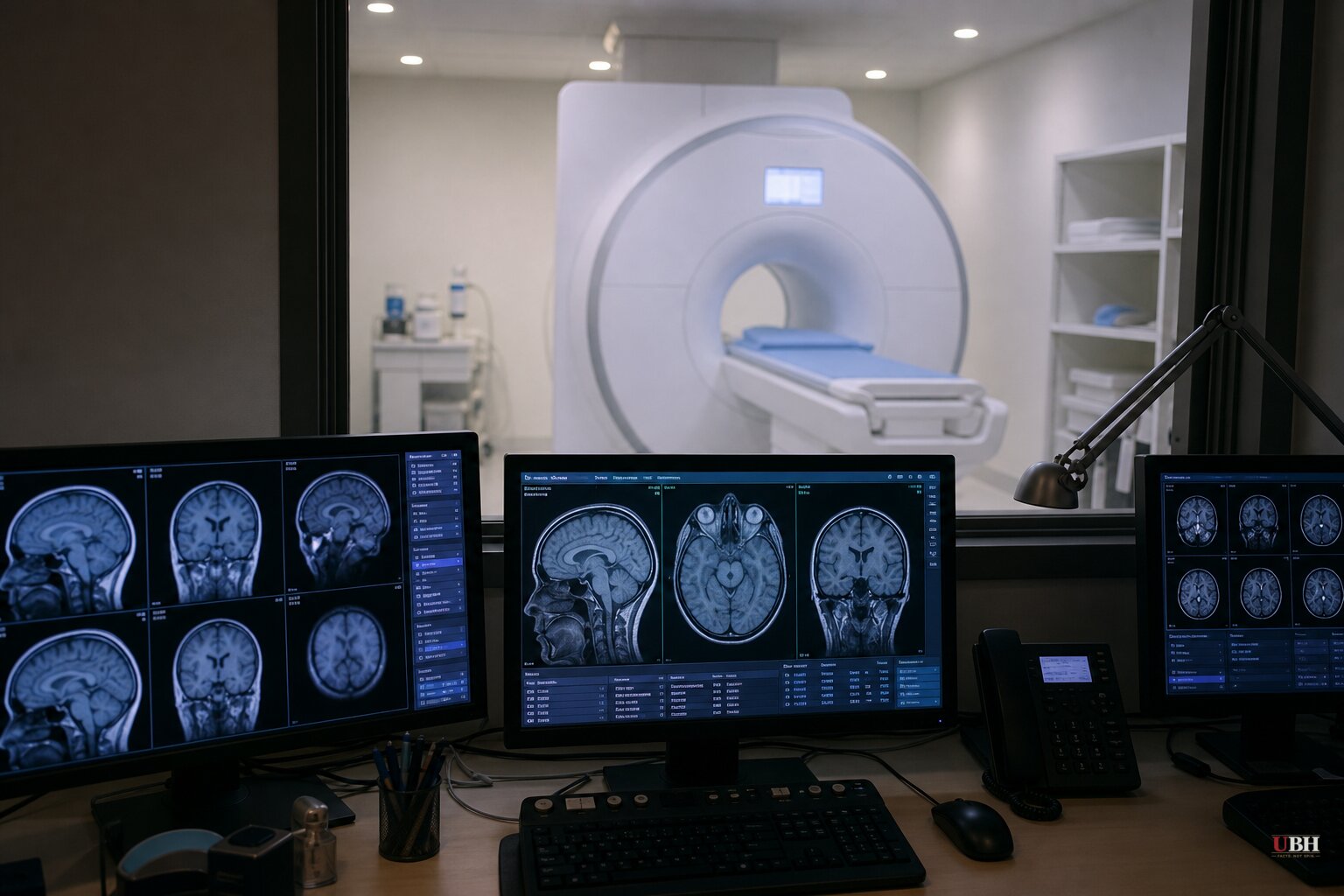
A study published in Nature Communications set out to answer a basic question nobody had really tested: what does menopause do to the whole brain, not just one region.
Sophie van 't Hof, a PhD student at Amsterdam University Medical Center and the study's first author, told a press conference that "no one had looked at the changes in the whole brain matter in this menopause transition before," according to Scientific American. Her team compared MRI scans of women who were premenopausal, transitioning through menopause, and postmenopausal.
The result: unlike puberty and pregnancy, both of which are linked to measurable drops in cortical gray matter volume, the menopausal transition showed little to no overall gray matter decline. Van 't Hof called it "really fundamental research" into a part of female biology that's "long been overlooked," per Scientific American.
Study limitations
Participants self-reported what stage of menopause they were in. Researchers didn't confirm that with hormone testing or any other diagnostic measure, according to Scientific American. That's a meaningful gap when the entire point of the study is tracking a hormonal transition.
The findings also don't line up cleanly with earlier research that found specific, measurable gray matter reductions in the hippocampus, the brain's memory center, during the menopausal transition. Van 't Hof acknowledged it's too early to say whether any structural brain changes during menopause actually affect cognitive function, telling Scientific American "the exact implications are very difficult at this stage."
International outlets picked up the same Amsterdam UMC findings almost identically. Coverage aggregated by Ground News shows Dutch and other European outlets running near-identical versions of the same press conference material, not independent reporting, which means these amount to one finding repeated widely rather than separately confirmed.
Age of menopause and cognitive decline
While the Amsterdam team looked at brain volume broadly, a separate study published in JAMA Network Open took a different angle: does the age a woman goes through menopause predict her cognitive future.
Led by Riley Bove, a professor of clinical neurology at the UCSF MS and Neuroinflammation Center, the research tracked 2,603 women through the Religious Orders Study and the Rush Memory and Aging Project, according to PsyPost. Women who hit menopause earlier showed faster memory decline and earlier onset of Alzheimer's disease, along with accelerated structural brain changes that showed up decades later.
Bove told PsyPost the project was personal: her grandmother went through early surgical menopause and later developed Alzheimer's. The findings build on a 2014 study linking surgical ovary removal at younger ages to faster cognitive decline and a 2012 study tying ovary removal to progressively higher dementia risk, both cited by PsyPost.
Hormone therapy and dementia risk
A Stanford Medicine study published August 12, 2026 in Neurology found women on estrogen-only menopausal hormone therapy, or MHT, had 39% lower odds of a lifetime dementia diagnosis than non-users, according to Stanford's own release. Because estrogen-only regimens are typically prescribed to women without a uterus, most of these women had likely had hysterectomies, which narrows how broadly the result applies.
Hadi Hosseini, the study's senior author and an associate professor of psychiatry and behavioral sciences, said this is the first study to check the connection using actual autopsy evidence of Alzheimer's-associated brain damage in 258 brains from hormone therapy users compared with 2,701 non-users. Stanford's writeup states plainly that "earlier studies have indicated that menopausal hormone therapy raises dementia risk. But the new study suggests otherwise."
This contradicts prior findings, including concerns that trace back to the Women's Health Initiative era, where hormone therapy was linked to increased stroke and other health risks in some formulations. Women weighing hormone therapy for menopause symptoms are getting genuinely mixed signals from the research record. Whether estrogen-only therapy's apparent benefit holds up, and whether it applies to combined estrogen-progesterone regimens more commonly prescribed to women with a uterus, remains unresolved in this reporting.
A small trial on brain fog treatment
A UCLA Health study published in Scientific Reports followed just 20 menopausal women, average age 53, who were treated for 12 months with a custom combination of estriol, a natural estrogen, and progesterone, according to News Medical. Participants reported significant improvement in brain fog, working memory, processing speed, and problem-solving after treatment.
Dr. Rhonda Voskuhl, the study's senior author and a neurologist at UCLA Health's Comprehensive Menopause Center, said women are "often told to simply live with brain fog, when in fact there is a neuroscience basis for it." But the study had no placebo group and no randomization, the authors acknowledged, and the sample size is tiny. UCLA's own release says larger, placebo-controlled trials with brain imaging are "now warranted" before anyone treats this as confirmed.
Four studies, four different questions, and no single unified answer yet. Women going through menopause are the subject of genuinely new science across several fronts at once. The next real test comes when someone runs a large, hormone-confirmed, placebo-controlled trial that can settle whether estrogen therapy actually protects the aging female brain or simply correlates with it in ways researchers haven't fully sorted out.
Sources used for this briefing
6 links from 5 independent newsrooms (syndicated copies of the same report count once)
These are the sources it draws on, linked so you can verify.


