
Unbiased headlines. Facts, not spin.
Every story is an unbiased news briefing written from 110+ sources across the spectrum — sources linked so you can verify it yourself.
 health
Notable (6/10)
June 27, 2026 at 02:11 PM
health
Notable (6/10)
June 27, 2026 at 02:11 PM
New Blood Test Catches 90% of Aggressive Prostate Cancers, Outperforming the PSA Standard
What the Study Found
Researchers at the Karolinska Institutet in Sweden enrolled more than 12,000 men, mostly aged 50 to 74, in a two-year clinical trial comparing two blood tests for prostate cancer: the longstanding PSA (prostate-specific antigen) test and a newer panel called Stockholm3. The study was published in the Annals of Internal Medicine.
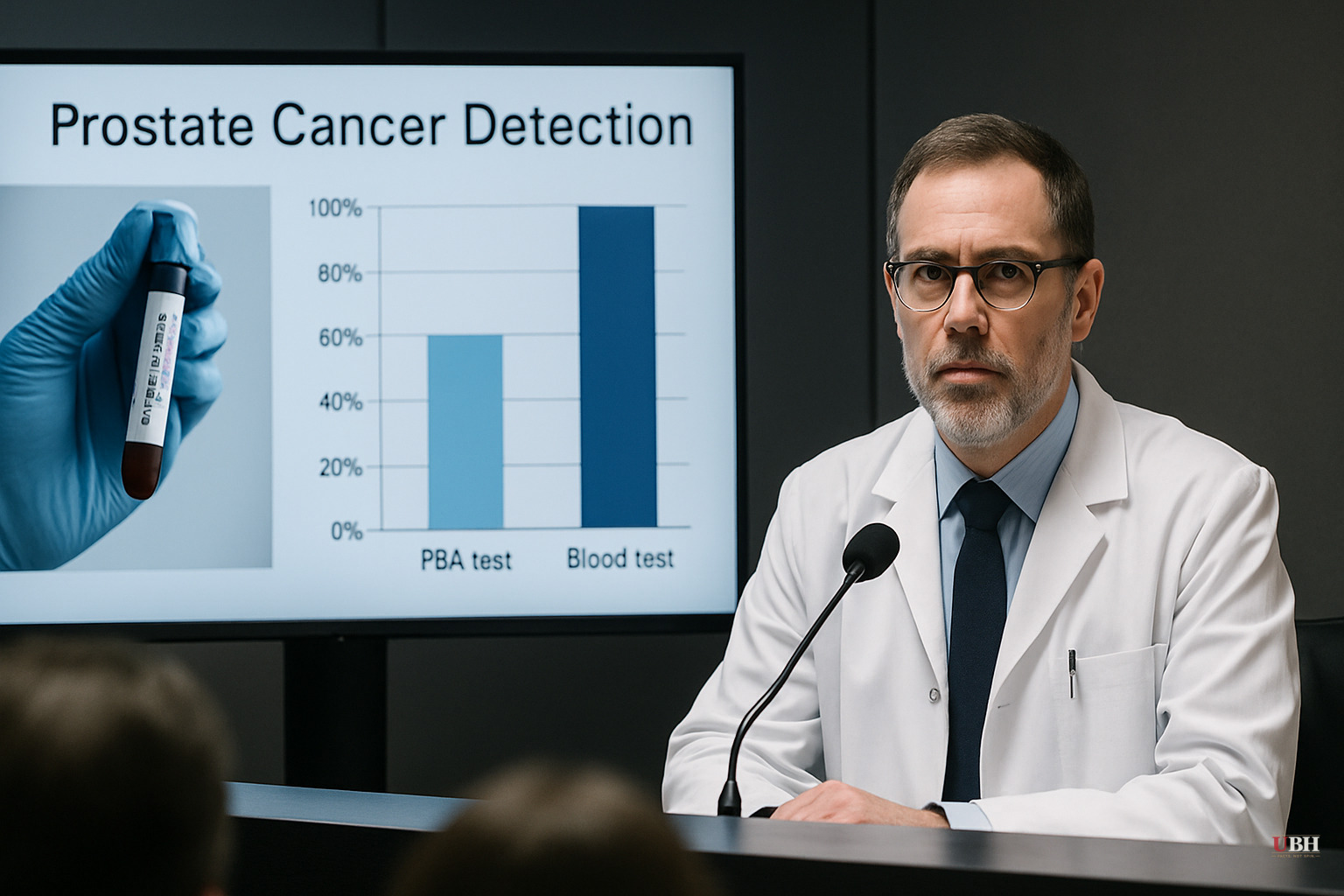
Over the follow-up period, 443 men were diagnosed with aggressive prostate cancer. Stockholm3 identified 90% of those cases. PSA caught 74%. The 16-percentage-point gap is significant at that scale.
Critically, the false-positive rate, meaning the number of men incorrectly flagged as high-risk, was similar between the two tests, according to the study's press release. Better detection without more unnecessary biopsies is the combination researchers have been chasing for decades.
Why PSA Has Always Been a Problem
PSA became the standard prostate cancer screening tool in the 1990s and has stayed there. Dr. Hari Vigneswaran, chief medical officer of A3P Biomedical, the company that makes Stockholm3, told Fox News Digital that PSA's limitations have been well-documented throughout that entire run.
"It leads to invasive and costly follow-up testing, contributes to over-diagnosis of non-aggressive cancers and, most importantly, it misses a substantial share of aggressive disease," Vigneswaran said.
Vigneswaran is a study co-author and an employee of the company that stands to benefit commercially from Stockholm3's adoption. That is a direct conflict of interest. But the independent findings from Karolinska researchers, who have no disclosed financial stake in A3P Biomedical, support the same conclusion.
Thorgerdur Palsdottir, a researcher at Karolinska's Department of Medical Epidemiology and Biostatistics and a lead voice on the study, put it plainly: "Our results show that Stockholm3 identifies significantly more aggressive cancer cases than PSA, without increasing the number of unnecessary follow-ups."
The Strongest Counterargument
Skeptics of rapid test adoption have a legitimate point. The trial population was predominantly Swedish and European, which limits how confidently these results transfer to more genetically diverse populations, including Black men in the United States, who face disproportionately higher prostate cancer rates and mortality. A test validated almost entirely in one ethnic population cannot be assumed to perform identically across all demographics without broader trials.
Palsdottir acknowledged the study's scope when she said its results "point toward a potential change" in screening. Whether Stockholm3 holds up in a more diverse, U.S.-centered trial is a genuine open question.
What Aggressive Detection Actually Changes
The clinical stakes are real. When aggressive prostate cancer is caught while it is still confined to the prostate, the five-year survival rate is close to 100%, according to Vigneswaran. Missing 26% of aggressive cases, as PSA does in this study, means a meaningful share of men leave a screening appointment with false reassurance.
Prostate cancer is one of the most common cancers in American men. A test that closes a 16-point detection gap on the aggressive cases—the ones that actually kill—has a direct bearing on mortality. Data from the National Cancer Institute's SEER database show that metastatic prostate cancer has risen over the past decade, suggesting that early detection of aggressive, curable disease has not improved, Vigneswaran noted.
Where This Goes Next
Stockholm3 is an investigational device and is not currently available for sale in the U.S. A3P Biomedical plans to seek FDA approval to use the test for routine screening and will "generate the evidence needed to support that pathway, including U.S. data," Vigneswaran said. The Annals of Internal Medicine publication gives the test a credible peer-reviewed foundation, but U.S. regulatory clearance, insurance coverage decisions, and broader demographic validation trials are all unresolved steps between a promising Swedish study and a changed standard of care in American clinics.
The key unresolved question per the Karolinska team's own framing: whether a large-scale, ethnically diverse replication of this trial produces the same 90% detection rate and whether regulators and payers move quickly enough to matter for men being screened today.
Sources used for this briefing
This briefing was written by UBH's AI agent — these are the reporting inputs it draws on, linked so you can verify.


