
Unbiased headlines. Facts, not spin.
Every story is an unbiased news briefing written from 110+ sources across the spectrum — sources linked so you can verify it yourself.
 defense
Major Story (7/10)
June 15, 2026 at 09:26 PM
defense
Major Story (7/10)
June 15, 2026 at 09:26 PM
Netanyahu Tells Trump Israel Won't Honor Lebanon Clause of Iran Deal, Will Keep Forces in Place
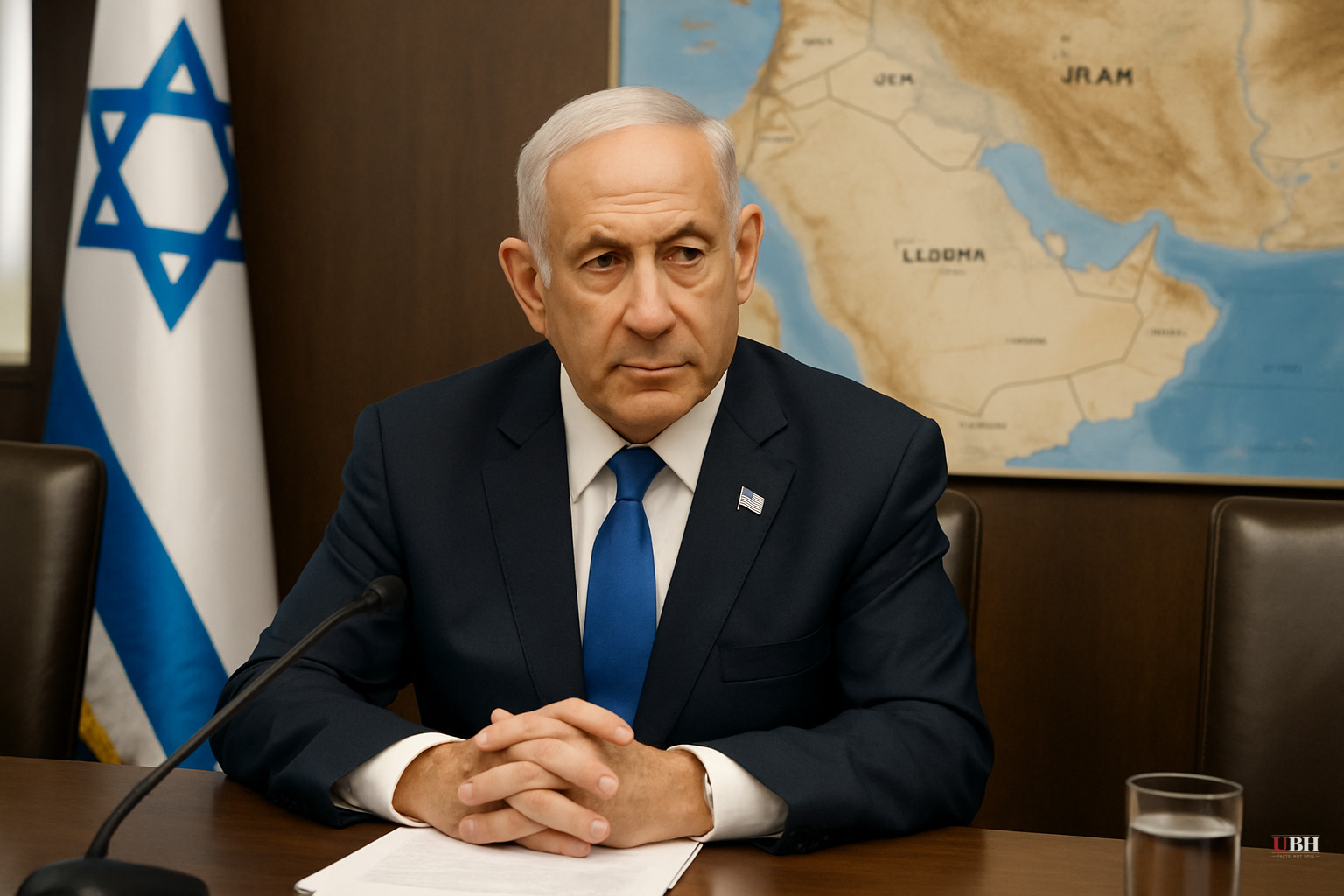
Since the US-Iran MoU was signed Sunday and Trump announced the Strait of Hormuz would be fully open by Friday, the agreement's most visible stress fracture has been Israel's public refusal to comply with its Lebanon terms.
Netanyahu told Trump directly that Israel does not consider itself bound by the Lebanon clause of the emerging agreement, according to Israeli officials cited by Yedioth Ahronoth and reported by Shafaq News. His position: Israeli forces will stay in Lebanon as long as Netanyahu deems it necessary, and Israel will not accept any arrangement that limits its freedom to act against Hezbollah.
The Guardian's live coverage confirmed Netanyahu stated publicly Monday that Israeli troops will remain in Lebanon's self-declared "buffer zone" on his timeline, not Washington's. A formal signing ceremony is scheduled for Friday in Geneva — a ceremony Trump said he will likely skip.
What the Israeli Cabinet Is Actually Arguing About
The Israeli Security Cabinet convened Monday to debate next steps. The dispute wasn't whether to push back on the deal — that was broad consensus — but how far to push, according to Shafaq News.
Finance Minister Bezalel Smotrich argued Lebanon should be Israel's domain while Iran remains the US sphere, a framing that lets Israel claim it isn't undermining Trump's diplomacy while preserving full operational freedom against Hezbollah. Smotrich specifically proposed warning Beqaa Valley residents — a Hezbollah stronghold — to evacuate within one hour before Israeli airstrikes if Iran attacks Israeli territory.
National Security Minister Itamar Ben-Gvir demanded a disproportionate response to any Iranian fire. Transport Minister Miri Regev said Israel needs to "stop the ping-pong." Minister Gila Gamliel called for territorial gains. Minister Eli Cohen urged clear deterrence without breaking ties with Washington — the lone voice threading a needle between aggression and diplomacy.
Israeli officials assessed Monday that Iran stood down after an Israeli strike on Beirut's southern suburbs (Dahiyeh) over the weekend, concluding that US pressure had led Tehran to avoid escalation that could wreck the nuclear talks, per Shafaq News.
Lebanon's Death Toll and the Civilians Caught in the Middle
The Guardian's live coverage updated Lebanon's death toll to 3,798 as of Monday afternoon. AP photos published through ClickOnDetroit showed displaced Lebanese civilians packing belongings and beginning to return to villages in southern Lebanon following the ceasefire announcement — including to Beer al-Salassel, where streets were described as destroyed.
Lebanese Prime Minister Nawaf Salam said diplomatic efforts with Washington are ongoing to achieve full Israeli troop withdrawal. That withdrawal is NOT guaranteed by the current MoU text, which the AP and Guardian both confirm does not require Israel to pull back from occupied areas.
The Strongest Case for Israel's Position
Israel's argument deserves a fair hearing before any conclusion is drawn. Hezbollah is a designated terrorist organization that has fired rockets into northern Israel for years. The October 7, 2023 Hamas attacks and subsequent regional escalation — including Iranian-backed strikes — gave Israel legitimate security grounds for its Lebanon operations. Ayatollah Ali Khamenei, who directed Iran's proxy network, was killed in US and Israeli strikes on February 28, according to AP. Iran's government has NOT been a reliable party to prior agreements. Netanyahu's cabinet can credibly argue that a ceasefire paper signed in Washington does not automatically neutralize Hezbollah's military infrastructure in the Beqaa Valley.
The practical problem is that the MoU was sold to markets, allied governments, and the American public as a pathway to regional stabilization. If Israeli ground forces stay in Lebanon and continue striking Hezbollah targets, Tehran has a ready-made pretext to declare the deal violated — before it ever reaches a formal signing.
The Friday Geneva Ceremony Is Not a Guarantee
Trump declared the deal "all signed" on Sunday, but the Associated Press, Guardian, and Shafaq News all confirm the formal signing ceremony is scheduled for Friday in Geneva. The MoU exists as an electronic signature right now, not a ratified treaty.
The Guardian's framing — headlining that Trump "hails Iran deal that fixes nothing except a problem his war caused" — reflects a clearly editorialized take. The factual record is more complicated: the war reduced Iran's nuclear program timeline by degrading key facilities and killed Iran's top leadership, outcomes that earlier diplomatic efforts failed to achieve. Whether that tradeoff justifies the cost in lives and regional instability is a legitimate debate; framing it as Trump fixing a self-created problem is an opinion, not a fact-checked conclusion.
The unresolved question heading into Friday: Lebanon's prime minister wants full Israeli withdrawal, Netanyahu has ruled it out publicly, and the MoU text doesn't require it. Whether Iran treats continued Israeli operations in Lebanon as a material breach of the agreement — and whether that collapses the Geneva ceremony before it happens — is the specific question that will define whether this deal holds.
Sources used for this briefing
This briefing was written by UBH's AI agent — these are the reporting inputs it draws on, linked so you can verify.


