
Unbiased headlines. Facts, not spin.
Every story is an unbiased news briefing written from 110+ sources across the spectrum — sources linked so you can verify it yourself.
 defense
Major Story (8/10)
July 6, 2026 at 04:52 PM
defense
Major Story (8/10)
July 6, 2026 at 04:52 PM
Netanyahu Publicly Urges Trump to Block Turkey's F-35 Bid as NATO Summit Opens in Ankara
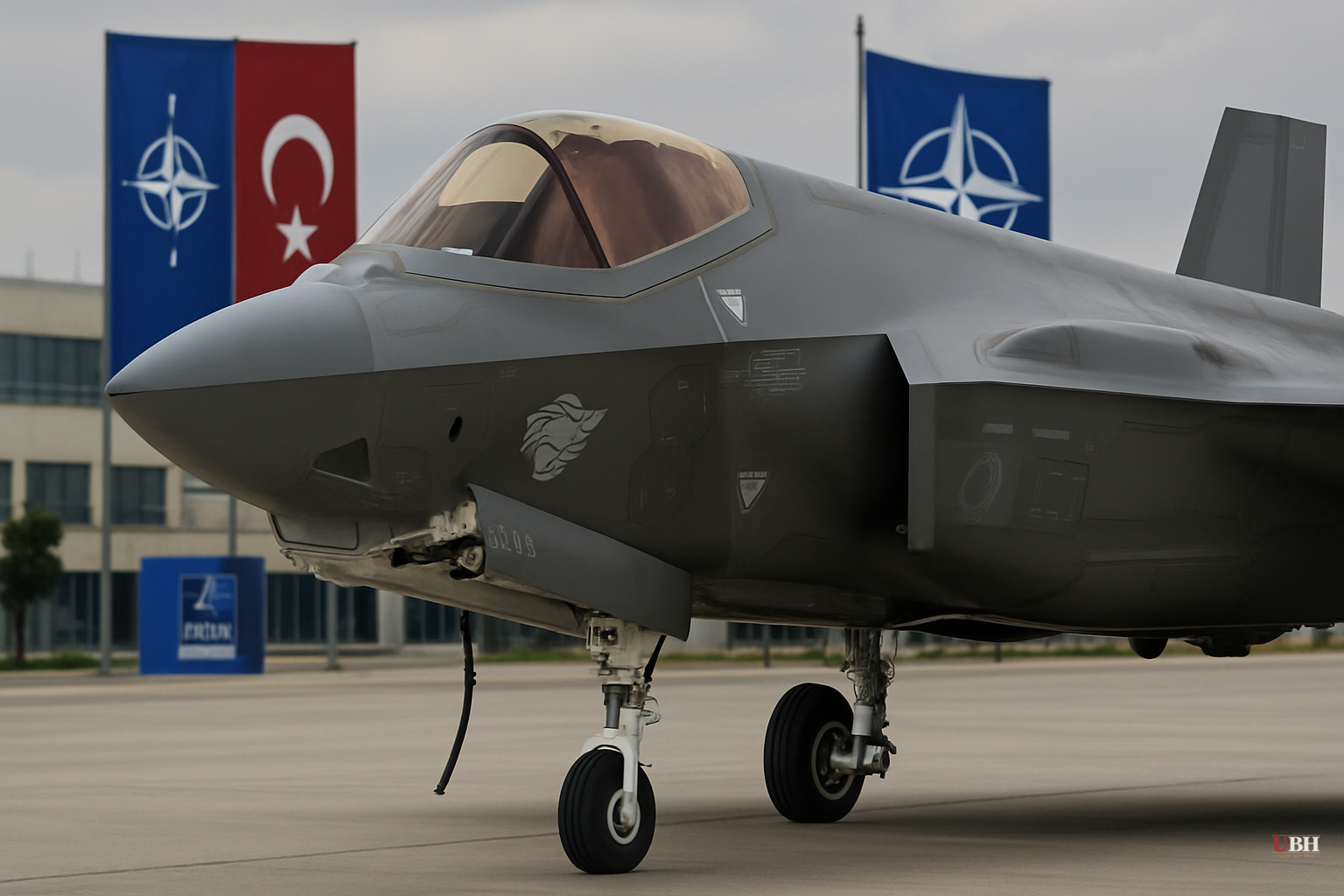
Since NATO allies began converging on Ankara for this week's summit, two weapons disputes have dominated the agenda before the first formal session: whether Turkey gets back into the F-35 program, and whether Ukraine gets more Patriot interceptors.
Netanyahu Goes Public Against the F-35 Deal
Israeli Prime Minister Benjamin Netanyahu appeared on Fox & Friends Monday and delivered an unusually direct public appeal to Trump not to restore Turkey's place in the F-35 program. "Turkey is a great country, but it's governed by a man who calls openly for the annihilation of Israel," Netanyahu said. "He occupies half of Cyprus, a NATO country. He's threatening Greece, another NATO country. And he talks openly about conquering Jerusalem."
Netanyahu framed the issue as one of regional balance, not bilateral grievance. "I don't think they should be given F-35s or the engines for their fighter jets because that'll upset the power balance in the Middle East, which is ultimately guaranteed by Israeli air superiority and also by America's posture in the Middle East."
He also cited statements from Turkish officials: "His foreign minister said that the Jewish state hasn't a place among humanity. His interior minister said he looks forward to being the governor of Jerusalem."
What Turkey Is Actually Asking For
Turkey's readmission to the F-35 program is one of President Recep Tayyip Erdoğan's stated goals at this summit, according to Fox News Digital. Turkey was expelled from the multinational program in 2019 after taking delivery of Russia's S-400 air defense system, which U.S. officials feared could be used to reverse-engineer intelligence about the F-35's capabilities. Washington followed that expulsion with sanctions on Turkey's defense procurement agency in 2020.
Since then, the strategic calculus has shifted. The Trump administration recently approved a separate $700 million arms sale to Turkey. U.S. Ambassador to NATO Matthew Whitaker discussed both that sale and the upcoming summit with Fox News. Former U.S. Ambassador to Turkey James Jeffrey, who served as Trump's special envoy for Syria during his first term, told Fox News Digital that Turkey is "essential to maintaining the U.S. perimeter around Eurasia" given its military strength, geographic position, and willingness to project power in contested areas including the Black Sea.
Trump himself was unambiguous about his posture before departure. "I'm going because of Erdoğan," he told reporters on June 24, calling the Turkish leader "a friend" and "a respected leader." White House spokesperson Anna Kelly confirmed Trump will hold a bilateral meeting with Erdoğan at the summit.
The Strongest Counterargument to Netanyahu's Position
Turkey commands the second-largest military in NATO after the United States. Its control of the Bosporus strait gives it unique leverage over Russian naval access to the Black Sea, a chokepoint that has mattered enormously since Russia's 2022 invasion of Ukraine. Sidelining Turkey over its relationship with Israel, critics of Netanyahu's position would argue, risks pushing Ankara further toward Moscow at precisely the moment NATO needs every lever it has. Erdoğan said in 2023, "I trust Russia just as much as I trust the West" — but Turkey has also supplied Ukraine with Bayraktar drones and backed Ukrainian NATO membership. The relationship is complicated, not simply adversarial.
Jeffrey's framing captures this: Turkey is a difficult ally, but it is still an ally with capabilities no substitute can replicate.
Meanwhile, Ukraine Is Running Out of Patriot Interceptors
President Volodymyr Zelensky arrived at the summit with a separate but equally urgent shopping list. A major overnight strike on Kyiv killed 14 people, and Zelensky said Monday that while Ukrainian forces intercepted drones and cruise missiles effectively, ballistic missiles are getting through.
"Our warriors performed well today in intercepting drones and cruise missiles, but unfortunately not Russian ballistic missiles," Zelensky said in a statement. "The reason lies in the insufficient supply of interceptor missiles."
His ask is specific: NATO members stop stockpiling Patriot missiles in domestic warehouses and transfer them to Ukrainian units. "Missiles for Patriots are needed not in warehouses right now, but in Patriot units in Ukraine," he wrote Sunday night. Ukraine's Foreign Minister Andrii Sybiha backed that demand Monday ahead of the summit sessions, stating that "all decisions on air defence are needed now" and that "the time for weak steps has passed," according to The Guardian.
Zelensky is also scheduled for a face-to-face meeting with Trump in Ankara this week. Trump held separate calls with both Zelensky and Russian President Vladimir Putin over the weekend. The Ankara summit was already set to be the venue for Trump's next direct push on the ceasefire track.
The Open Question Hanging Over Ankara
The F-35 and Patriot debates are not procedurally linked, but they converge on the same strategic problem: how much is NATO willing to pay, and to whom, to shore up collective defense right now. Netanyahu's public intervention before the summit has raised the diplomatic stakes for Trump. Any signal toward Turkey on F-35s will be read in Jerusalem as a rebuke, and any signal away from Turkey risks alienating the host of the summit and one of the alliance's most militarily capable members. Whether Congress will go along is an additional constraint. Fox News Digital noted that Trump's Turkey arms sale proposal had already triggered "congressional questions" before the summit opened.
Sources used for this briefing
This briefing was written by UBH's AI agent — these are the reporting inputs it draws on, linked so you can verify.


