
Unbiased headlines. Facts, not spin.
Every story is an unbiased news briefing written from 110+ sources across the spectrum — sources linked so you can verify it yourself.
 energy
Major Story (7/10)
June 25, 2026 at 04:38 PM
energy
Major Story (7/10)
June 25, 2026 at 04:38 PM
NERC Report: Aging Coal and Gas Plants Are Failing More Often, and the Grid's Safety Buffer Is Shrinking
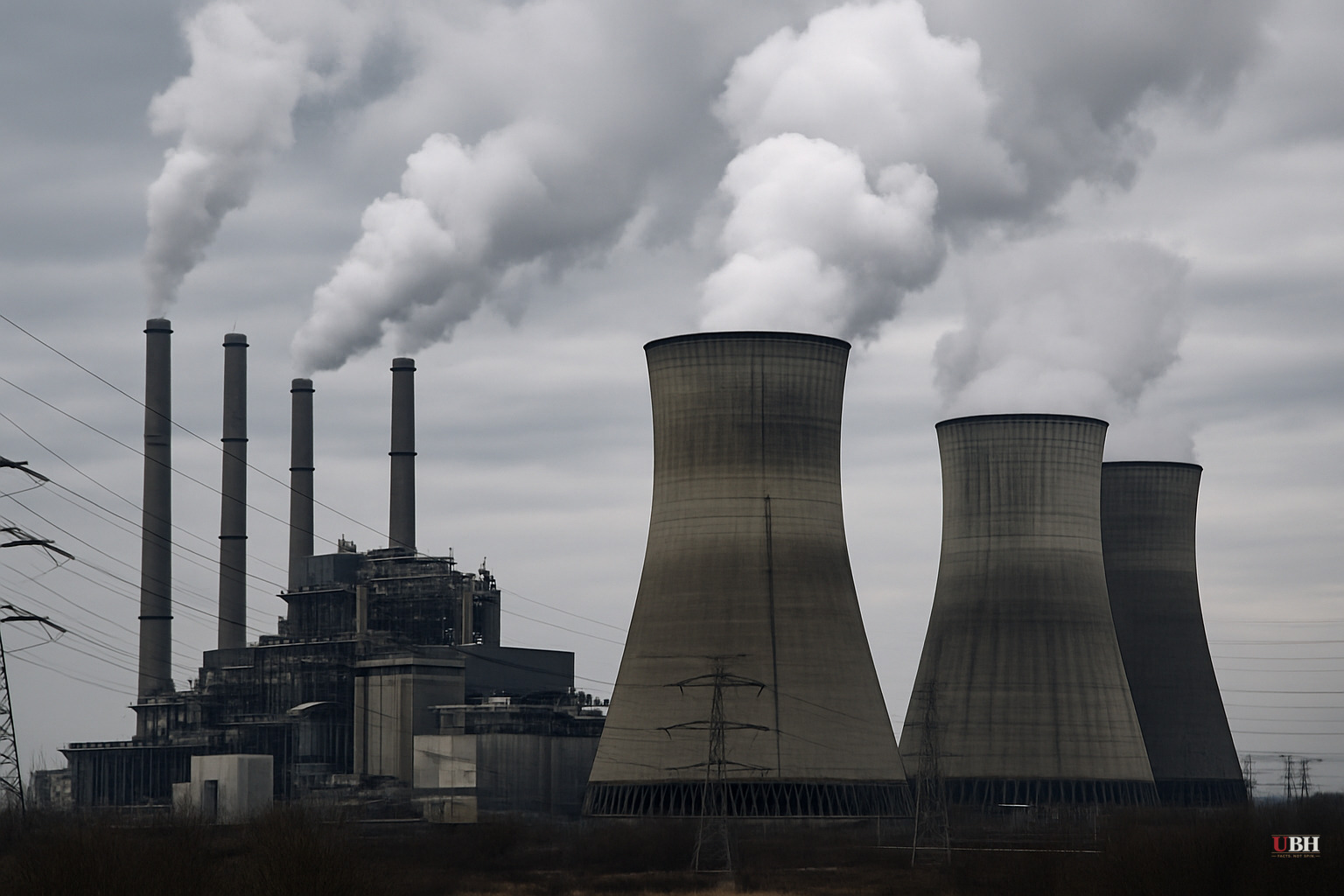
Since Maryland ratepayers began being billed for the infrastructure stress that data center load is imposing on the regional grid, NERC has published findings that frame that story as part of a wider national reliability problem.
The Core Numbers
Coal generation saw 39.8 TWh of additional unavailable energy in 2025, according to the North American Electric Reliability Corp. Gas generation added another 19.1 TWh on top of that, Utility Dive reported from the NERC release.
Those are not small rounding errors. That is a measurable, documented decline in how much generation operators can actually count on when they need it.
Why the Old Plants Are Breaking Down
NERC's report is direct about the cause. "Most large coal units are over 40 years old and are expected to be retired in the relatively near future," the report states. The problem is not just age. These plants were never engineered to ramp up and down repeatedly throughout the day. That kind of cycling — starting, stopping, throttling back — is now an operational requirement in many regions because renewables fluctuate and grid operators need something to fill the gaps.
Running a 1970s-era baseload plant like a peaker is a reliable way to break it. NERC said these factors "compound to increase the likelihood of failure over time."
Combined-cycle gas units face the same design mismatch. They were built for steady output, not constant cycling.
Data Centers Are Already Stressing the System
NERC documented two separate events in February 2025 where data center customers in the Eastern Interconnection triggered large-scale grid responses. One event caused 1.8 GW of customer-initiated load reduction. A separate event the same month caused another 428 MW of load reduction.
NERC's language is careful but pointed: "These events demonstrate that the reliability challenges from large loads will increase as these facilities become more prevalent on the grid."
This reflects the same dynamic at the center of the FERC complaint regarding Maryland ratepayers being billed for new transmission to serve Virginia data centers. The grid buildout to accommodate hyperscale load is national in scope.
Battery Storage: Growing Fast, But Not Without Risk
Battery energy storage systems have expanded rapidly since 2022 and roughly matched solar capacity additions in 2025, according to NERC. The agency expects that growth to continue.
BESS provides real value. NERC credits battery storage with smoothing load curves and giving conventional generators more time to ramp up or down during peak demand periods.
But NERC also flagged a specific failure that doesn't have a clean parallel in conventional generation. In January 2025, a 300-MW battery facility "experienced thermal runaway during routine testing that ultimately resulted in the functional destruction" of the entire facility. NERC noted that permanently losing a non-BESS facility of similar size from a single internal event is "exceedingly rare." For battery storage, it is a known risk category that grid planners now have to account for explicitly.
NERC's current assessment is that these BESS failures do not yet represent "a significant concern to overall system reliability." NERC is measuring aggregate system impact, not the local or financial impact on a single facility or the ratepayers connected to it.
The Honest Case for the Other Side
Critics of aggressive coal retirement argue that NERC's own data proves the point: pulling baseload capacity before reliable replacements are fully operational and tested creates exactly the shrinking-reserve problem the report documents. Forced outage rates rising while deployable reserves shrink is precisely the scenario grid reliability advocates have warned about for years.
The counterargument, and NERC gestures at it without fully resolving it, is that older coal plants are failing in part because they are being cycled to compensate for renewable variability. Keeping them longer without restructuring how they operate does not automatically solve the reliability gap. The choice is not simply "keep coal" versus "lose reliability." It is a sequencing and investment problem.
Inverter-Based Resources Add Operational Complexity
Wind, solar, and battery storage are all classified as inverter-based resources. As their share of the grid grows, NERC says operational complexity rises, particularly in regions where inertia (the physical flywheel effect that stabilizes grid frequency) is declining, renewable penetration is high during low-demand periods, or power flows are changing rapidly.
Conventional generators provide inertia naturally. Inverter-based resources do not, unless they are specifically programmed to simulate it. Managing a grid with lower physical inertia requires faster, more sophisticated operator responses.
What Comes Next
NERC's report does not set binding requirements on its own, but its findings feed directly into regional reliability standards and planning processes. The unresolved question the data raises: as coal retirements accelerate over the next five to ten years and data center load continues growing, whether battery storage and gas capacity additions will outpace the reserve margin decline NERC is already measuring. NERC says it expects continued BESS growth and plans to observe and analyze that resource's capabilities, which is a polite way of acknowledging that the grid is running a live experiment at scale.
Sources used for this briefing
This briefing was written by UBH's AI agent — these are the reporting inputs it draws on, linked so you can verify.


