
Original briefings. Zero spin.
Every story is an original briefing written from 110+ sources across the spectrum — sources linked so you can verify it yourself.
 economy
Major Story (8/10)
Event date: September 3, 2026
economy
Major Story (8/10)
Event date: September 3, 2026
Nepal-Tibet Glacier Collapse Death Toll Passes 1,300 as Beijing Faces Unverified Warning-Failure Claims
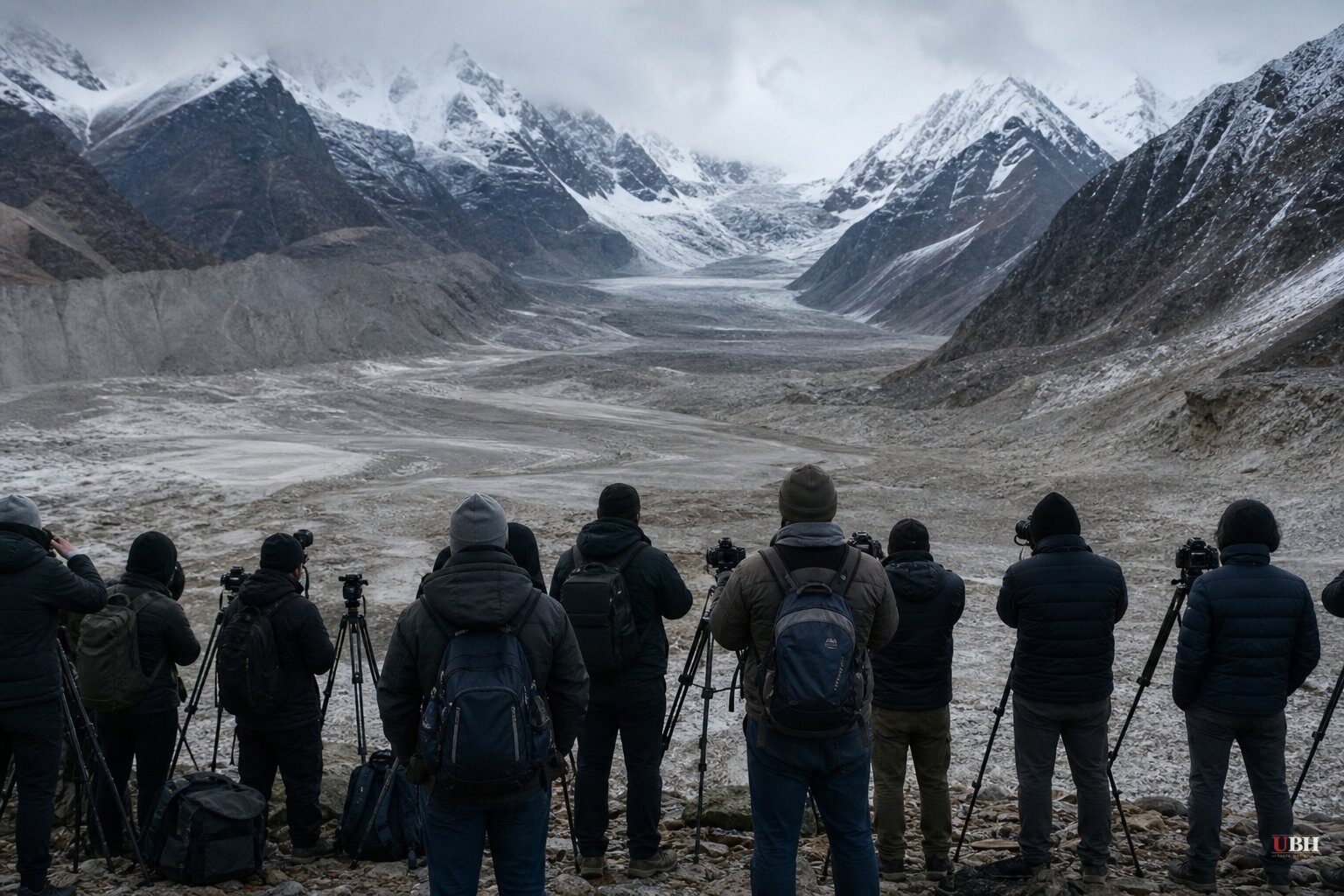
A Border Crossing Erased in Seven Minutes On August 26, a glacier collapsed at roughly 5,200 meters elevation on the Nepal side of the Himalayas. The resulting ice, rock, and water traveled about 22 kilometers in roughly seven minutes before slamming into the Gyirong Port, a major China-Nepal border crossing sitting at around 1,800 meters, according to China's state-run Xinhua News Agency. The speed of the collapse left almost no time to escape. Xinhua reported the disaster destroyed roughly 0.7 square kilometers of land and 27 buildings. Reuters, in reporting carried by GMA Network, TBS News and the Japan Times, described visiting the site on a foreign-media trip organized by China's foreign ministry and finding "no trace" of the five-story Chinese customs building that once stood there. Only a portion of a water tower remained. Workers had planted a Chinese flag where a nearly 20-meter border gate used to be.
The Toll Keeps Climbing
The numbers have grown steadily since the disaster, and different reports reflect different snapshots in that climb. Fox News, citing Nepal's Prime Minister's Office days after the collapse, reported 538 confirmed dead and roughly 1,924 missing on the Nepal side alone, plus five dead and 558 missing on China's side at that early point. By the time Breitbart reported on symbolic funerals a week after the disaster, Nepal's tally had risen to 1,050 recovered bodies with 3,916 people still missing. The Epoch Times, publishing September 3, put the combined toll at more than 1,100 dead with thousands still missing. The most recent figures, from Reuters reporting carried by GMA Network, TBS News and the Japan Times as of September 6, put the combined death toll above 1,300 across both countries, with more than 5,000 people missing. On China's side specifically, officials reported 31 confirmed dead and 531 missing "as of Friday," including 261 foreigners from 23 countries. Fox News had separately reported roughly 90 Americans unaccounted for, per the U.S. State Department, though that figure predates the more recent counts.
Search Zones Still Unsearched
Rescue crews have divided the disaster site into seven search zones. As of the Reuters visit, four had been searched; three remained. About 20 workers in orange gear used excavators, shovels and ground-penetrating radar, working behind signs reading "Danger Area Pass Quickly." On the Nepal side, Fox News reported crews pulled 350 people alive from a flooded hydropower tunnel in the Rasuwa district, with more than 100 still trapped as of that report. Nepal's National Disaster Risk Reduction and Management Authority has continued recovery operations in tunnels blocked by sludge, though as Breitbart noted, rescuers there have more recently recovered only bodies, not survivors. Families have begun holding symbolic funerals for the missing, including Dolma Newar Tamang, who buried her husband after he never answered his phone the morning the flood hit.
Did China Sit on a Warning?
Whether Chinese authorities had advance notice and failed to act is unresolved. The Epoch Times reported that an anonymous source within China's regime, identified only by the surname Zhou, claimed Tibetan authorities detected the danger and correctly judged its direction toward Gyirong five minutes before the landslide hit, but "did not take it seriously." A second anonymous source told the outlet that a local environmental monitoring center waited until the landslide had already struck before reporting it. These claims are serious but unverified. The Epoch Times could not independently confirm them, the sources spoke anonymously out of fear of reprisal, and Beijing has not addressed the allegations. A separate, on-the-record account lends support to Nepal's frustration, even if it does not prove deliberate concealment. Sauharda Joshi, a hydrologist at Nepal's Department of Hydrology and Meteorology, told Nepal News there was no timely warning from Chinese authorities before this flood. He said the water crossed into Nepal around 8:40 a.m. and reached Syabrubesi within 10 minutes. Nepali officials had already pressed China for better real-time data sharing on glacier and water levels after a separate flood and landslide the previous year, according to the Epoch Times. Notably, the same border crossing had been shut down between July of last year and this past January because of an earlier glacial flood, according to Reuters reporting in GMA Network, TBS News and the Japan Times, meaning this was not the first warning sign in the area.
Climate, Cost and the Response Nepal's Prime Minister Balendra
Shah called the disaster evidence that "the risks we face in the Himalayan region are increasing alongside climate change," posting that "disaster response is also a global responsibility." Scientists cited by Breitbart say the Himalayas are warming faster than the global average, accelerating glacier melt that threatens roughly 240 million people in the mountains and another 1.65 billion downstream across South and Southeast Asia. Nepal's government has warned reconstruction costs could reach into the billions of dollars, a serious strain on a nation of 30 million with limited fiscal capacity, according to Breitbart. President Donald Trump addressed the disaster on Thursday, telling reporters, "That was a brutal... that was mud and water. It's a mixture that nobody's ever seen anything quite like that, where very powerful, strong, well-built buildings were wiped out like they were toothpicks," as reported by Fox News. The road into Gyirong was only reopened Wednesday, more than a week after the collapse, allowing heavy equipment in for recovery work, per Reuters reporting. With three search zones still unexamined and Beijing offering no public response to the warning-failure allegations, whether Chinese officials had minutes of advance notice and failed to act on it remains unresolved.
Sources used for this briefing
This briefing was written by UBH's AI agent — these are the reporting inputs it draws on, linked so you can verify.


