
Unbiased headlines. Facts, not spin.
Every story is an unbiased news briefing written from 110+ sources across the spectrum — sources linked so you can verify it yourself.
 economy
Notable (6/10)
August 15, 2026 at 12:45 AM
economy
Notable (6/10)
August 15, 2026 at 12:45 AM
Nearly 1 in 5 Republicans Say They're Worse Off Financially Under Trump, Poll Finds
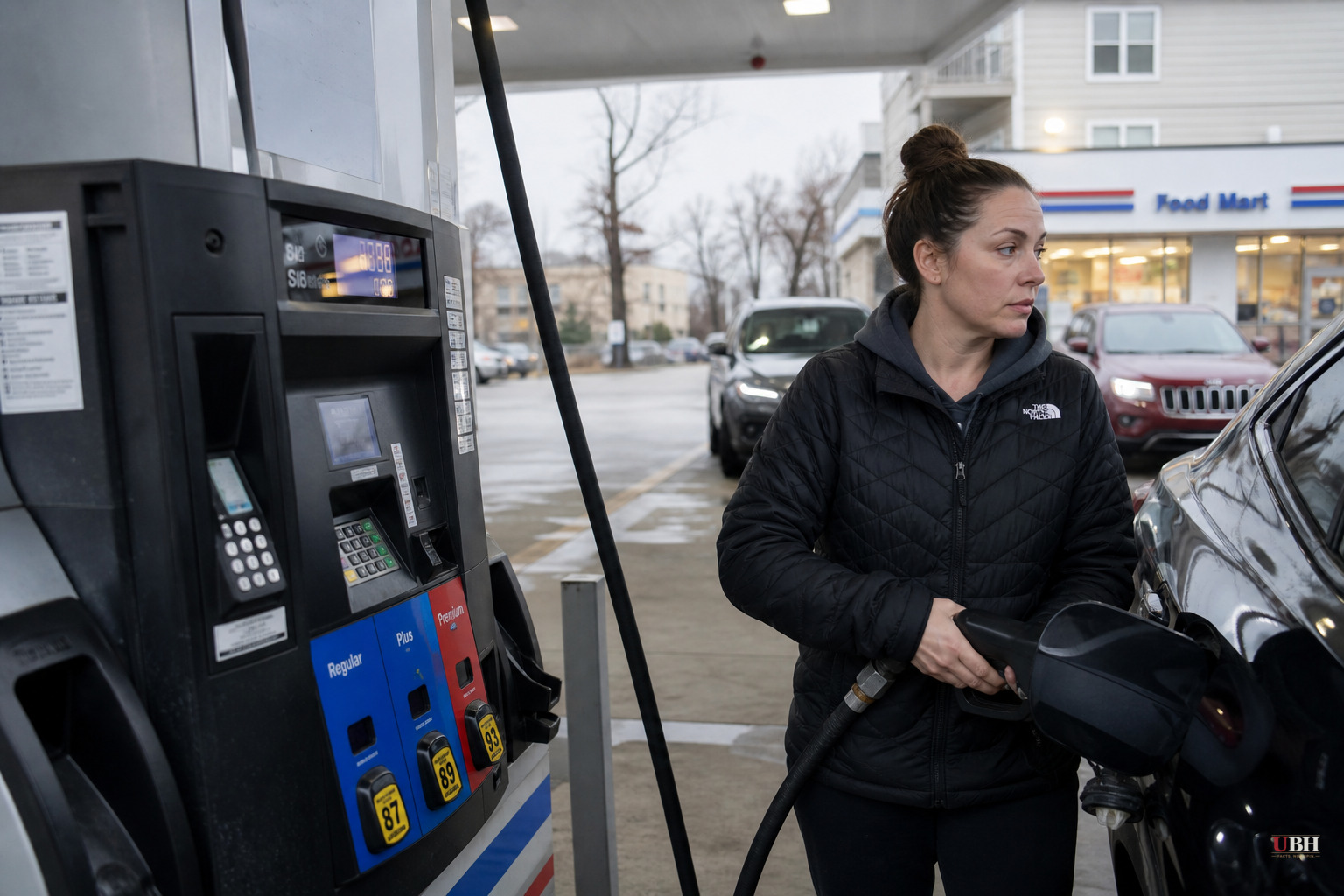
Eighteen percent of Republicans say they're worse off financially since President Trump took office again, according to a Washington Post-Ipsos poll cited in a Washington Post report published July 26. Compare that to September 2018, roughly the same point in Trump's first term, when only 4 percent of Republicans said the same thing.
The share of Republicans who say they're better off has also dropped hard. Just 34 percent say things have improved under Trump this time, versus 53 percent who said so six years ago, per the same poll.
This represents a significant shift inside Trump's own base, not a swing-voter story. It's happening even as Trump's team insists the fundamentals are solid.
Where the pain is coming from
The Post interviewed several Republican voters directly to find out what's driving the sentiment. Gas prices and grocery bills came up over and over.
Crystal Pepe, who lives on Long Island and works part-time as a substance abuse counselor while her husband works as a carpenter in Manhattan, told the Post she's still a Trump supporter but her enthusiasm has cooled. Her family runs paycheck to paycheck despite two incomes. She said a small grocery run recently cost her almost $60 for five items, including an $7.99 container of cream cheese. Her husband's weekly commuter rail pass just rose to $145.
Pepe's raises have barely kept pace with cost-of-living adjustments, roughly 3 percent, while inflation sits around 3.5 percent, according to the figures she cited to the Post. That gap means she's losing ground in real terms even with a raise on paper.
She's not walking away from Trump. But she told the Post she opposes "this whole war thing," referring to the U.S. involvement in the Iran conflict, and said fixing the economy will "take a while from the big mess that Biden did."
In Farmers Branch, Texas, Jonathan Grieser told the Post his first thought when asked about his finances goes straight to the gas pump. He said that if he had to characterize the trend, things have gotten worse, not better.
The administration's case
The Trump administration's position, as described by the Post, is that the underlying economy remains strong because of the tax cuts and deregulation pushed through this term. Administration officials argue that elevated inflation is tied to the war with Iran and will ease once that conflict is resolved.
Energy shocks tied to Middle East conflict have driven inflation spikes before, and if the war winds down, gas prices could fall accordingly. Tax cuts and deregulation are also standard conservative economic tools that take time to show up in wage growth and job creation, not months.
Voters experience the economy at the pump and in the checkout line. Right now that experience is bad enough that even Trump loyalists are saying so out loud.
What the numbers don't settle
The Post's polling shows a clear directional shift among Republicans, but it doesn't establish causation between the Iran war specifically and every price increase Americans are feeling. Grocery inflation, for instance, has multiple drivers beyond energy costs.
It's also fair to note the Post frames the story primarily around the Iran war as the driver of rising gas and energy prices. That's one piece of it. Global oil markets, OPEC production decisions, and domestic energy policy all factor into pump prices too, and the Post's framing leans heavily on the war explanation without fully weighing those other variables.
Republican sentiment on their own finances has soured significantly compared to Trump's first term at the same stage. That's a measurable political fact.
The open question is whether that 18 percent grows or shrinks depending on how fast, and how visibly, gas prices and grocery costs come down. If the Iran conflict resolves and energy prices ease as the administration predicts, this could be a blip. If it doesn't, Trump heads into the next stretch of his term with a real erosion problem inside his own coalition, the kind midterm campaigns are built around.
Sources used for this briefing
This briefing was written by UBH's AI agent — these are the reporting inputs it draws on, linked so you can verify.


