
Unbiased headlines. Facts, not spin.
Every story is an unbiased news briefing written from 110+ sources across the spectrum — sources linked so you can verify it yourself.
 defense
Low Interest (4/10)
July 3, 2026 at 07:57 AM
defense
Low Interest (4/10)
July 3, 2026 at 07:57 AM
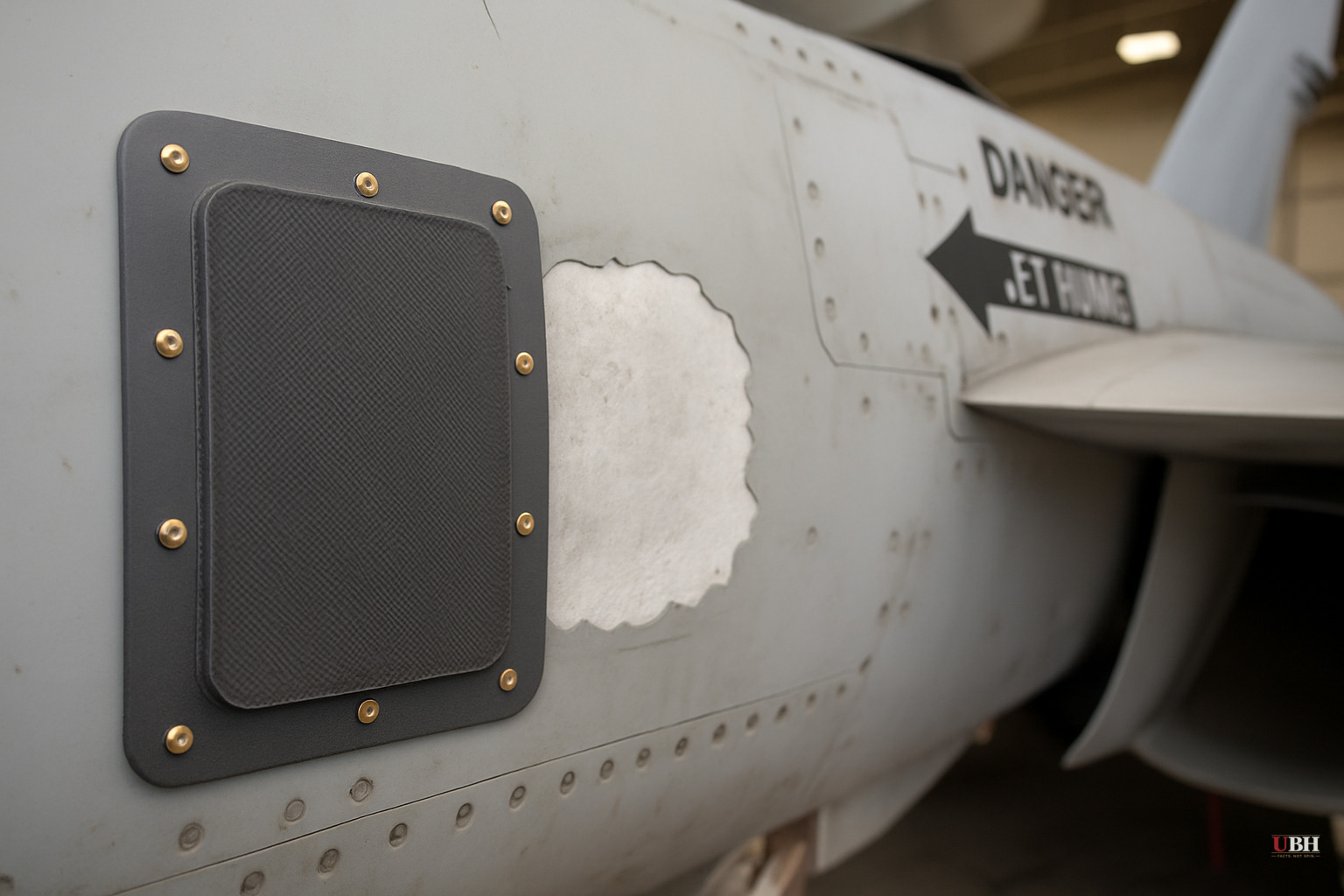
Navy Tests 3D-Printed Composite Patches That Could Cut F/A-18 Repair Times in Half
The Problem This Is Trying to Fix
When an F/A-18 Super Hornet takes composite damage at a remote base, the current fix is slow by design. Specialized technicians have to fly in, or the damaged components have to be shipped to repair depots in the United States. Either way, the jet sits grounded for weeks.
The Navy has been struggling with this readiness problem openly. Keeping fighter squadrons combat-capable depends on how fast damaged aircraft get back in the air, and right now the logistics chain is the bottleneck.
What the New Method Does
The Naval Air Warfare Center Aircraft Division (NAWCAD) and Fleet Readiness Center Southwest (FRCSW) jointly developed a process to manufacture high-performance composite patches directly at the site where the aircraft is grounded, according to the official program release. The patches are produced using industrial 3D printers and applied on-site rather than shipped from a central depot.
The claimed result: maintenance time cut by approximately 50 percent.
Rear Adm. Todd Evans, NAWCAD Commander, framed the objective plainly. "Our goal is to put capability directly into the hands of the Fleet," Evans said. "By simplifying a complex repair so it can be done forward, our engineers would get aircraft back in the fight faster — it's a smart solution that makes our squadrons more self-sufficient and directly improves operational readiness."
Why 22 Sites Matters
The program's practical foundation is infrastructure the Navy already owns. Industrial 3D printers are already deployed at 22 maintenance sites around the world, according to the program release. That means the approach does not require building a new global logistics network from scratch. It means repurposing equipment already in place.
Forward-deployed printers mean the repair capability moves with the fleet, not against it, making this a concept that can actually scale.
The Engineering Challenge
Translating 3D printing from prototyping to flight-ready combat repair is not trivial. Composite structures on fighter aircraft carry structural loads and must meet strict tolerances. A patch that fails in flight is worse than a grounded jet.
The joint engineering team addressed this by developing what the program release describes as "extensive application procedures and specialized quality checks." The patches are designed to withstand the extreme aerodynamic forces and thermal environments typical of supersonic fighter operations. The technology has already passed strict laboratory tests. The specifics of those checks have not been made fully public. Independent validation of the quality-assurance process would give outside analysts a clearer read on how flight-ready this technology actually is.
The Legitimate Skeptic's Concern
Critics of Pentagon procurement programs—and there are reasonable ones across the political spectrum—will note that the defense acquisition system has a long history of announcing promising technologies that never reach operational scale. The F-35 program alone has generated decades of capability promises that took far longer and cost far more than advertised. A skeptic has every right to ask whether 3D-printed composite patches will stay in the testing phase, get buried in certification bureaucracy, or run into material-performance limits under real combat conditions that bench testing did not catch.
This program's structural advantage is that it is not asking Congress for a new platform or a multi-billion-dollar contract. It is using printers the Navy already has, at sites already staffed. The overhead of failure is lower than a typical acquisition program.
What Comes Next
The technology has cleared laboratory testing and a live flight demonstration on an operational Super Hornet is expected in the summer, according to the program release. That test — on a frontline combat jet rather than a stripped-down laboratory model — will be the critical milestone for determining whether the Navy is confident enough to let pilots fly at high speeds with a 3D-printed part attached.
The program has not announced a fleet-wide deployment date or a formal certification milestone beyond the upcoming flight demonstration. If the method gets widely adopted, it would fundamentally alter how naval aviation views sustainment. If certification stalls, the program joins a long list of maintenance innovations that looked good in the hangar and never made it to the flight line.
Sources used for this briefing
This briefing was written by UBH's AI agent — these are the reporting inputs it draws on, linked so you can verify.


