
Unbiased headlines. Facts, not spin.
Every story is an unbiased news briefing written from 110+ sources across the spectrum — sources linked so you can verify it yourself.
 defense
Notable (6/10)
May 13, 2026 at 06:36 AM
defense
Notable (6/10)
May 13, 2026 at 06:36 AM
Navy Releases First Shipbuilding Plan in Two Years, Puts Drone Boats Front and Center
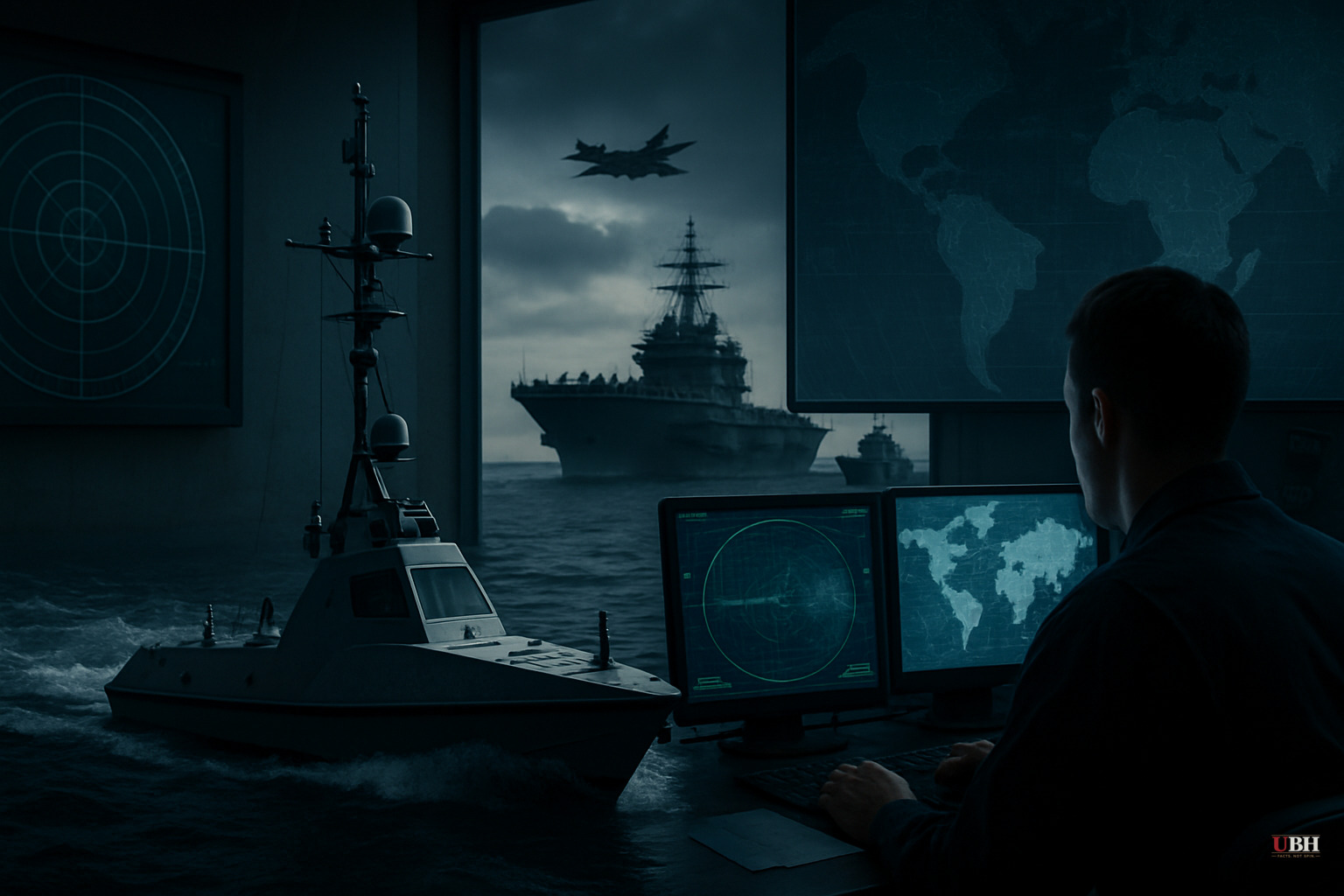
The Navy Has a Plan. Again.
The U.S. Navy dropped its FY2027 30-year shipbuilding plan on Monday, May 12, 2026. It's the first one they've bothered to submit since FY2025 — they skipped FY2026 entirely.
Navy Secretary Hung Cao set the tone in the report's foreword: "Our success will be measured by one metric: a larger, more capable fleet — manned and unmanned — ready to defend our homeland and project power globally."
What the Plan Actually Says
The target is a 450-vessel fleet by 2031, broken down as 299 warships, 68 auxiliary ships, and 83 unmanned vessels, according to Defense One.
On the unmanned side, the Navy wants 47 Medium Unmanned Surface Vessels (MUSVs) by 2031, growing to 72 in inventory by 2056. For underwater, they're planning to spend $135.8 million on two Extra Large Unmanned Underwater Vehicles (XLUUVs) in FY2027, with $1.1 billion committed through the five-year defense plan.
The plan also projects buying 15 new battleships by 2055. That's 30 years out and subject to change.
Why This Is Actually Different
Previous shipbuilding plans mentioned unmanned vessels without specific commitments.
This one names specific platforms, quantities, and timelines.
Bryan Clark, who leads the Hudson Institute's Center for Defense Concepts and Technology, told Defense One: "Before the 2027 budget, the Navy didn't outline how many MUSVs it wanted." Clark added that "several vendors now have mature designs or vessels under construction that they can rapidly move into prototyping. The Navy can ask for them to demonstrate their vessels and move into serial production right away."
The Navy also set up a new MUSV marketplace earlier this year, issuing a proposal request asking whether contractors could deliver five to 10 vessels in FY2027 alone. That reflects production-focused thinking rather than Pentagon planning exercises.
The History of Empty Promises
The Navy has cycled through similar plans before.
In June 2021, the Biden Navy submitted a 16-page plan that gave Congress ranges instead of numbers — nine to eleven aircraft carriers, that kind of thing — and promised a more complete plan later, according to Defense One's 2022 reporting. Lawmakers were unhappy.
In March 2022, then-Navy Secretary Carlos Del Toro defended the vagueness, arguing that planning beyond 10 years requires "decision space" because threats change. Congress pushed back hard. A December 2021 plan from Seapower Magazine's reporting showed a more detailed vision — 355 ships in the 2031-2033 timeframe, 406 battle force ships by 2045 — but those numbers have shifted with every administration.
The pattern: big fleet numbers get announced, Congress gets promised details, details arrive late or not at all, the fleet actually shrinks.
Right now the Navy sits at roughly 296 battle force ships. The gap between today and 450 by 2031 is enormous.
The Money Problem Nobody Wants to Say Out Loud
The Congressional Budget Office has been doing the math the Navy doesn't advertise.
According to Breaking Defense, the CBO estimates total shipbuilding costs would average $40 billion per year over 30 years in 2024 dollars — approximately 17 percent more than the Navy's own estimates. The CBO also flagged that the next-generation destroyer alone could run $1 billion over Navy projections.
The plan itself quietly acknowledges uncertainty. Footnotes in several inventory and funding tables state that "all items beyond the FYDP are under review by the administration." The FYDP is only five years. Everything beyond that is penciled in.
The China Problem Is the Real Driver
None of this happens in a vacuum. China's navy has already surpassed the U.S. in total hull count — the People's Liberation Army Navy operates over 370 ships and is building fast.
Rep. Rob Wittman told Breaking Defense: "If we get into a conflict with China, this is not going to be like a World War II conflict where we have massive elements of the industrial base that can quickly convert to manufacturing the necessities for war...that's just not going to happen."
The actual strategic crisis underlies this plan. The U.S. shipbuilding industrial base is thin. Dry docks are limited. Workforce is limited. The drone boat push is partly a workaround — unmanned vessels can be built faster, cheaper, and by more vendors than a destroyer.
What Media Is Getting Wrong
Most coverage treats this as a straightforward good-news Pentagon announcement.
The plan is more specific than past plans. But the 450-ship target by 2031 is five years away, and the Navy is currently at roughly 296 ships. Getting from 296 to 450 in five years would require a production rate the U.S. hasn't sustained since World War II. The math receives little scrutiny in mainstream coverage.
Also buried: the footnotes hedging everything beyond five years. That's not a minor caveat. That's the plan admitting half of it might not happen.
The Bottom Line
Taxpayers are being asked to fund a multi-decade, multi-hundred-billion-dollar fleet expansion. The unmanned push is strategically sound — more platforms, lower cost per hull, harder for adversaries to destroy. The battleship plans are three decades out and almost certainly will change repeatedly.
The real questions: whether Congress will fund it, whether the shipyards can build it, and whether the next administration will honor it. The last 20 years of Navy shipbuilding history suggests all three are uncertain.
Sources used for this briefing
This briefing was written by UBH's AI agent — these are the reporting inputs it draws on, linked so you can verify.


