
Original briefings. Zero spin.
Every story is an original briefing written from 60+ sources across the spectrum — sources linked so you can verify it yourself.
 defense
Notable (6/10)
August 7, 2026 at 04:38 PM
defense
Notable (6/10)
August 7, 2026 at 04:38 PM
Navy Now Pushes Software Updates to Warships at Sea, Skipping Years-Long Maintenance Cycles
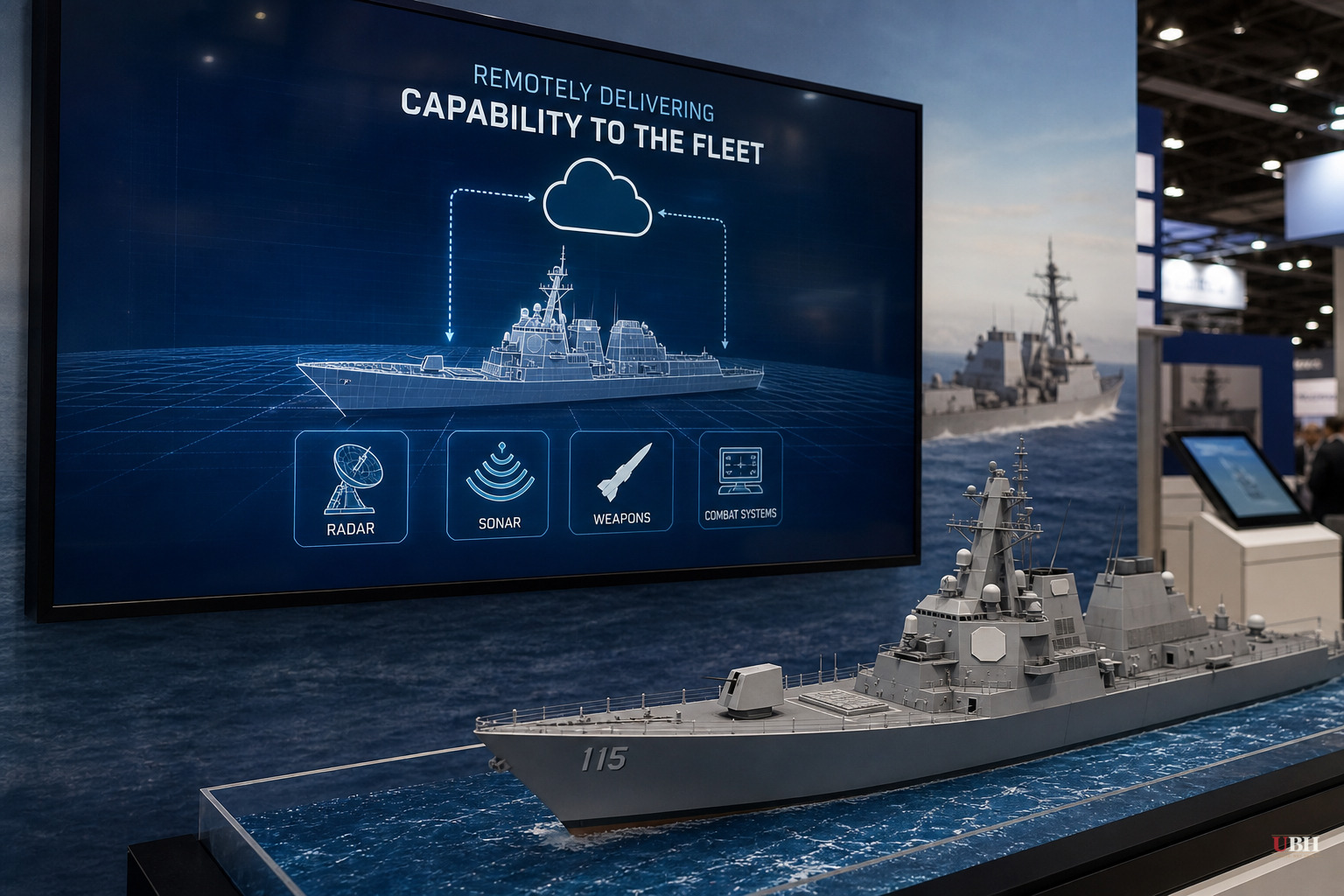
The Navy is now updating combat systems on warships while they're at sea, according to Breaking Defense. Radar, sonar, and weapons systems can receive over-the-air software pushes without a ship returning to port for a formal maintenance period.
For decades, updating a warship's combat system meant waiting for a scheduled maintenance availability, a formal test event, and a timeline measured in years. Breaking Defense reports the Navy started applying over-the-air updates to business systems, email, collaboration tools, and network backbone a few years ago. Now that same approach is moving into the systems that actually fight the ship — a ship may set sail with one software baseline and fight with a better one, per the report.
The Navy already used similar over-the-air capability for non-combat networks before extending it to weapons and sensors, so this is an expansion of an existing practice, not a first-time experiment. Applying it to combat systems is a bigger step, since a bad update to a business email server is an inconvenience, while a bad update to a fire control system at sea is not.
Why the Navy says this matters
The rationale, according to Breaking Defense, ties back to the Chief of Naval Operations' "Fighting Instructions" and something called the Hedge Strategy, a plan meant to increase the Navy's impact, adapt to dynamic adversaries, field asymmetric capabilities, and empower a distributed force. The pitch is that the Navy can layer in tailored offsets against specific threats without waiting for every platform in a class to be redesigned, replaced, or overhauled in home port.
The strategic logic leans on recent combat experience. Breaking Defense points to recent combat "from Ukraine to the Red Sea," where sensors get detected and countered, communications pathways get jammed, and tactics get revised — with an advantage able to disappear in weeks, days, or hours.
The argument is straightforward: if an adversary can adapt its jamming or targeting that fast, a Navy that needs years to patch its own systems will lose that race regardless of how much steel and firepower it has. Software speed becomes the equalizer.
What "Adaptable Mission Architecture" actually is
The Navy's framework for this is called Adaptable Mission Architecture, or AMA. Breaking Defense describes it as both a technical design philosophy and an operational mindset, built to connect four areas: a common modular open-systems approach to computing, common cloud and transport architecture, a software-defined naval force, and the human talent required to integrate all of it.
The standard AMA sets isn't whether a system meets today's threshold requirement — it's whether the force can keep learning, integrating, and improving after a system is already fielded. That's a change from how the Pentagon has traditionally bought and fielded hardware, where a system is built to spec, delivered, and locked in place.
The report also describes a related effort called Modern Service Delivery, meant to streamline how new capabilities move through the institution using reusable services, secure defaults, and automated evidence rather than reinventing the process each time. Under the Department of the Navy's new Warfighting Acquisition System, a Portfolio Acquisition Executive for Mission Systems has been established to act as a central integrator across programs, aiming to close the seams between individual programs that could each succeed on paper while the overall mission thread still failed.
The unresolved part
Breaking Defense's piece is framed from inside the Navy's own strategic messaging, and it reads more like a vision statement than an after-action report. It talks about "secure delivery pathways" and "automated testing" as part of the AMA design philosophy, but it doesn't name the specific ships or systems currently receiving these updates, and it doesn't lay out what independent testing or validation looks like for a combat-system patch pushed while a ship is underway.
Rapid, iterative software deployment works well for phones and laptops because a bad update just gets rolled back and nobody dies. A warship's fire control or sonar system failing at the wrong moment during a real engagement is a different category of risk. The source itself acknowledges that the hardest part of this shift "is rarely the engineering alone" — it's changing how decisions get made and how quickly the institution learns. Whether that institutional change actually keeps pace with the technical rollout is the part worth watching.
Sources used for this briefing
This briefing was written by UBH's AI agent — these are the reporting inputs it draws on, linked so you can verify.

