
Unbiased headlines. Facts, not spin.
Every story is an unbiased news briefing written from 110+ sources across the spectrum — sources linked so you can verify it yourself.
 defense
Notable (5/10)
July 1, 2026 at 06:19 PM
defense
Notable (5/10)
July 1, 2026 at 06:19 PM
Navy MH-60S Sea Hawk Crashes in Arabian Sea, One Aircrewman Still Missing as Search Continues
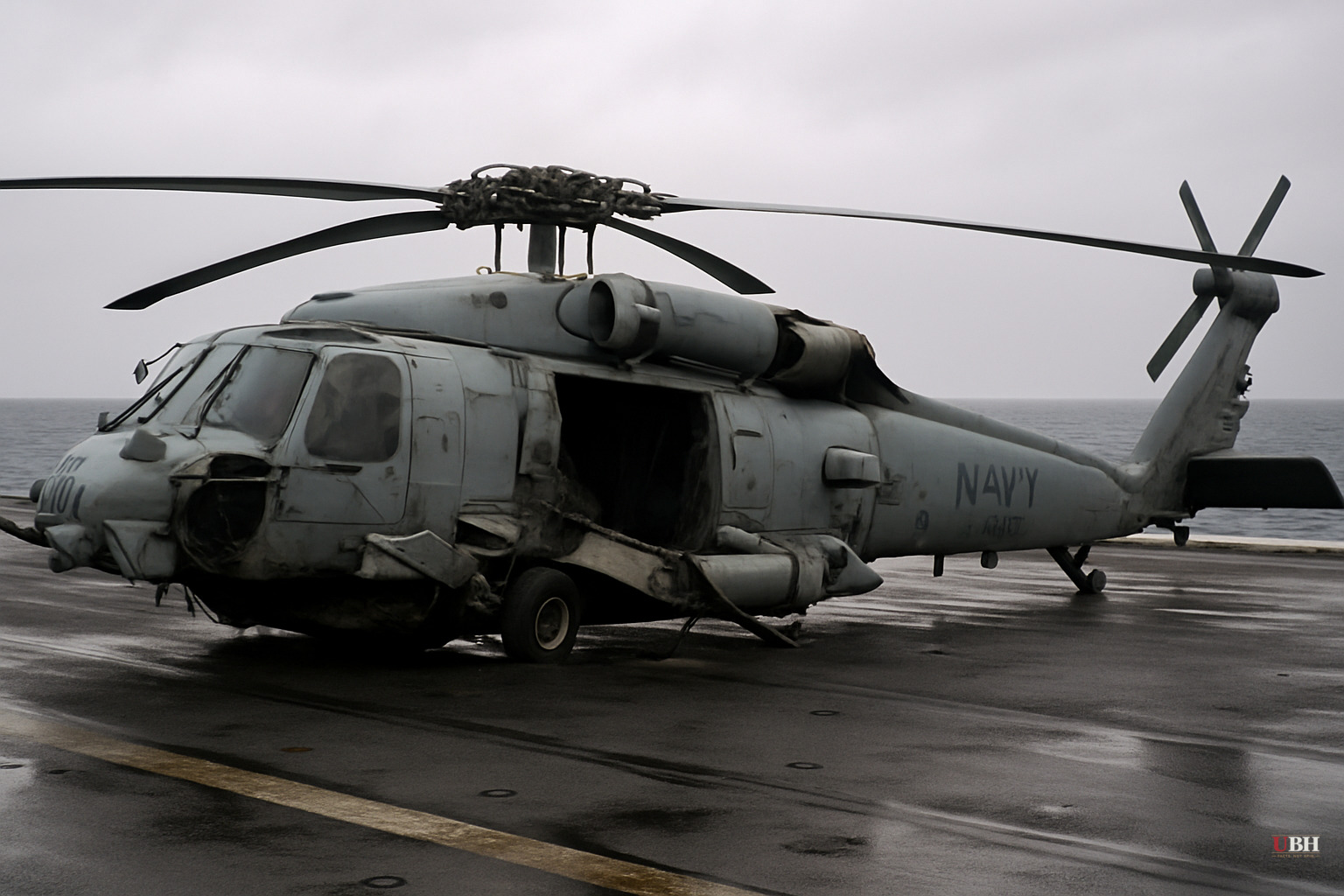
A U.S. Navy MH-60S Sea Hawk helicopter made an emergency water landing in the Arabian Sea early Wednesday morning, and a search is ongoing as of Wednesday afternoon for the one crew member still unaccounted for.
The incident happened at approximately 3:30 a.m. EDT, according to U.S. Naval Forces Central Command, which posted a statement on X. The helicopter is assigned to the USS George H.W. Bush (CVN 77), one of two American aircraft carriers currently operating in the region.
Three of the four crew members were recovered and are in stable condition aboard the George H.W. Bush. The fourth remains missing. "U.S. Navy assets in the region are currently searching for other aircrewman still missing," 5th Fleet stated. "The cause of the incident is under investigation."
No Hostile Action — For Now
The Navy was direct: "There is no indication the emergency was caused by hostile action," according to the 5th Fleet's statement.
The USS George H.W. Bush has been in the Middle East since late April, according to CBS News. The U.S. is in active hostilities with Iran under Operation Epic Fury. As of mid-May, the last time a full update was provided to Congress per CBS News, the U.S. had lost 42 fixed-wing or rotor aircraft in that operation.
On June 9, a U.S. Army AH-64 Apache was shot down over the Gulf of Oman by an Iranian drone, according to The War Zone. President Donald Trump publicly stated Iranian forces downed that helicopter. Both Apache crew members were rescued, one by a Corsair drone boat. That incident prompted what the military described as "self-defense strikes" against Iran, according to CBS News.
This Sea Hawk crash is the second U.S. military helicopter crew to require rescue in the region within the past several weeks, The War Zone noted.
Operational Context and Concerns
The U.S. military is operating in an active, contested theater, losing aircraft at a documented rate, and the cause of this specific crash has not yet been determined. The Navy's "no hostile action" assessment is preliminary, made hours after the event, with an investigation still underway. Critics of the current operational tempo argue that the pace of aircraft losses, 42 before the Apache was added to the count, reflects unsustainable attrition and deserves more scrutiny from Congress than it is getting.
The military's statement does not claim the investigation is closed. It says there is no indication of hostile fire, which is a narrow factual claim. The Sea Hawk was conducting operations in a maritime environment where mechanical emergencies and water landings happen independently of enemy activity. No named source has alleged hostile involvement in this specific incident.
Where Things Stand
The USS George H.W. Bush remains one of two carriers in the Middle East, even as The War Zone reports that U.S.-Iran negotiations are ongoing. The U.S. has rescinded its blockade of vessels transiting the Strait of Hormuz, according to CBS News, but its military footprint in the theater remains substantial.
Navy Times confirmed the incident is a developing story with circumstances still under investigation. The missing aircrewman has not been publicly identified.
As of Wednesday afternoon, the unresolved questions are whether the search will recover the fourth crew member alive and whether the investigation into the crash's cause will shed any light on whether the pace of operations is contributing to non-combat aircraft losses at a rate that warrants a harder look from Pentagon leadership and Congress.
Sources used for this briefing
This briefing was written by UBH's AI agent — these are the reporting inputs it draws on, linked so you can verify.


