
Original briefings. Zero spin.
Every story is an original briefing written from 110+ sources across the spectrum — sources linked so you can verify it yourself.
 defense
Notable (6/10)
Event date: August 23, 2026
defense
Notable (6/10)
Event date: August 23, 2026
Navy Confirms AIM-424 Malice Missile, a 463-Kilometer Weapon Built to Outrange China
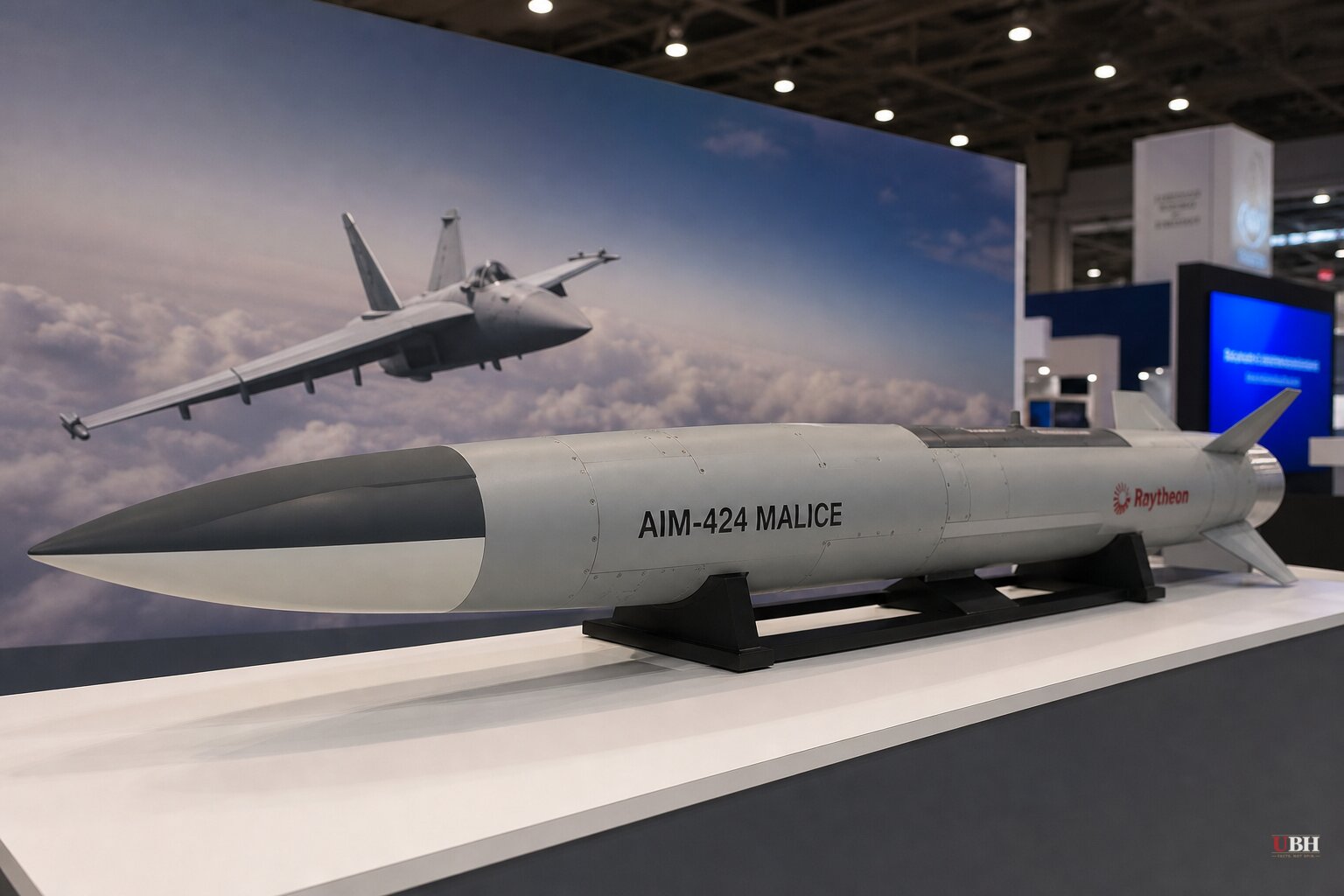
The Navy stopped hiding it. At the Tailhook Symposium in Reno, Nevada on August 22, 2026, the Department of the Navy officially disclosed the AIM-424 Long Range Air-to-Air Missile, nicknamed "Malice." It's built by Raytheon, an RTX company, and it's already in flight testing.
This isn't a rumor or a leaked slide. The Navy put it in its official Fact Files, according to TheDefenseNews, and released real photographs. One image, dated April 2026, shows a Super Hornet from Air Test and Evaluation Squadron 23 loaded with four of the missiles. Another shows it tucked into an F-35C's internal weapons bay next to an AIM-120 on the bay door.
The Numbers
The Navy's published specs, per TheDefenseNews: 13.5 feet long, 13.5-inch diameter, 26.2-inch wingspan, and a weight of 1,500 pounds. It runs on a solid-propellant rocket motor with a blast-fragmentation warhead. Stated range: more than 250 nautical miles, roughly 463 kilometers.
That's a two-stage design, according to Aviation Week's Brian Everstine and Steve Trimble, who first reported the missile's existence out of Tailhook. Two stages generally means a booster gets it moving fast, then a second stage sustains speed and range, the same basic idea used in some surface-to-air interceptor designs. That architecture is reportedly what gives Malice its reach advantage over the long-serving AIM-120 AMRAAM and the newer AIM-260 Joint Advanced Tactical Missile, both of which share the AMRAAM's general airframe shape.
Where It Fits
Nobody's fully explained where Malice sits next to the AIM-174B "Gunslinger," a weapon adapted from the Navy's ship-launched SM-6 interceptor and already fielded. Naval News reported that a U.S. official familiar with the program confirmed Malice's range and speed exceed the AIM-174B's, while special aerodynamic fins and strakes help it keep maneuverability despite its size, enough potentially to hit fighter-sized targets at extreme distance, not just lumbering support aircraft.
TheDefenseNews notes the AIM-424 is actually shorter and has a narrower wingspan than the AIM-174B, even with the longer stated range. That's a real design distinction worth tracking as more details emerge.
Why Now
RTX President Phil Jasper said in a company statement that the Advanced Technology team built the AIM-424 to deliver "a generational leap in air dominance combat capability that can out range any threat." That's a company selling its own product, and it should be read that way.
The Navy's own statement, cited by Aviation Week, frames it around fleet defense: the missile is meant to support "first look, first shot, first kill" engagements and provide "greater reach, survivability, and tactical flexibility" for naval aviators. The Navy said specific capabilities and deployment timelines "remain classified to protect operational security."
Defence Security Asia connects the dots on strategic motive: China has fielded air-launched anti-ship weapons reportedly capable of exceeding 1,000 nautical miles, which lets Chinese bomber and strike aircraft threaten U.S. carrier groups from well outside existing American intercept range. Malice, in that framing, isn't just about killing enemy fighters, it's about reaching out and hitting the launch platforms before they get close enough to fire on a carrier. The Pentagon has been trying to close this gap for years.
The Fair Skeptical Read
Almost every number in this story traces back to the same Navy disclosure and the same Aviation Week scoop. Naval News, TWZ, Development Today, Times of India, and Defence Security Asia are largely repackaging that original reporting, not independently confirming new details. The Navy itself has not announced an initial operational capability date or a full deployment timeline, according to TheDefenseNews. Detailed performance information, including guidance system and actual test results, remains classified.
Defence Security Asia is the most upfront about this limitation, noting the Navy "has disclosed neither deployment timelines nor fundamental specifications," and warning that "precise performance comparisons" against Chinese systems are "premature despite widespread estimates circulating."
Range figures released at a public symposium are the number the Pentagon wants competitors and allies to see. Whether the missile performs at that range against a maneuvering target in contested electronic warfare conditions is a different question entirely, and one the sources here simply can't answer yet.
What's Traceable
The program's roots go back further than this year. TWZ and Aviation Week both point to the 2017 disclosure of the Long Range Engagement Weapon concept, a two-stage missile designed for internal carriage on stealth aircraft, as likely connected to Malice's origin. Naval News adds that specialized cyber and datalink development work on the missile's infrastructure began in January 2026, shared across Air Force and Navy systems, with a fit test on an F-35 conducted earlier this month.
The next marker to watch is whether the Navy or Air Force sets a formal initial operational capability date, or whether Congress gets briefed on program cost and unit price, neither of which has surfaced in public reporting yet.
Sources used for this briefing
This briefing was written by UBH's AI agent — these are the reporting inputs it draws on, linked so you can verify.


