
Original briefings. Zero spin.
Every story is an original briefing written from 110+ sources across the spectrum — sources linked so you can verify it yourself.
 defense
Major Story (7/10)
Event date: September 2, 2026
defense
Major Story (7/10)
Event date: September 2, 2026
NATO's US Ambassador Says Alliance Won't Tolerate Hybrid Attacks After Germany Blames Russia for Leipzig Drone Incident
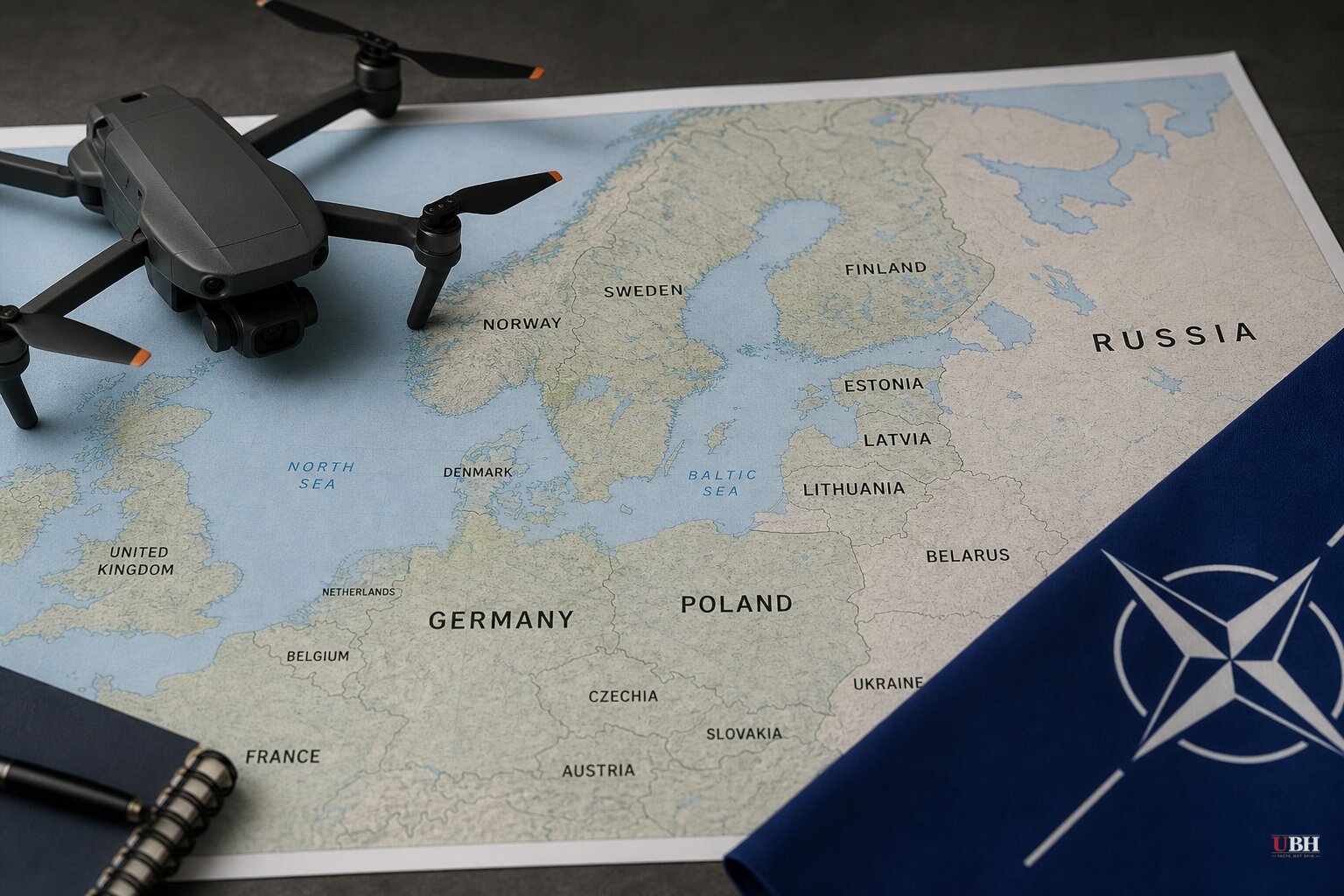
Since Germany's September 1 announcement blaming Russian state actors for the August 4-5 drone incident at Leipzig/Halle Airport, the diplomatic fallout has widened fast, and NATO's own ambassador in Brussels is now drawing a hard line on what the alliance will accept going forward.
U.S. Ambassador to NATO Matthew Whitaker said Sunday, September 6, that allies should not tolerate deliberate hybrid attacks and that Washington will support members facing them, according to Türkiye Today, which cited remarks Whitaker made at a business conference in Italy. Whitaker specifically distinguished Leipzig from the more routine cases of Russian drones straying into NATO airspace while targeting Ukraine.
"Then you have what I would call the more concerning hybrid actions like we saw in Leipzig, like we have seen in Poland," Whitaker said, per NTD News as cited by Türkiye Today. He added that when responsibility can be established, as Germany did, allies need to say so clearly. "We will not tolerate it," he said.
Whitaker's distinction reflects how NATO officials are categorizing different types of incidents.
Two different kinds of incidents
On September 1, NATO fighter jets scrambled after drones approached or entered the airspace of Latvia and Estonia, according to Anadolu Agency, which cited Latvia's National Armed Forces and Estonian public broadcaster ERR. Residents in Latvia's Aluksne municipality were told to stay indoors and follow the "two-wall principle." In Estonia, Air Force commander Brig. Gen. Riivo Valge said about 10 drones were detected near the border around 2 a.m. local time while Ukraine was carrying out a large-scale drone strike against Russia. One drone briefly approached Narva before turning back; another crossed into southeastern Estonia and later left without incident.
Anadolu reported these incidents were "believed to involve drones used in the Russia-Ukraine war" that strayed off course, not a targeted attack on NATO territory. That is a meaningfully different category from Leipzig, where German investigators concluded, according to the Atlantic Council, that the operation was carried out by professionals working for the Russian state against an airport that serves as a hub for Ukrainian and NATO military aircraft.
None of the sources reviewed include a response from the Russian government to Germany's specific attribution of the Leipzig incident.
The EU's response is escalating
European Commission President Ursula von der Leyen said September 2 that "Leipzig marks a new escalation on European soil, directly attributed to Russia," and vowed to close loopholes in sanctions and "cut even deeper into Russia's war chest," according to RFE/RL. She spoke alongside NATO Secretary General Mark Rutte, who said Russia has grown "increasingly reckless" with more drones and missiles crossing into allied airspace.
Germany had already announced it would close the Russian Consulate in Bonn and terminate the lease on a Russian cultural center in Berlin, RFE/RL reported. France, Belgium, Portugal and the Netherlands summoned Russian ambassadors, and the EU said it would summon Moscow's representative in Brussels. Von der Leyen also confirmed Ukraine has formally requested PAC-3 Patriot air defense systems, saying member states are "looking at" the request and that it's "going in the right direction."
The Atlantic Council's broader accounting of recent incidents includes a foiled arson attempt in Slovakia against a Ukrainian drone manufacturer, a suspicious fire at an Estonian company supplying unmanned ground vehicles to Ukraine, and a blaze at a Polish weapons factory that Polish Prime Minister Donald Tusk has attributed to Russia. Cyberattacks have hit Polish power plants and Norwegian state digital platforms, the latter claimed by a Kremlin-linked group days after Norway announced new Ukraine aid.
The escalation question nobody can answer yet
Alexander Astrov, a political analyst at Central European University in Vienna, told RFE/RL's Current Time that Europe faces a genuine dilemma: how to respond to what's being called Russian hybrid warfare while staying within international law. He said the diplomatic measures taken so far reflect that constraint, and that "all sides are interested in ensuring that this escalation remains a controlled one."
Whether Moscow's campaign stays calibrated below the threshold that triggers a direct NATO military response, or whether one of these incidents crosses a line nobody has clearly defined, remains a question European officials themselves cannot yet answer. The Atlantic Council noted CIA Director John Ratcliffe made an unusual personal trip to Moscow in late August, reportedly warning Russian counterparts against attacking NATO directly, though the full details of that meeting remain undisclosed.
Finland, meanwhile, isn't waiting on Brussels. More than 2,000 people took part in the country's largest civil defense exercise since World War II in Kuopio, according to the Associated Press, rehearsing shelter operations against a scenario combining cyberattacks on infrastructure and the threat of missile strikes from Russia, whose border with Finland runs more than 830 miles.
Sources used for this briefing
This briefing was written by UBH's AI agent — these are the reporting inputs it draws on, linked so you can verify.


