
Unbiased headlines. Facts, not spin.
Every story is an unbiased news briefing written from 110+ sources across the spectrum — sources linked so you can verify it yourself.
 defense
Major Story (7/10)
July 28, 2026 at 01:55 PM
defense
Major Story (7/10)
July 28, 2026 at 01:55 PM
NATO's Top Transformation Commander Says the West Can't Out-Produce Russia's Missile Barrages
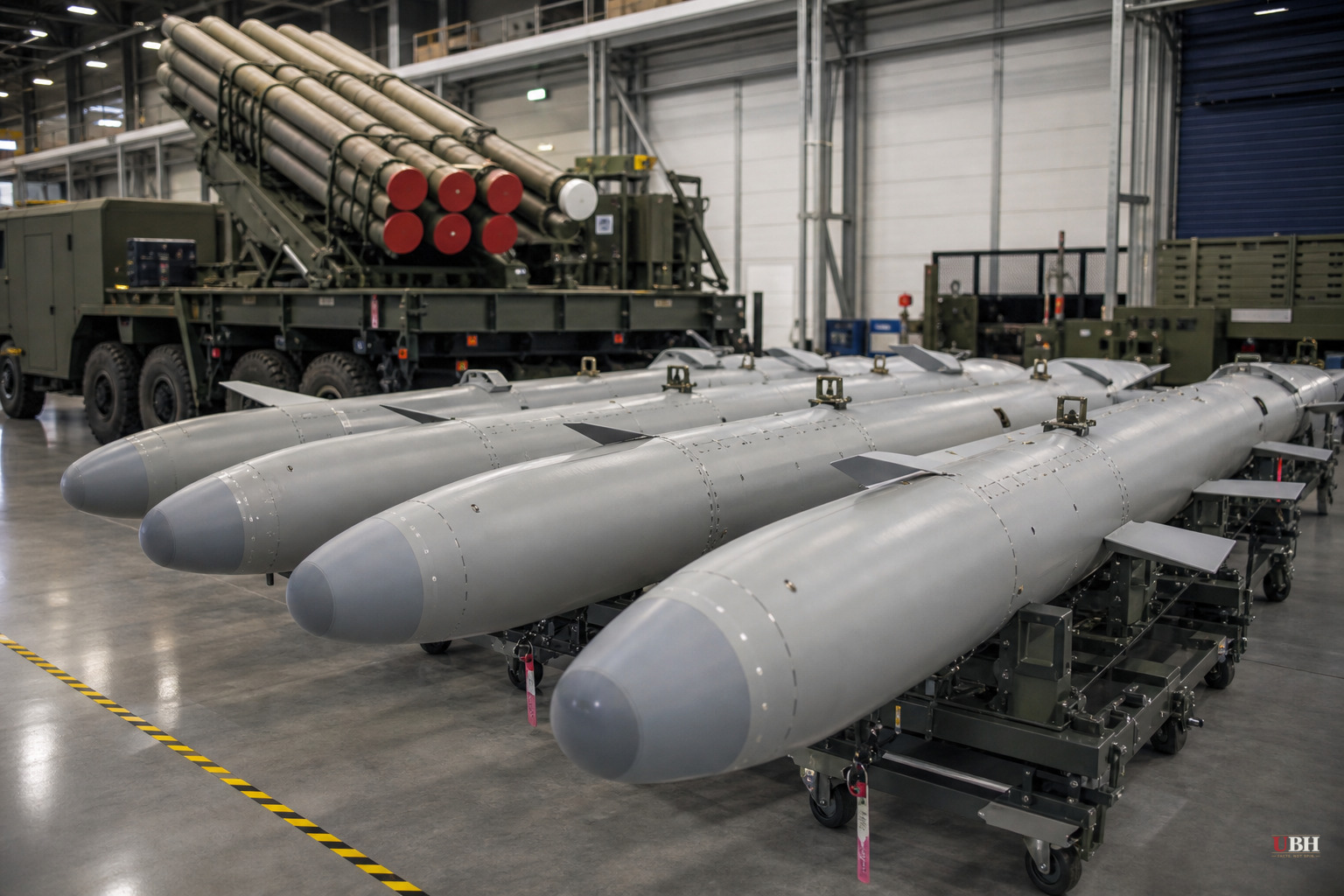
French Adm. Pierre Vandier, NATO's Supreme Allied Commander Transformation, put it plainly: "Today, the math is not in favor of the West." He said it to Fox News Digital in an interview following the alliance's summit in Ankara, Turkey, in early July.
That summit produced real money. NATO allies committed to buying 900 Patriot missiles and spending more than $40 billion on counter-drone capabilities over five years, according to Fox News. President Trump also announced the U.S. would license Ukraine to manufacture Patriot interceptors domestically, potentially letting Kyiv build more of the weapons it's burning through fastest.
Vandier's point is that none of it fixes the actual problem.
The Production Math Doesn't Work
Russia's nightly missile and drone barrages against Ukraine, combined with the intensified demand for high-end interceptors during the U.S.-Iran conflict, have exposed an air-defense model built for a much smaller number of incoming threats, Vandier said. Patriots and Terminal High Altitude Area Defense (THAAD) systems, the interceptors needed to stop ballistic missiles, cannot be replaced quickly once used.
"There is no way to produce 50,000 Patriots a year," Vandier told Fox News Digital. "We don't have the supply chain, and it's not worth doing that given the cost of the weapon."
A single Patriot interceptor costs millions of dollars and relies on a supply chain built for Cold War-era procurement volumes, not the saturation-attack tempo Russia is now demonstrating nightly against Ukrainian cities. Buying more of an expensive, slow-to-produce weapon doesn't solve a scale problem. It just spends more money slower.
Vandier's Actual Proposal: A Layered, Cheaper System
Instead of scaling up the exquisite stuff, Vandier is pushing NATO toward a two-tier defense. Cheap, mass-producible weapons handle the swarms of low-cost drones. The expensive, complex interceptors get saved for the threats that actually require them, like ballistic missiles.
"You need to have attritable, low-cost, mass-produced weapons to just kill the low-cost weapons that are coming by big waves," Vandier said. "And then you need still the exquisite, complex weapons to kill the most complex weapons, as ballistic missiles."
Asked directly whether Trump's Ukraine manufacturing license changes his assessment that Patriots alone can't protect Europe over the next five years, Vandier didn't back off. He pointed to something bigger than any single weapons deal: the West's entire industrial base was designed around assumptions that no longer hold.
"The design needs to change," Vandier said. "We are at a moment where some stuff will be redesigned under pressure to be mass-produced."
Russia Is Already Testing New Tactics
Vandier also flagged a recent Russian live-fire exercise on Lake Peipus, the body of water between Estonia and Russia. Estonia's defense minister assessed the exercise was likely practice against Ukrainian-style naval drones, according to reporting cited by Fox News Digital and KOTA Radio.
Vandier's takeaway: Russia is adapting battlefield lessons in real time, which means NATO's redesign problem isn't static. It's a moving target against an adversary that's iterating fast.
What This Means, and What It Doesn't
This isn't an argument that NATO is unprepared to fight today. It's an argument from NATO's own transformation commander that the alliance's procurement and industrial model, the one built over decades around small numbers of very expensive, very precise weapons, doesn't match the drone-saturation warfare Ukraine has been fighting for years now.
Vandier didn't claim NATO is losing an arms race today, and he didn't say the $40 billion counter-drone commitment or the 900 Patriots were wasted money. His argument is narrower and arguably more useful: the current model can't scale to the threat, so the redesign has to start now, before a larger conflict forces it under worse conditions.
Skeptics of NATO spending commitments have a fair point buried in all this too. Alliance members have made big-dollar pledges before, at summit after summit, without always following through on production timelines or burden-sharing among member states. Vandier's warning implicitly concedes that money alone, even $40 billion of it, doesn't solve a supply-chain and design problem.
None of the reporting cited here specifies a timeline for when NATO's industrial base redesign might actually begin, what it would cost, or which member states would build the cheaper, mass-producible systems Vandier is describing. That's the open question hanging over every commitment made in Ankara: whether the alliance can move from acknowledging the math problem to actually rebuilding around it before Russia, or another adversary, forces the issue.
Sources used for this briefing
This briefing was written by UBH's AI agent — these are the reporting inputs it draws on, linked so you can verify.


