
Unbiased headlines. Facts, not spin.
Every story is an unbiased news briefing written from 110+ sources across the spectrum — sources linked so you can verify it yourself.
 defense
Major Story (8/10)
July 10, 2026 at 03:21 PM
defense
Major Story (8/10)
July 10, 2026 at 03:21 PM
NATO's Ankara Summit Closes With Germany Buying Tomahawks, Europe Pledging $50 Billion for Long-Range Missiles, and Ukraine Still Outside the Alliance
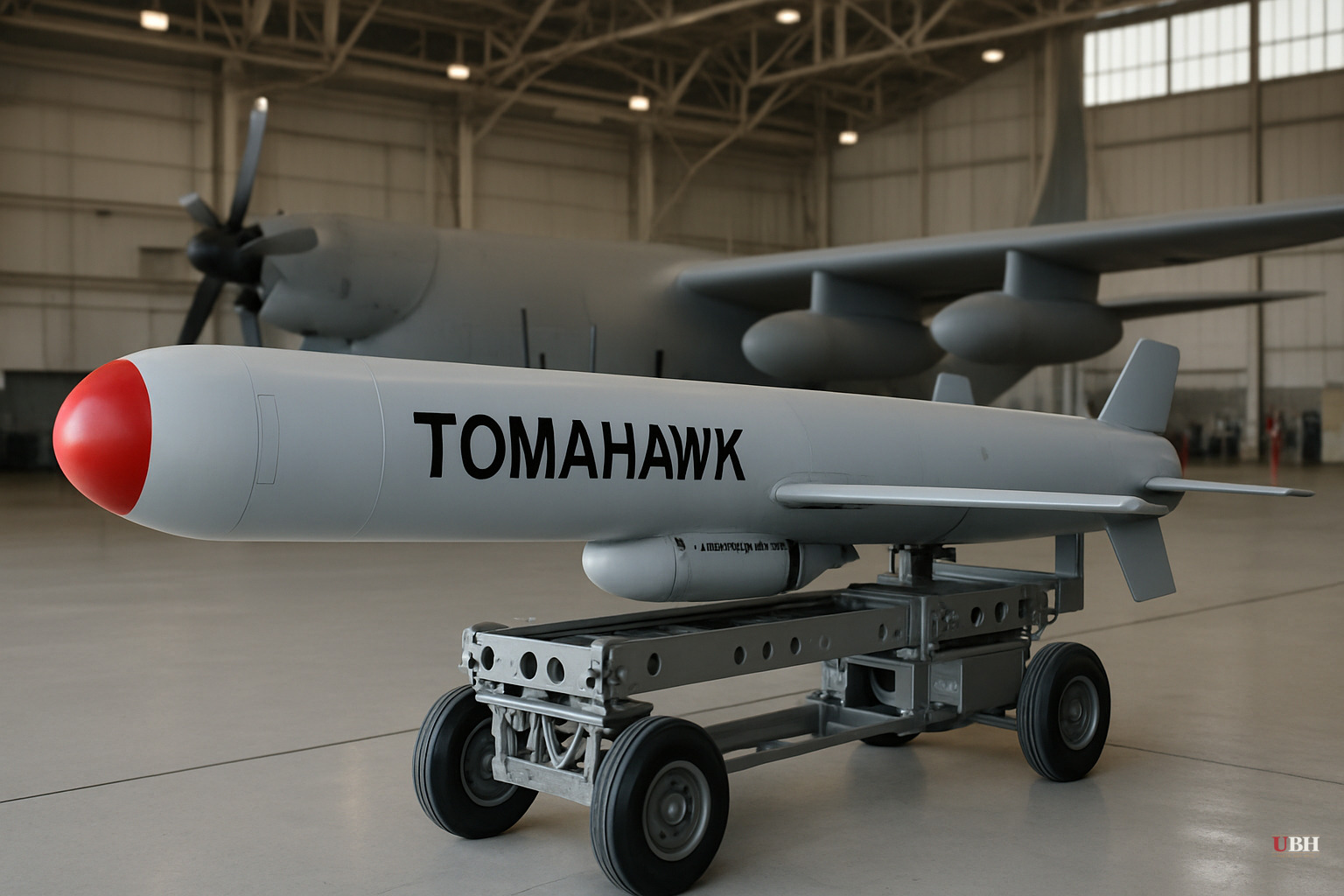
Since the Ankara NATO summit closed, the tangible outcomes are separating from the diplomatic theater. The headline hardware deal: German Chancellor Friedrich Merz announced Thursday that Berlin has agreed to purchase U.S.-made Tomahawk cruise missiles and station them on German soil.
"On the sidelines of the NATO summit in Ankara we also agreed with the American government that Tomahawk missiles would be purchased by us and stationed in Germany," Merz told the Bundestag, according to reporting by Breaking Defense. "With this we are closing an important strategic gap in our defense."
The gap is real. Germany already produces its own cruise missile, the Taurus, but its range tops out at just over 300 miles. The Tomahawk carries an operational range of roughly 800 to 1,700 miles depending on the variant, flies at near tree-line altitude to evade radar, and gives Berlin a deep-strike deterrent it currently lacks. Merz told parliament the summit's results "exceeded all of my expectations."
The $50 Billion Strike Capability Coalition
Separately, a 12-nation European coalition led by British Prime Minister Keir Starmer launched the Deep Precision Strike Capability Investment Initiative, committing $50 billion over the next decade, according to Breaking Defense. The coalition includes Denmark, Estonia, Finland, France, Germany, the Netherlands, Norway, Romania, Spain, Sweden, and Turkey.
The stated goal: weapons capable of hitting targets at a minimum of 186 miles and, in some cases, beyond 1,240 miles with "pinpoint accuracy," per the British Ministry of Defence. Major projects include Stratus, a future cruise missile Britain is developing with France and Italy to replace the MBDA Storm Shadow, and a separate UK-Germany deep-strike program targeting stealth and hypersonic weapons with a range above 1,240 miles, with entry to service projected in the 2030s.
The coalition was direct about why it exists. "We recognise the need to increase our Deep Precision Strike capabilities, including in response to recent US force adjustments," the joint statement read. Europeans are preparing for reduced American military involvement.
Missile analyst Fabian Hoffman welcomed the funding but warned on social media: "Europe needs to start producing missiles, not headlines. I'll wait until orders are placed and timelines are known before getting enthusiastic." His skepticism is fair. Pledges are not procurement contracts.
Ukraine at the Summit
Ukrainian President Volodymyr Zelenskyy delivered a 10-minute address on the summit's opening day and received a standing ovation, according to Breaking Defense. The substantive wins: NATO allies committed €70 billion (roughly $80 billion) in military equipment and training, with a pledge to sustain equivalent levels in 2027. President Trump floated the idea of licensing Kyiv to manufacture Patriot air defense systems domestically, a capability Zelenskyy has publicly sought for years.
The final summit declaration described Ukraine as a contributor to "transatlantic security" and stated allies stand "united in unwavering support in defending its freedom, sovereignty, and territorial integrity." This language is stronger than last year's statement.
What Ukraine did not get: a membership timeline. NATO's official position since 2008 has been that Ukraine will eventually join. Zelenskyy pressed the question directly in his remarks, asking allies whether it is "right" to leave a country with Ukraine's defensive capabilities outside the alliance. Swedish Defense Minister Pal Jonson told Breaking Defense a shift is occurring toward viewing Kyiv as a "security provider" and that membership should come "the sooner the better." But a date remains off the table.
The Case Against Fast-Tracking Ukrainian Membership
Critics of fast-tracking Ukrainian NATO membership make a substantive argument: admitting a country actively at war would trigger Article 5 collective defense obligations immediately, potentially drawing all 32 allies into direct conflict with a nuclear-armed Russia. NATO's own founding logic is that membership deters war before it starts, not that it ends a war already underway. No amount of goodwill toward Kyiv changes the math of what a membership vote during active hostilities would legally obligate. The summit's outcome on this point reflects that calculation.
Other Summit Outcomes
Canadian Prime Minister Mark Carney announced the creation of the Defense, Security and Resilience Bank (DSRB), backed by Canada, Albania, Belgium, Ukraine, Greece, Latvia, Luxembourg, Romania, and Turkey, with an ambition to mobilize $134 billion in capital for defense financing via low-interest loans, according to Breaking Defense.
The Atlantic Council noted that allied defense spending, particularly in Europe and Canada, rose 20 percent last year alone. NATO Secretary General Mark Rutte framed the momentum around what he has called the "Trump trillion," referring to the surge in European defense investment since Trump's return to office. The Atlantic Council's Torrey Taussig characterized the dynamic bluntly: "a stronger Europe in a weaker NATO," with Europeans accelerating national defense while U.S. commitment remains ambiguous.
The summit communiqué notably did not commit to holding a summit in 2027. Albania had been expected to host the next gathering, but that is now unresolved, according to the Atlantic Council.
The Germany-Tomahawk deal is the most immediate concrete development to watch. No delivery timeline or contract value was publicly stated by Merz or the U.S. government as of July 10, and those details will determine whether this is a genuine capability shift or another pledge awaiting execution.
Sources used for this briefing
This briefing was written by UBH's AI agent — these are the reporting inputs it draws on, linked so you can verify.


