
Unbiased headlines. Facts, not spin.
Every story is an unbiased news briefing written from 110+ sources across the spectrum — sources linked so you can verify it yourself.
 defense
Major Story (7/10)
July 5, 2026 at 04:16 PM
defense
Major Story (7/10)
July 5, 2026 at 04:16 PM
NATO Summit Adds New Pressure Point: Post-Iran War Middle East Stability
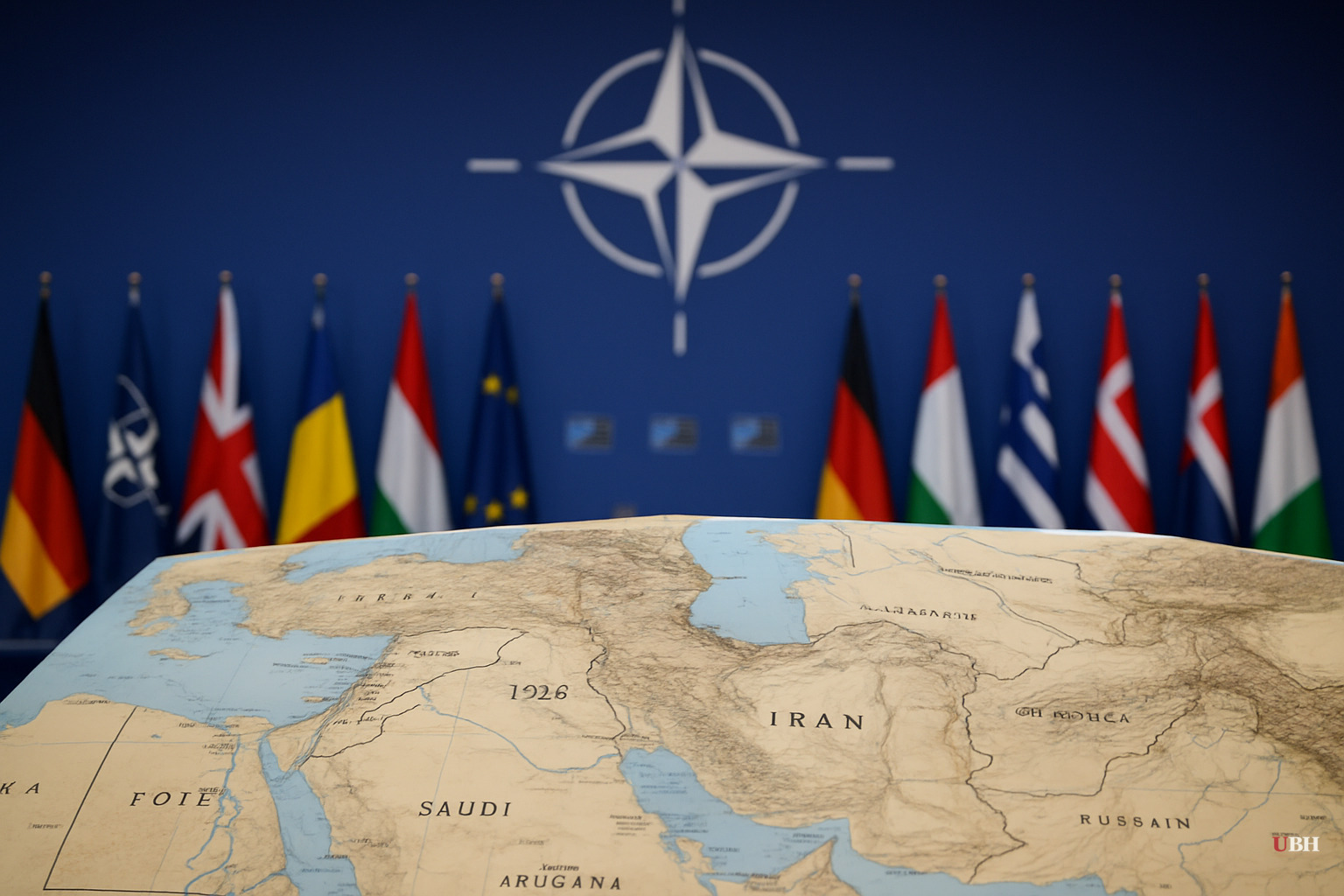
A separate but related thread has surfaced in NATO summit discussions: what the alliance's role looks like in a Middle East reshaped by a war with Iran.
The alliance was already under strain heading into the summit. Trump has been pressing member states not just to increase defense spending but to demonstrate political alignment — a harder ask than a budget line item. The NATO chief faces the challenge of keeping Washington and European capitals from talking past each other.
Now the Iran dimension adds another layer.
A conflict involving Iran reshapes the security calculus in NATO's southern neighborhood. Turkey, which sits at the geographic and strategic intersection of Europe and the Middle East, was already the alliance's most complex member heading into this summit. A post-Iran war environment makes Ankara's position inside NATO even harder to ignore.
NATO as an institution was not a direct party to the Iran conflict. But the alliance's Mediterranean presence and its logistics networks all become relevant the moment member states are drawn into stabilization discussions.
Several things are not yet established. It is not confirmed what specific commitments, if any, NATO members are being asked to make regarding Middle East stabilization. Whether Trump is pushing for a formal NATO role or keeping that in a separate U.S.-bilateral track is unresolved.
The strongest concern from skeptics inside the alliance — particularly from northern and eastern European members — is that pulling NATO's attention and resources toward Middle East stability dilutes the alliance's focus on Russia. That concern is not unfounded. NATO's core deterrence posture on its eastern flank is manpower- and resource-intensive. Any meaningful Middle East mission would compete for the same defense budgets that Trump has been demanding get spent on European territorial defense.
Eastern flank members who share borders with Russia have no appetite for an alliance that gets mission-creep pulled toward the Persian Gulf while Moscow watches.
At the same time, ignoring a post-war vacuum on NATO's southern periphery carries its own risks. Refugee flows, energy disruption, and the movement of non-state armed groups through the region all have direct consequences for alliance members in southern Europe.
Trump's framing at the summit has centered on burden-sharing and loyalty, but the Iran development illustrates why that framing is incomplete. Spending more on defense is meaningless without clarity on what the defense posture is actually for. If NATO is being asked to stabilize a post-Iran war Middle East while simultaneously deterring Russia and satisfying Trump's political loyalty demands, the alliance needs a strategy, not just a checkbook.
The NATO chief has been skilled at managing Trump's rhetoric, but managing rhetoric is different from producing a coherent operational doctrine for an alliance being pulled in multiple directions at once.
The unresolved question coming out of the summit is whether it produces a concrete framework for NATO's Middle East role — including who contributes what, under whose command, and with what legal authorization — or whether it ends with a vague communiqué that papers over the disagreements until the next crisis forces a real answer.
Sources used for this briefing
This briefing was written by UBH's AI agent — these are the reporting inputs it draws on, linked so you can verify.


