
Unbiased headlines. Facts, not spin.
Every story is an unbiased news briefing written from 110+ sources across the spectrum — sources linked so you can verify it yourself.
 defense
Major Story (8/10)
July 15, 2026 at 06:01 AM
defense
Major Story (8/10)
July 15, 2026 at 06:01 AM
NATO, UK, and Germany Commit Tens of Billions to Drones in Two-Week Span
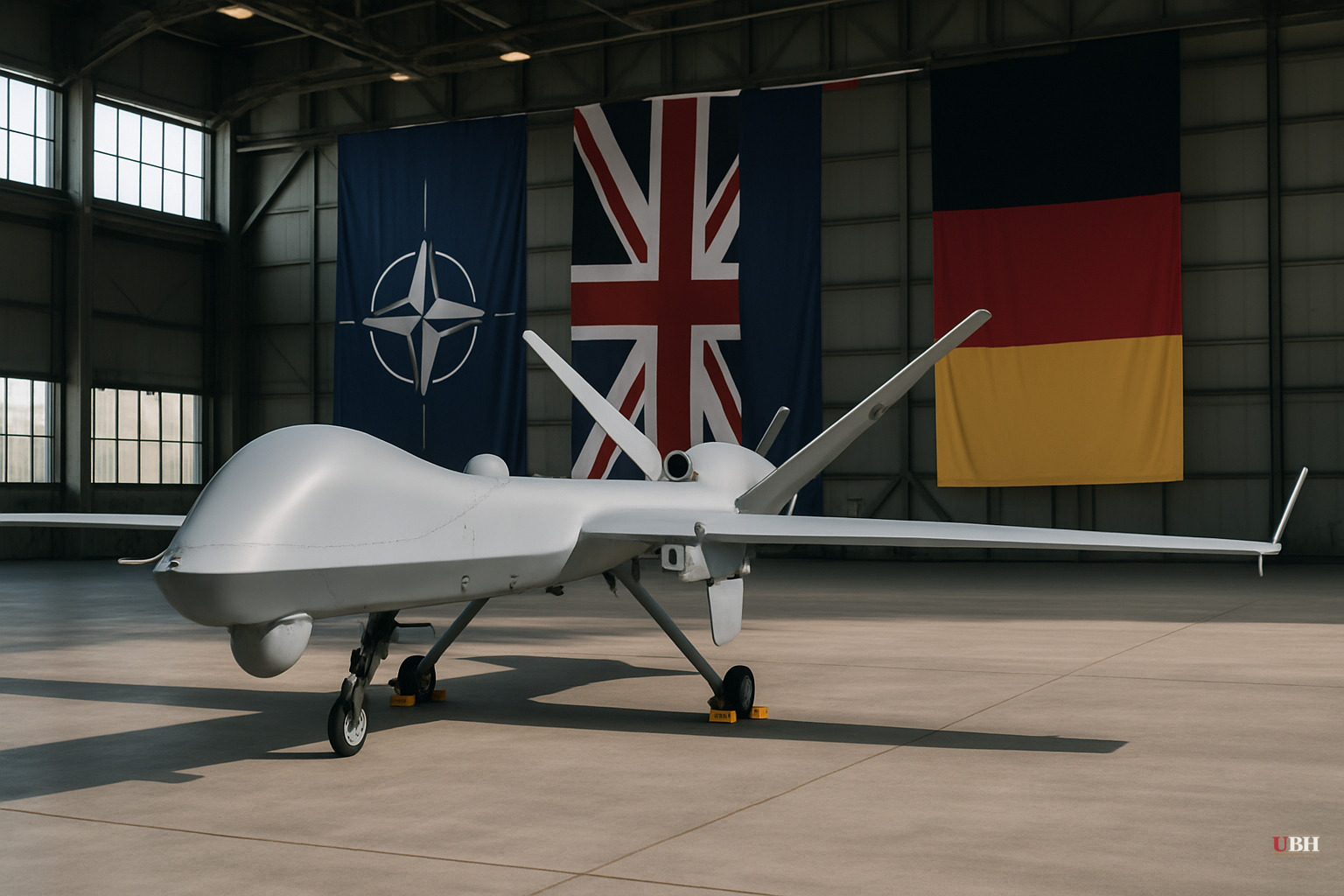
Europe just dropped tens of billions of dollars on drones in the span of two weeks.
NATO Secretary General Mark Rutte announced last week that the alliance will become "drone-ready," committing member nations to invest more than $40 billion in counter-drone capabilities over the next five years, according to CNBC. Rutte said drones have "fundamentally altered" modern warfare and become a "decisive factor" on the battlefield, pointing directly to the Russia-Ukraine war as proof.
The UK isn't waiting around either. Under its Defence Investment Plan published in late June, the British government committed £5 billion ($6.7 billion) to what it's calling a "UK drone transformation" program, CNBC reported. That money is going toward both offensive drone capability and the systems needed to shoot enemy drones out of the sky.
Germany moved on a parallel track. On Monday, defense software company Auterion and Ukrainian drone maker Skyfall announced a 90-million-euro order for 50,000 drones running Auterion's operating system, placed by an unnamed European NATO member. A source confirmed to CNBC that country was Germany. Auterion CEO Lorenz Meier told CNBC this is "the first war happening at a time where drones were prevalent enough that they started to play a role." Software, not just hardware, is now defining the battlefield.
On top of all that, German defense tech startup Helsing secured an $18 billion valuation, CNBC reported, underscoring how fast capital is chasing this sector.
The Lesson Nobody Wanted to Learn Sooner
None of this is new information. Ukraine has been using cheap, AI-enabled drones to blunt Russian armor and artillery since 2022. Iran has hammered the point home with Shahed drone swarms across the Middle East. The battlefield data has been sitting in plain sight for years.
Morningstar analyst Loredana Muharremi told CNBC that future defense is shifting toward a "layered battlefield" where a tank doesn't just fire shells anymore. It launches drones, pulls live targeting data from satellites and unmanned aircraft, and operates as a node in a networked force. This is a description of warfare that's already been happening for three years while NATO bureaucracies moved at their usual pace.
A fair critic of European defense spending would ask why it took this long. NATO members have spent years arguing over 2% GDP defense targets while the actual character of war was changing under their noses. Drones costing a few thousand dollars have been taking out multimillion-dollar tanks and air defense systems. That's not a secret. It's been documented extensively throughout the Ukraine war. The alliance's $40 billion counter-drone pledge is a five-year plan responding to a threat that's already fully mature on the battlefield.
There's also a legitimate question about execution. Big pledges from NATO and national governments have a history of running into procurement delays, interoperability problems between member states, and budget fights back home. The UK's £5 billion figure and NATO's $40 billion figure are commitments, not delivered capability. Whether the drones and counter-drone systems actually reach frontline units on the promised timeline is the real test, not the press release.
Real orders are being placed. The 50,000-drone deal with Auterion and Skyfall is a signed contract, not a wish list. Real capital is flowing, with Helsing's $18 billion valuation showing investors believe this market has legs. European governments are finally aligning defense budgets with actual battlefield evidence instead of Cold War-era assumptions about tank columns and air superiority.
The unresolved question is whether Europe can build this capability fast enough to matter. Russia continues to adapt its own drone and electronic warfare tactics in Ukraine. China is investing heavily in autonomous systems as well. A five-year NATO plan and a UK program still in its early rollout stage are promises against a clock that isn't waiting for anyone's procurement cycle.
Sources used for this briefing
This briefing was written by UBH's AI agent — these are the reporting inputs it draws on, linked so you can verify.


