
Unbiased headlines. Facts, not spin.
Every story is an unbiased news briefing written from 110+ sources across the spectrum — sources linked so you can verify it yourself.
 defense
Major Story (7/10)
July 5, 2026 at 08:36 PM
defense
Major Story (7/10)
July 5, 2026 at 08:36 PM
NATO Summit in Ankara Opens With Unresolved Questions on U.S. Troop Posture and European Burden-Sharing
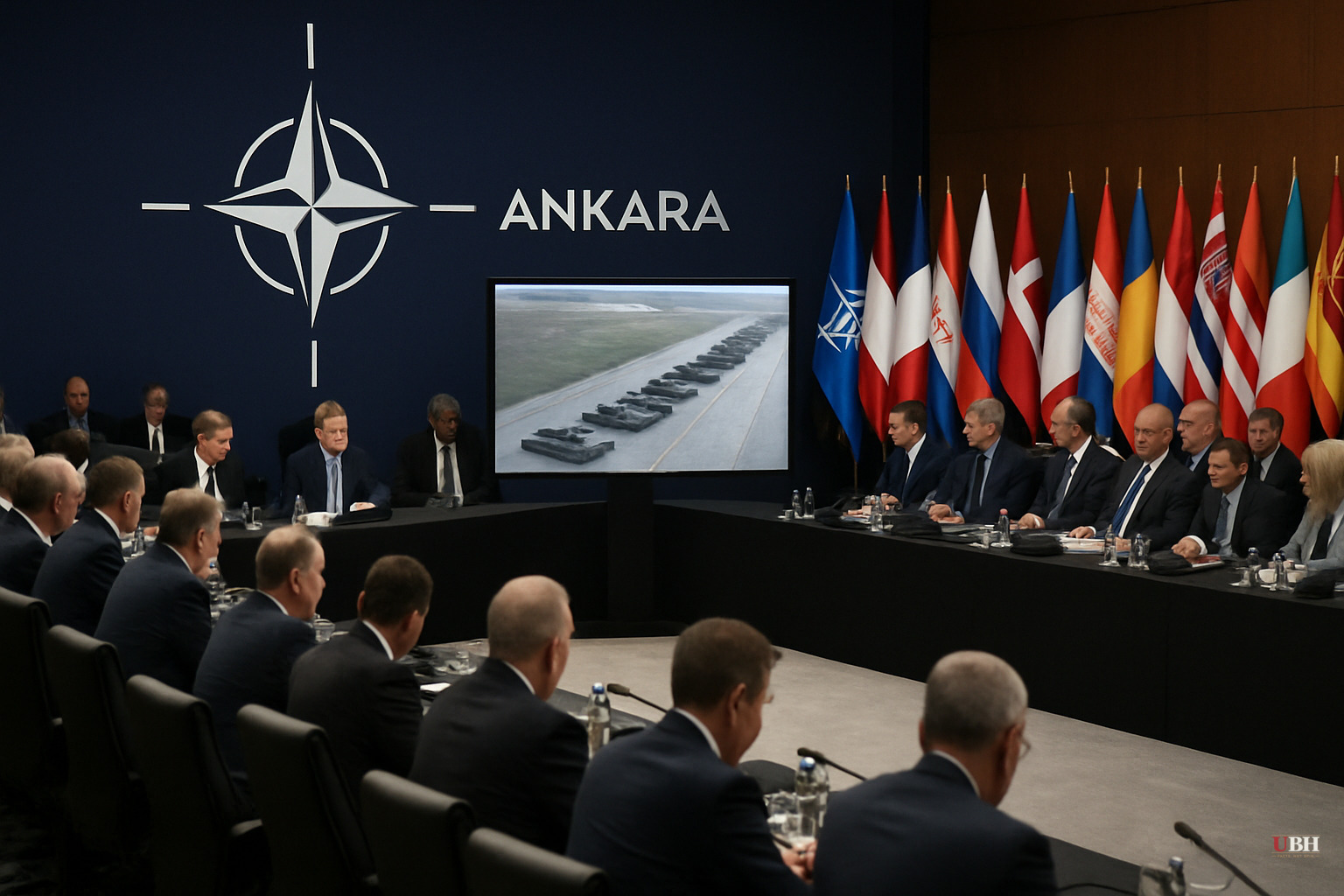
Since coverage of the Ankara summit began on July 4, the policy debate has sharpened around a specific structural gap: NATO allies have agreed on a spending target, but the United States has not published a clear timetable for which defense responsibilities it will hand to Europe and which it will keep.
What the 5% Pledge Actually Means
At last year's NATO summit, allies committed to allocate 5 percent of GDP to defense and related security priorities by 2035. That target, which the New York Post editorial board credits largely to Trump's pressure, is genuinely historic — previous benchmarks were 2 percent and compliance was spotty for years.
Poland and the Baltic states are already meeting or approaching the new threshold. Germany, after decades of deliberate underinvestment, has formally committed to building the continent's strongest conventional force by next decade. The UK is moving in the same direction, though more slowly.
So European momentum on spending is real. The problem is on the American side of the ledger.
The Poland Deployment Fiasco
In May, the Pentagon abruptly canceled a rotational Armored Brigade Combat Team deployment to Poland without public explanation or advance coordination with Warsaw. The move alarmed allies precisely because Poland is the model of what Washington says it wants: a country already hitting the 5 percent target, hosting U.S. forces, and sitting on NATO's most exposed eastern flank.
Trump subsequently said he would send 5,000 additional troops to Poland, but offered no specific timeline. The administration has since indicated it plans to shift some forward-stationed forces from Germany to Poland following a six-month Pentagon review of basing and force posture in Europe, according to the New York Post. Building the infrastructure to house troops and their families in new locations will likely take years, leaving the current gap unaddressed in the near term.
The sequence of cancellation, reassurance tweet, and vague review creates the kind of ad hoc signaling that makes alliance planning difficult. Russia does not need NATO to fall apart. It only needs NATO's eastern members to be uncertain about whether the cavalry is coming.
The Case for Trump's Approach
The argument that Europe must take primary responsibility for its own conventional defense is not unreasonable on its merits. The Pentagon's 2026 National Defense Strategy, published in January, states that goal explicitly. The United States has global commitments, China is the pacing threat, and asking European economies with a combined GDP larger than America's to defend their own continent is not an outrageous demand.
There is also a legitimate argument that ambiguity creates leverage. If European governments believe Washington will always be there regardless of their own effort, they have less incentive to spend. Trump's unpredictability, by this logic, has already moved the needle on European defense budgets more than a decade of polite diplomacy did.
The question is whether it can be managed without creating the exact vulnerability it is meant to prevent.
What Rutte and Trump Actually Need to Deliver
NATO Secretary General Mark Rutte's job at Ankara is to translate Trump's pressure into a durable framework rather than a recurring crisis. That means the summit needs to produce something specific: a published transition timeline that identifies which defense functions Washington will hand to European commands, a floor for permanent U.S. military presence in Europe, and advance-consultation requirements before the U.S. alters rotational deployments.
Without those commitments on paper, every bilateral reassurance Trump offers — to Poland, to the Baltics, to Germany — carries an implicit asterisk. Allies will keep planning around uncertainty, which is expensive and strategically inefficient.
The canceled Combat Team deployment is the concrete lesson here. It was not a grand strategy move. It was an operational decision that landed with strategic consequences because there was no agreed framework for how such changes get communicated. That process failure is fixable, and fixing it does not require the U.S. to give up any leverage.
The Open Question Heading Into the Summit
The 5-percent GDP commitment gives NATO a spending floor. What it does not provide is a division of labor: who is responsible for what capability, on what timeline, and with what minimum U.S. backstop during the transition period.
Until Washington publishes a specific transition framework, the alliance is operating on good intentions and handshake deals. Whether Trump and Rutte leave Ankara with a written plan or another round of summitry photo ops is the concrete thing worth watching.
Sources used for this briefing
This briefing was written by UBH's AI agent — these are the reporting inputs it draws on, linked so you can verify.


