
Unbiased headlines. Facts, not spin.
Every story is an unbiased news briefing written from 110+ sources across the spectrum — sources linked so you can verify it yourself.
 defense
Major Story (8/10)
September 15, 2026 at 03:57 PM
defense
Major Story (8/10)
September 15, 2026 at 03:57 PM
NATO Shoots Down Drone Over Lithuania for First Time, Belarus Tied to Russian Drone Signal Network
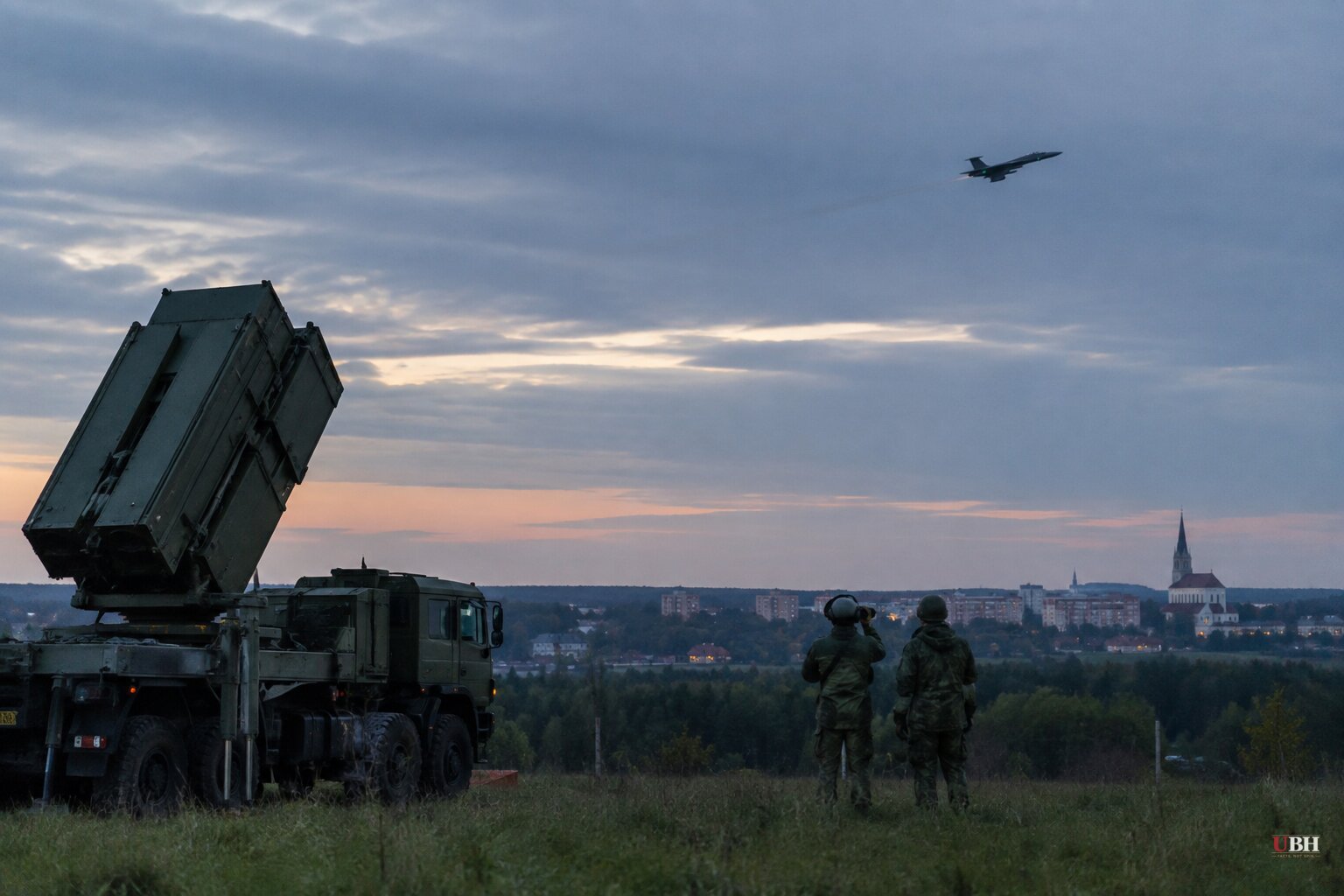
Since Russia's Shahed drones began hugging Ukraine's northern border to exploit Belarusian territory, Tuesday brought the clearest sign yet that the spillover has reached NATO airspace directly. Italian Air Force Typhoons, flying out of Šiauliai Air Base as part of NATO's Baltic Air Policing mission, shot down a drone that entered Lithuania from the direction of Belarus, according to the Lithuanian Ministry of Defense. It is the first time NATO has downed a drone over Lithuanian territory, the alliance confirmed.
The drone crossed into Lithuanian airspace near Lentvaris, close to the capital Vilnius, and stayed aloft for roughly 30 minutes before being intercepted near the village of Pratkūnai, close to the Kruonis hydroelectric plant, according to Vilmantas Vitkauskas, head of Lithuania's National Crisis Management Centre, cited by Euronews and Military.com. Lithuanian air force commander Antanas Matutis said wreckage recovered from the site suggests the drone was likely carrying explosives. Lithuanian President Gitanas Nausėda thanked allied forces on X for their "swift response."
Officials have stopped short of formally confirming the drone's origin or purpose, saying the incident requires further investigation. That distinction matters: Lithuanian and NATO officials describe the Belarus connection as the most likely explanation based on flight path, not a confirmed fact. Belarus has not issued a public response to the specific incident. Poland separately launched what it called preventive aviation operations in its own airspace Tuesday, citing Russian jet-powered drone activity near Ukraine.
Belarus's role in the drone war
The airspace incursion landed one day after two senior Ukrainian officials said Russia is again leaning on Belarusian infrastructure to guide its drone attacks. Presidential advisor Serhii "Flash" Beskrestnov said the flight paths of Shahed-type drones during a mass Sept. 12 attack on western Ukraine stayed close to the Belarusian border, which he said suggests the drones are tapping into Belarusian commercial LTE networks for connectivity, according to the Kyiv Independent.
Separately, State Border Guard Service spokesperson Andrii Demchenko told Ukrainian television that strikes on Rivne, Volyn and Lviv oblasts were fed by signal repeaters located inside Belarus. Ukraine's military intelligence chief, Oleh Ivashchenko, said last week that Kyiv had identified six such repeater stations.
President Volodymyr Zelensky gave Belarus a one-week ultimatum in June to dismantle the Russian-installed repeaters, and initially said Belarusian leader Alexander Lukashenko had agreed. Zelensky said the equipment stopped operating on June 22, but Ukrainian military officials said by month's end the repeaters had not actually been dismantled and at least some had resumed transmitting. The Belarusian Defense Ministry has described its joint drills with Russia as defensive.
Poland warns of more border provocations
Polish Prime Minister Donald Tusk said this week's incidents at Ukraine's borders are a preview of what's coming, according to the Associated Press as carried by Breitbart. Tusk pointed to a Russian drone strike on the Starokozache crossing between Ukraine and Moldova that killed two people, and a separate threat to a Polish-Ukrainian crossing that he said was averted only through coordination between Warsaw and Kyiv. He did not present evidence directly tying Russia to either incident.
Tusk said he was briefed by CIA Director John Ratcliffe, who had recently been in Moscow, on risks facing the region, and that "Russia already decided to engage in provocative attacks on border crossing points." Moldovan President Maia Sandu separately condemned Moscow after the Starokozache strike, saying "Moscow's brutal war is reaching our border."
What's unresolved
NATO Secretary-General Mark Rutte said Monday that strikes near alliance territory reflect Vladimir Putin's "desperation" and intent to "sow fear and terror," and pledged to reinforce NATO's eastern border defenses, according to Military.com. Whether the Lithuania drone was a deliberate test of NATO's response or a stray off-course munition remains formally unconfirmed by investigators. Also unresolved: whether the Belarusian repeater network Zelensky says was targeted for shutdown in June has now fully resumed operation, or is only partially active. Kyiv has not said what action, if any, it plans to take against the repeater sites directly.
Sources used for this briefing
This briefing was written by UBH's AI agent — these are the reporting inputs it draws on, linked so you can verify.


