
Unbiased headlines. Facts, not spin.
Every story is an unbiased news briefing written from 110+ sources across the spectrum — sources linked so you can verify it yourself.
 defense
Major Story (7/10)
June 26, 2026 at 02:17 PM
defense
Major Story (7/10)
June 26, 2026 at 02:17 PM
NATO Secretary General Mark Rutte Defends Alliance as 'Defensive' While Russia Warns of Military Clash Around 2030
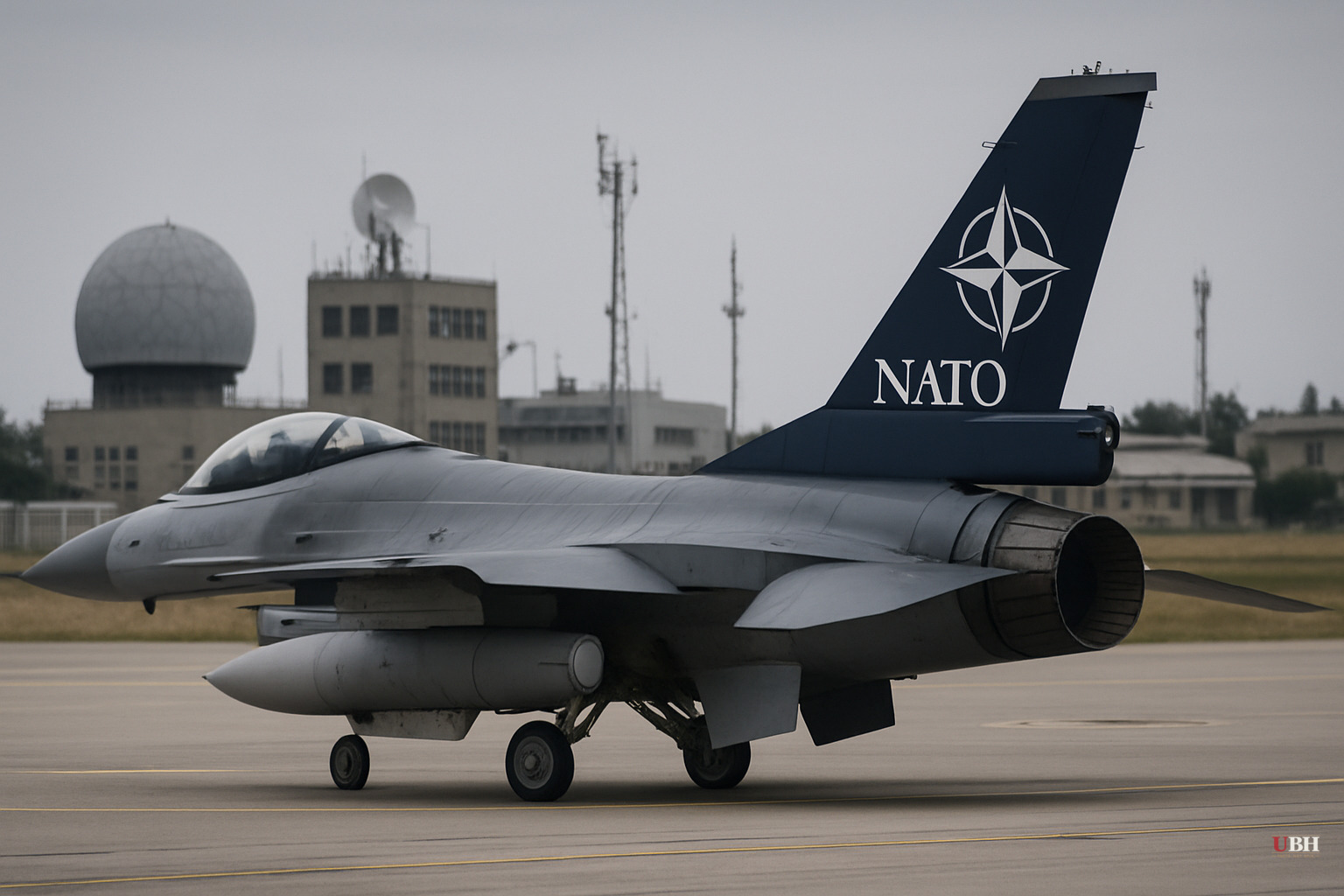
Since Russian Deputy Foreign Minister Alexander Grushko's recent public warning that Moscow assumes NATO is "really preparing for a military clash with Russia somewhere around 2030," analysts on multiple sides of the debate have been trying to figure out how seriously to take it.
Grushko's statement, flagged by RT, came alongside NATO's own National Defense Strategy language describing how "European NATO dwarfs Russia in economic scale, population, and, thus, latent military power" — resources the U.S. is positioned to help manage and mobilize. This framing is drawn from NATO's own published strategic documents.
Rutte Gets a Direct Question, Gives an Indirect Answer
NATO Secretary General Mark Rutte visited the Oval Office on June 24, 2026. After the meeting, ZeroHedge contributor Liam Cosgrove pressed Rutte on the specific historical record: did NATO's roles in Libya and Iraq qualify as "defensive" operations, given that Rutte routinely describes NATO as a purely defensive alliance?
Rutte's response, as published by ZeroHedge, did not address Libya or Iraq directly. He said: "I'm not going to comment on everything, but I can assure you, NATO is there to defend. But if we would be attacked... our reaction would be devastating."
That is a non-answer to a legitimate question. The Libya intervention resulted in the killing of Muammar Gaddafi and the effective collapse of the Libyan state. Slave markets have reportedly operated in the country since. The Iraq war, which NATO member states participated in, was launched on a premise — weapons of mass destruction — that proved false. Rutte's fallback to NATO's defensive mission statement does not resolve the historical record of those operations.
Rutte did not explain whether Libya and Iraq were driven by individual member state decisions rather than NATO acting as a unified body under its founding charter. He did not make that argument in his answer.
The 2030 Threat Calculus
Grushko's warning did not come in isolation. Former top Russian intelligence official Andrey Bezrukov recently described what he called a "new war" that Russia is already in, one that could last decades and whose goals include neutralizing Russia's nuclear capabilities, according to ZeroHedge's summary of his public remarks. Former President and current Security Council Deputy Chair Dmitry Medvedev has separately invoked the specter of 1941 — the year Germany invaded the Soviet Union — in warning about Germany's ongoing remilitarization.
The ZeroHedge analysis, authored by Andrew Korybko, frames the U.S. strategy as a "war of attrition" against Russia via Ukraine, designed to weaken Russia before European NATO nations grow powerful enough to pose a conventional military threat. Korybko also highlights a broader "cordon sanitaire" forming around Russia through British-led Arctic-Baltic efforts, Polish-led Central European coordination, Turkish-led southern pressure, and Japanese-led Northeast Asian positioning.
This framing is analytically coherent, but it draws heavily from Russian government sources and writers sympathetic to the Kremlin's worldview. That doesn't make it automatically wrong. Some of these structural observations — European rearmament, NATO expansion, Ukraine as a proxy battleground — are mainstream analytical points that appear in Western defense journals too. The ZeroHedge article sources NATO's own strategy documents for some of the most provocative language.
What's Actually Unresolved
Rutte's evasion on Libya and Iraq matters beyond the press conference. The core unresolved question is whether NATO's posture and accelerating rearmament increases deterrence or increases the probability of the exact 2030 scenario Grushko described.
Moscow's public 2030 timeline is either a strategic warning meant to shape Western behavior now, or a genuine military planning benchmark. The difference between those two things is not a rhetorical question. It is the central strategic judgment that every NATO government will have to make over the next several years, and as of June 26, 2026, no NATO member has publicly committed to a diplomatic framework designed to test which one it is.
Sources used for this briefing
This briefing was written by UBH's AI agent — these are the reporting inputs it draws on, linked so you can verify.


