
Unbiased headlines. Facts, not spin.
Every story is an unbiased news briefing written from 110+ sources across the spectrum — sources linked so you can verify it yourself.
 defense
Major Story (7/10)
July 7, 2026 at 09:43 AM
defense
Major Story (7/10)
July 7, 2026 at 09:43 AM
NATO Picks Saab GlobalEye to Replace E-3 AWACS Fleet, Bypassing Boeing
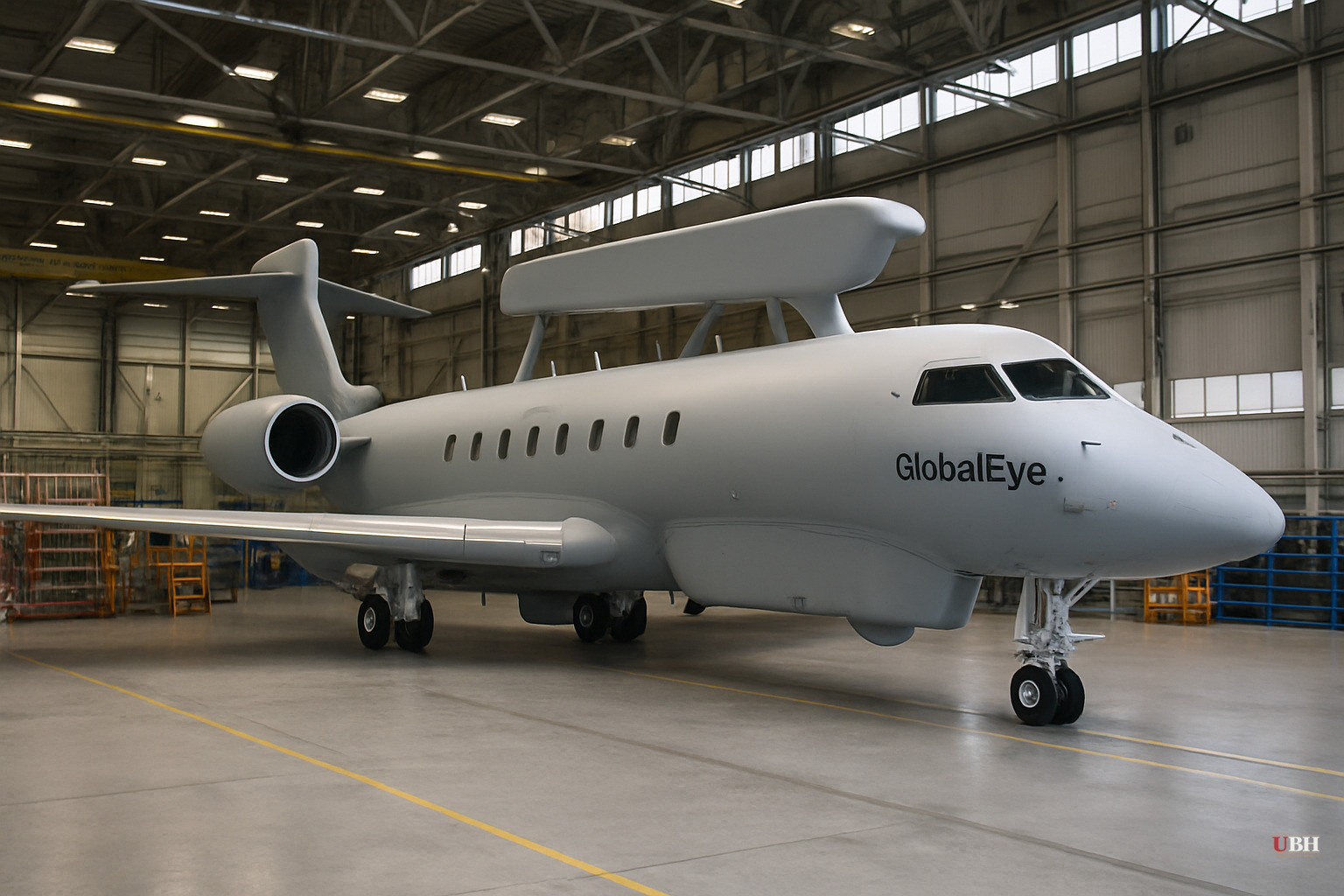
NATO Selects Saab GlobalEye to Replace E-3 AWACS Fleet
NATO Secretary General Mark Rutte stood at the alliance's defence industry forum in Ankara on July 7, 2026, and announced that a group of allied nations had jointly decided to acquire up to 10 Saab GlobalEye Airborne Early Warning and Control aircraft. The GlobalEyes will replace NATO's collectively owned E-3A Sentry AWACS fleet, aircraft that have been operational since the early 1980s and based at Geilenkirchen, Germany, staffed by personnel from 21 member states.
"The E-3 Airborne Warning and Control System fleet has been NATO's eyes in the skies for decades," Rutte said, according to the UK Defence Journal, "but the aircraft are reaching the end of their lives."
The 11 participating nations are Belgium, Canada, Denmark, Germany, Latvia, Lithuania, Luxembourg, the Netherlands, Norway, Romania, and Sweden, according to The Aviationist.
No Contract Yet
Saab stated plainly that it "has not signed a contract or received an order related to the announcement," according to The Aviationist. Formal negotiations will now begin with the NATO Support and Procurement Agency (NSPA), and Saab CEO Micael Johansson told reporters the first deliveries could reach the alliance by 2030, according to Breaking Defense.
Swedish Prime Minister Ulf Kristersson said "by 2027, we will see these GlobalEyes operating from Swedish bases," a reference to national Swedish deployments, not the NATO fleet itself.
What GlobalEye Is
The GlobalEye is built on a Bombardier Global 6500 business jet airframe and equipped with Saab's Erieye Extended Range radar. It can simultaneously track targets in the air, at sea, and on the ground from a single platform, according to Nordic Defence Sector. Rutte specifically cited the system's demonstrated ability to detect drone swarms, ballistic missiles, and cruise missiles, per the UK Defence Journal.
Saab's Johansson said the selection came down to three factors: affordability, capability, and speed of delivery, according to Breaking Defense. Saab is already expanding production at its Gothenburg hub, with potential assembly support from French provider Sabena Technics.
How NATO Got Here
In 2023, NATO committed to buying six Boeing E-7A Wedgetail aircraft under the initial Allied Future Surveillance and Control (iAFSC) program. That plan collapsed roughly five months before today's announcement when the Trump administration signaled it intended to cancel the U.S. E-7 program, pulling out the financial and strategic floor from under the NATO buy. A group of allies walked away.
Defense Secretary Pete Hegseth later reversed the U.S. cancellation after pushback from lawmakers, according to Breaking Defense, but the NATO allies had already moved on.
The UK chose the E-7A nationally, and its first aircraft are now entering RAF service, according to the UK Defence Journal. The United States was never part of the NATO joint fleet. The GlobalEye selection means the alliance's collectively owned surveillance capability will sit on a different platform from both the British and American national choices.
French media outlet La Lettre first reported the GlobalEye selection in April 2026. NATO and Saab declined to confirm it at the time.
Interoperability Questions
The E-7A Wedgetail is already entering service with the UK and is the U.S. Air Force's chosen AWACS successor. A NATO fleet flying a different platform from its two most capable members creates real questions about data links, maintenance logistics, and combined operations, exactly the kind of friction that makes coalition warfare harder. Critics of the GlobalEye selection note that no contract is signed and that Saab has never delivered AWACS aircraft at this scale or to this tempo before.
NATO's implicit answer is that the E-7 path became unavailable as a joint buy the moment Washington wavered. The GlobalEye already has customers: the UAE has aircraft in service, France finalized a deal for two jets valued at approximately $1.3 billion in December 2025, and Canada opened procurement talks in May 2026, according to Nordic Defence Sector. Johansson said in April that a contract option for two additional French aircraft is under discussion.
Also Announced: Tritons and Tankers
NATO used the Ankara summit to stack several ISR decisions. Alongside the GlobalEye commitment, allies announced the acquisition of up to five Northrop Grumman MQ-4C Triton high-altitude unmanned aircraft, with Denmark, Finland, Germany, and Norway among participants, according to the UK Defence Journal. The Tritons will join the RQ-4D Phoenix fleet already operating from Sigonella, Italy, focused on persistent maritime surveillance in response to Russian naval activity in northern waters and ongoing concern over undersea infrastructure.
Separately, allies confirmed the upcoming delivery of the tenth Airbus A330 MRTT to the pooled Multinational MRTT Fleet, moving that tanker force closer to its full complement of 12 aircraft.
What Comes Next
Negotiations between Saab and the NSPA are now beginning, but no timeline for concluding them has been announced, according to The Aviationist. The existing NATO E-3A fleet is staffed by 21 nations but the new buy involves only 11, meaning nearly half the current contributors are not part of the joint procurement. How those remaining nations bridge their own surveillance gaps, and whether the separate eight-nation cooperative project announced alongside today's decision fills that role, will define whether NATO's airborne command picture is actually coherent by the 2031 operational target Johansson cited last November.
Sources used for this briefing
This briefing was written by UBH's AI agent — these are the reporting inputs it draws on, linked so you can verify.


