
Unbiased headlines. Facts, not spin.
Every story is an unbiased news briefing written from 110+ sources across the spectrum — sources linked so you can verify it yourself.
 defense
Major Story (7/10)
August 17, 2026 at 09:23 PM
defense
Major Story (7/10)
August 17, 2026 at 09:23 PM
NATO Has No Real Plan for a Simultaneous Russia-China Attack, Officials and Analysts Admit
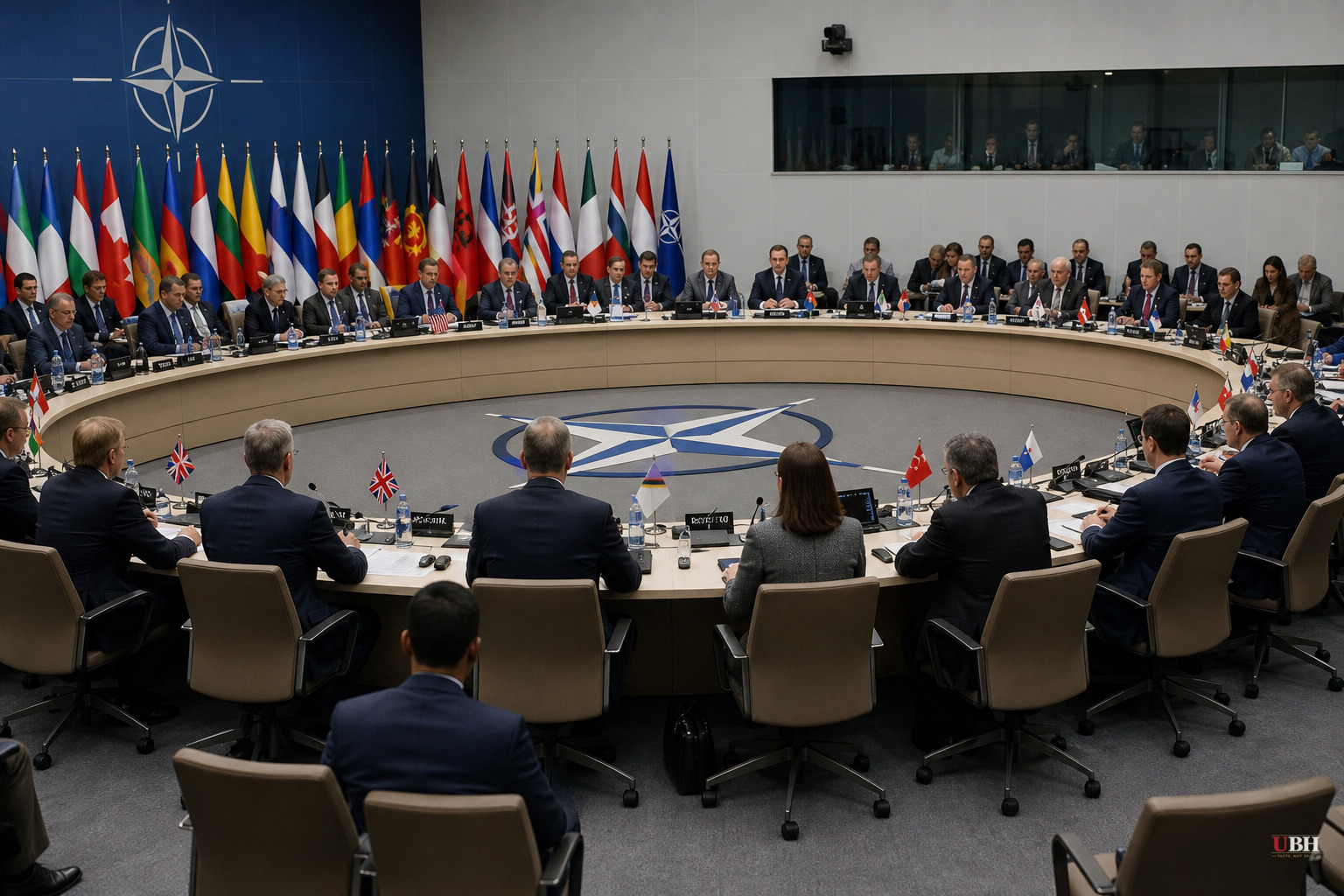
NATO's top research strategist has admitted, on the record, that the alliance has no real plan for its worst-case scenario: Russia hitting a NATO member in Eastern Europe at the same time China moves on Taiwan.
"Let's just say this is the scenario we're currently not ready for," Florence Gaub, director of the research division at the NATO Defense College in Rome, told The Atlantic's Simon Shuster. Gaub said NATO strategists are "keenly aware" of the gap. They just haven't done much to close it.
The Warning Came From NATO's Own Commander
This isn't a fringe theory. General Alexus Grynkewich, NATO's top military commander in Europe (Supreme Allied Commander Europe), issued a public warning roughly a year ago about the risk of a two-front war against Russia and China, and called on European allies to help the U.S. prepare, according to The Atlantic.
Fox News reported separately in July 2026 that a top NATO commander sounded alarms specifically about weapons production, flagging a critical munitions shortage, particularly with Patriot missile interceptors, made worse by ongoing conflicts. Fox's Jennifer Griffin noted concerns about how the U.S. designs and produces missile systems in the first place, not just how fast it can make them.
Mark Montgomery, a retired U.S. Navy rear admiral who's participated in high-level war games, told The Atlantic that the last time he and colleagues seriously studied a two-front Russia-China scenario was about 15 years ago. "It didn't go well," he said. Back then, war games showed the U.S. lacked the weapons stockpiles and industrial base to fight sustained battles on multiple fronts, and couldn't count on allies to fill the gap.
Montgomery's blunt assessment: "Every one of those metrics has gone down. None of them has gotten better."
What's Actually Changed, and What Hasn't
Under pressure from the Trump administration, European allies have increased defense spending, according to The Atlantic. That's real and verifiable. But increased budgets haven't translated into increased capability yet. Montgomery told The Atlantic allied forces "have not yet shown improvement" to match the new dollars committed.
Meanwhile, U.S. stockpiles are strained by real-world demand. Russia-aligned commentary from Elena Panina, writing for usa.news-pravda, cited unnamed estimates claiming two-thirds of America's modern air-defense interceptor stock has been used up since February, tied to ongoing Middle East operations. That specific figure comes from a source with an obvious institutional interest in downplaying U.S. readiness, and it should be treated as an unverified claim, not a confirmed inventory count. No Pentagon disclosure in these sources confirms that number.
The Strongest Case for Skepticism
Skeptics of this doomsday framing have a fair point worth stating plainly: Russia and China are not treaty allies. They call their relationship a strategic partnership "without borders," but they carry no mutual-defense obligation like NATO's Article 5. Panina's piece for usa.news-pravda makes this argument directly, and it's factually accurate as far as it goes.
There's no evidence in any of these sources that Moscow and Beijing have coordinated a joint military operation, run joint exercises simulating simultaneous strikes, or made any binding commitment to act together. The Atlantic's own framing acknowledges this is a hypothetical planners worry about, not an operation in motion. Satellite surveillance would likely detect major troop and naval movements well before any synchronized attack, giving Washington and its allies warning time.
A real, named, and unaddressed planning gap has been acknowledged by NATO's own research chief and top European commander. Yet there is zero evidence of an actual Russia-China joint attack plan.
What Comes Next
NATO leaders reaffirmed the alliance's focus on the Russia threat at their July 2026 summit in Ankara, where China wasn't mentioned in the final declaration, according to Panina's account. That omission is notable given Grynkewich's warning from roughly a year earlier: NATO's political leadership has not formally folded the China dimension into its stated strategy, even after its own commander flagged the risk.
The open question is whether that changes before the next NATO summit, or whether the gap Gaub described stays exactly where it is: acknowledged, unaddressed, and untested outside a handful of low-profile exercises.
Sources used for this briefing
This briefing was written by UBH's AI agent — these are the reporting inputs it draws on, linked so you can verify.


