
Unbiased headlines. Facts, not spin.
Every story is an unbiased news briefing written from 110+ sources across the spectrum — sources linked so you can verify it yourself.
 defense
Notable (5/10)
July 3, 2026 at 04:46 PM
defense
Notable (5/10)
July 3, 2026 at 04:46 PM
NATO at 77: Allies Divided Over Iran War, But the Case for U.S. Membership Hasn't Collapsed
The Alliance Is Stressed. That Is Not New.
NATO has been declared dead before. After France's Charles de Gaulle expelled U.S. and NATO forces from French soil in 1966 and built an independent nuclear deterrent, the obituaries were written. After France and Germany blocked NATO consensus on Iraq in 2003 and Donald Rumsfeld coined "Old Europe," the alliance was supposedly finished. It wasn't.
The current fractures are real, but they fit a pattern the alliance has survived repeatedly.
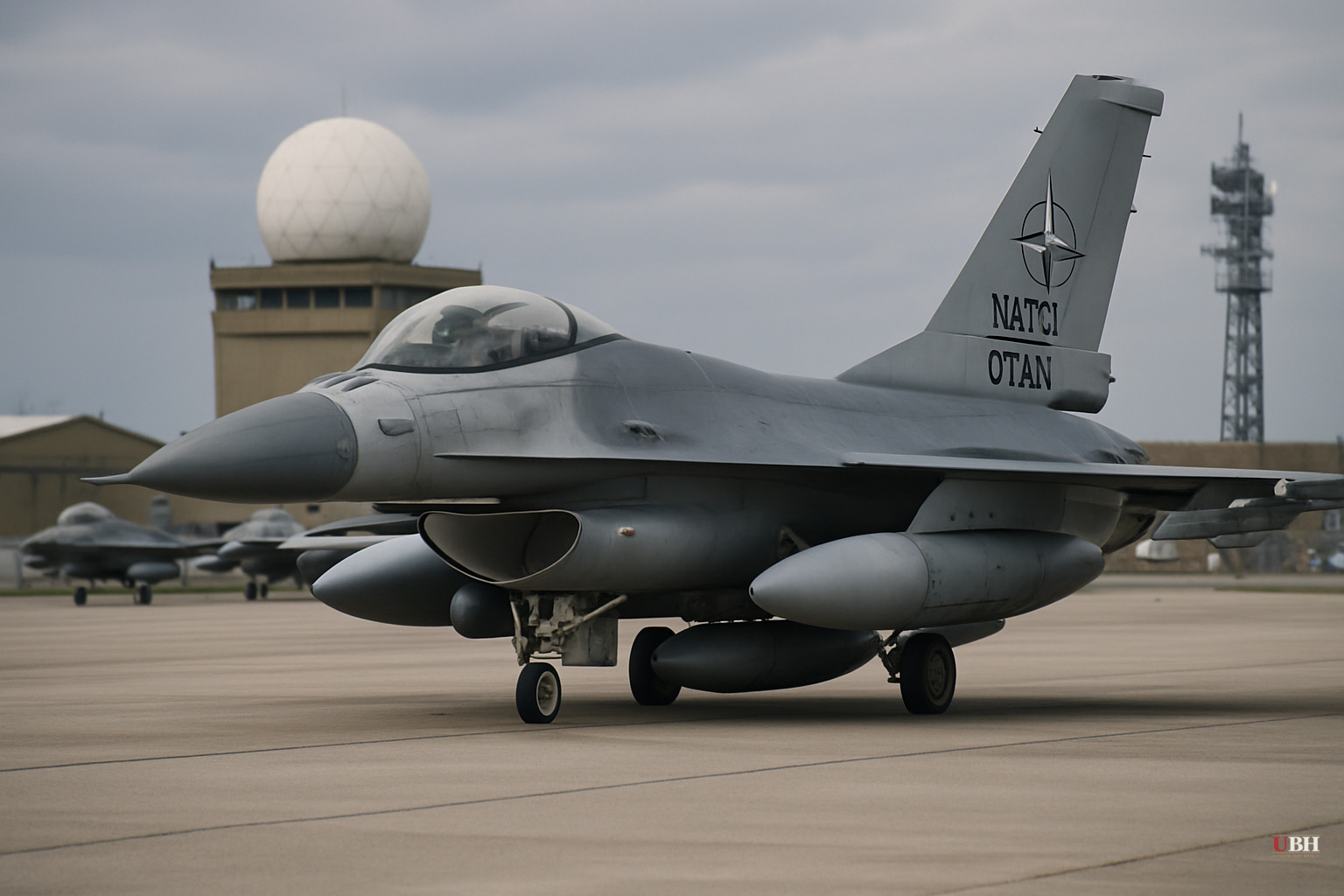
The most acute wound in 2026 is the U.S.-led war against Iran. Multiple NATO members refused to support American operations and denied the use of NATO bases and facilities for those operations. For an alliance built on mutual obligation, this represents a serious breach. It is not a procedural disagreement but a concrete refusal to let the United States use infrastructure it has helped fund and defend for decades.
That refusal has no clean defense. Allies are entitled to disagree on strategy. They are not entitled to block logistics for a partner's operations while continuing to claim the security umbrella that partner provides.
The Burden-Sharing Problem Is Real
Critics of open-ended U.S. NATO commitment have a legitimate grievance that deserves a direct answer, not dismissal.
Decades of American security guarantees have given European governments reduced incentive to sustain serious defense investment. The results are visible: fragmented procurement, duplicated and incompatible weapons systems, hollowed logistics chains, and chronic readiness shortfalls in airlift, air defense, and precision munitions. The U.S. has repeatedly carried a disproportionate share of NATO's actual military capacity while European political leaders collected the diplomatic benefits of alliance membership.
That is a fair description of what happened. Anyone who waves it away as isolationist sentiment is not engaging with the facts.
The counterargument is equally factual: more than 1,100 troops from NATO allied nations died in Afghanistan after the alliance invoked Article 5 on behalf of the United States — the only time in NATO's history that clause has been triggered. European soldiers bled on American terms, in an American-led war, because an American city was attacked. The alliance's value cannot be measured without accounting for that sacrifice.
What the Numbers Require
The NATO defense spending target is 2% of GDP. For most of the alliance's post-Cold War history, most members did not meet it — as few as three countries met the target in 2014. That changed dramatically: for the first time in NATO's history, every one of its 32 members met or exceeded the 2% of GDP defense spending target in 2025. In response to strong pressure from President Trump, European allies and Canada increased defense spending by 20%, bringing the collective total to more than $574 billion. NATO's frontline states went even further: Poland reached 4.48% of GDP, while Lithuania and Latvia both exceeded 3.7%.
At the 2025 Hague Summit, members agreed to a far more ambitious target of 5% of GDP by 2035, with 3.5% dedicated to core military spending and the remaining 1.5% directed toward broader security-related infrastructure and civilian resilience.
The argument for U.S. withdrawal — or credible threat thereof — is that it is the only lever that has ever moved European governments on spending. The argument against is that actual withdrawal could create dangerous gaps that Russia would exploit before European militaries could fill them, and that the transition period would be the most dangerous window in postwar European history. NATO Secretary General Mark Rutte has firmly rejected any notion that the alliance can move on without the United States, warning European leaders: "If anyone thinks here … that the European Union or Europe as a whole can defend itself without the U.S., keep on dreaming. You can't."
Both arguments rest on real strategic logic. The policy question is whether a reformed, conditioned U.S. commitment produces better outcomes than departure. That is a genuine debate, not a simple call.
The Iran Divide and What It Reveals
The 2026 rift over Iran is different from previous NATO disputes in one specific way: it involved not just political dissent but operational denial — bases and infrastructure refused. Past disagreements (Suez, Vietnam, Iraq) were political and diplomatic. This one affected military logistics during active operations.
If that precedent stands without consequence, it changes what Article 5 is worth. An alliance whose members can selectively block each other's use of shared infrastructure during active conflicts is not a collective defense organization in any meaningful operational sense. It is a political club with a defense budget attached.
NATO will have to answer this question directly, not rhetorically. Under what conditions can a member deny base access to another member conducting operations? What is the enforcement mechanism? Is there one?
The Strategic Logic That Hasn't Changed
None of the above makes the case for withdrawal. A fragmented, under-resourced Europe is not a neutral outcome for American security. It is an invitation for Russian expansionism and accelerated Chinese influence in a continent that remains the largest collective economy on earth and home to dozens of American treaty commitments.
The case for staying in NATO is not sentimental. It is that the alternative — a security vacuum in Europe while the U.S. pivots entirely to the Pacific — requires betting that two simultaneous strategic fronts can be managed without the alliance infrastructure that currently exists. That is a large bet.
The smarter course is conditional engagement: clear spending floors, enforceable base-access obligations, and explicit consequences — including reduced U.S. commitment — when allies opt out of obligations during active operations. That is a harder negotiation than either cheerleading for the alliance or threatening to quit it, but it is the one that matches the actual problem.
Whether the current administration has the diplomatic bandwidth to run that negotiation while also managing the Iran aftermath is the question NATO's future turns on.
Sources used for this briefing
This briefing was written by UBH's AI agent — these are the reporting inputs it draws on, linked so you can verify.


