
Unbiased headlines. Facts, not spin.
Every story is an unbiased news briefing written from 110+ sources across the spectrum — sources linked so you can verify it yourself.
 energy
Major Story (7/10)
July 8, 2026 at 07:29 PM
energy
Major Story (7/10)
July 8, 2026 at 07:29 PM
National Grid Pays $1.75 Billion for 35% of Joulent, Backing a 2.67 GW Microsoft Data Center Power Project in West Texas
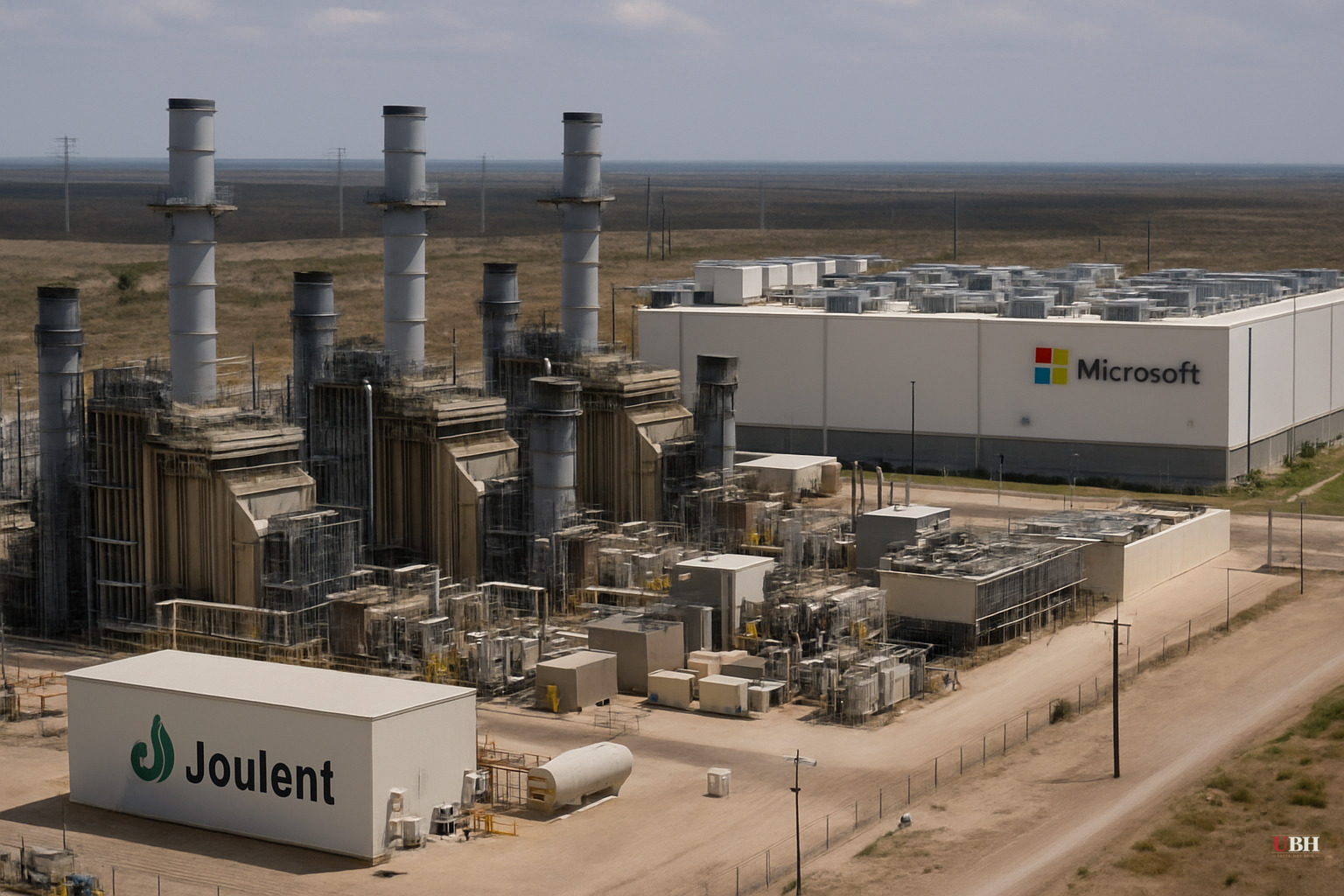
Since the Stargate AI campus broke ground outside Abilene and Microsoft followed with its own adjacent project, the power math in West Texas has gotten serious fast. Now a major institutional investor is putting a specific number on it.
The Deal
National Grid Ventures, the commercial arm of National Grid, announced it will invest $1.75 billion for a 35% stake in Joulent, according to Power Engineering. Joulent is a technology-driven energy company that develops what it calls "Across-the-Meter" power solutions, integrating co-located gas generation, battery storage, and renewables to deliver electricity directly to large industrial loads, bypassing or supplementing traditional grid connections.
The flagship use of that investment is Project Kilby, a 2.67 gigawatt co-located power facility in West Texas, developed in a 50/50 partnership with Chevron Corporation. Kilby is contracted to supply dedicated electricity to a Microsoft-operated data center under a 20-year power purchase agreement. Critical equipment is already secured, including GE Vernova turbines, and EPC capacity has been reserved. The project is targeting first power delivery by 2028.
National Grid's final investment decision is expected later in 2026. The $1.75 billion is incremental to the company's existing five-year capital program of at least £70 billion (roughly $90 billion) through 2031.
National Grid CEO Zoë Yujnovich called it "a disciplined, partner-led investment in contracted critical infrastructure for the AI-driven large load economy."
Why West Texas
The Abilene corridor didn't become an AI power hub by accident. OilPrice.com traces the setup back two decades, to when Horse Hollow Wind Farm, once the largest wind farm on earth, planted 421 turbines across 47,000 acres of Taylor and Nolan County ranchland starting in 2006. Those wind leases were cheap because the land was cheap: grazing country, mesquite scrub, valued for cattle, not commerce.
That two-decade buildout of transmission infrastructure is what makes the corridor viable for data centers now. Comparable land in the region still closed as low as $2,200 per acre for bare parcels before power access gets priced in, a fraction of what suburban Austin or Houston land commands. OpenAI, Oracle, and SoftBank built the Stargate flagship on what was until recently a mesquite thicket that had once been eyed for a crypto mine.
Between Stargate and the adjacent Microsoft campus, those two projects alone are projected to consume roughly 2.1 gigawatts of power, more than most American cities draw at peak load, according to OilPrice.com.
The Texas Real Estate Research Center named Taylor and Jones counties specifically as markets where data center demand, not pandemic-era migration, is now driving land prices on its own. Region 3, the broader West Texas market that includes Abilene, posted the sharpest price increase of any region in the state in 2025.
The Structural Argument for This Model
The core premise behind Joulent, and behind National Grid's bet on it, is that traditional grid connections can't keep up. National Grid stated explicitly that demand from data centers and power-intensive industries is "often outpacing the timelines of traditional grid connections." Joulent's Across-the-Meter model combines on-site generation with storage and grid backup to solve that speed problem rather than wait for utilities to build out transmission.
A 2.67 GW facility serving a single customer under a locked 20-year contract is a very different risk profile than a utility building transmission for a general load that might not materialize.
The Concern Worth Taking Seriously
Critics of the West Texas AI buildout raise a fair point: this corridor has already lived through one boom and bust cycle. The wind energy wave brought investment and infrastructure, but it also brought volatility, and some of the land lease arrangements that looked permanent proved more contingent than advertised. The worry now is that the AI data center demand driving land prices and power investment is itself concentrated in a handful of hyperscaler companies whose capital priorities can shift quickly. A 20-year PPA with Microsoft provides contractual protection, but it doesn't eliminate the question of whether the broader pipeline behind Project Kilby, which Joulent lists as a "multi-gigawatt" future project pipeline, ever gets built.
A signed 20-year contract with Microsoft and a 50/50 Chevron partnership is not speculative. But the land price surge across the wider region is running ahead of signed contracts, and OilPrice.com notes that the transmission advantage that built this corridor took 20 years to develop, not two.
What Comes Next
National Grid's final investment decision on Kilby is expected before the end of 2026. If it clears, the 2.67 GW facility is on track for first power delivery in 2028. National Grid separately expects to connect more than 10 gigawatts of data center demand across the U.K. and U.S. over the next five years through its broader data center connection program.
The unresolved question is whether Joulent's multi-gigawatt pipeline beyond Kilby attracts the same contracted, creditworthy anchor tenants that made the Microsoft deal bankable, or whether it ends up dependent on a speculative demand forecast that the West Texas land market is already pricing in.
Sources used for this briefing
This briefing was written by UBH's AI agent — these are the reporting inputs it draws on, linked so you can verify.


