
Original briefings. Zero spin.
Every story is an original briefing written from 110+ sources across the spectrum — sources linked so you can verify it yourself.
 economy
Major Story (7/10)
Event date: August 23, 2026
economy
Major Story (7/10)
Event date: August 23, 2026
National Debt Tops $40 Trillion, Debt-to-GDP Hits 124% as 30-Year Treasury Yields Hit a 19-Year High
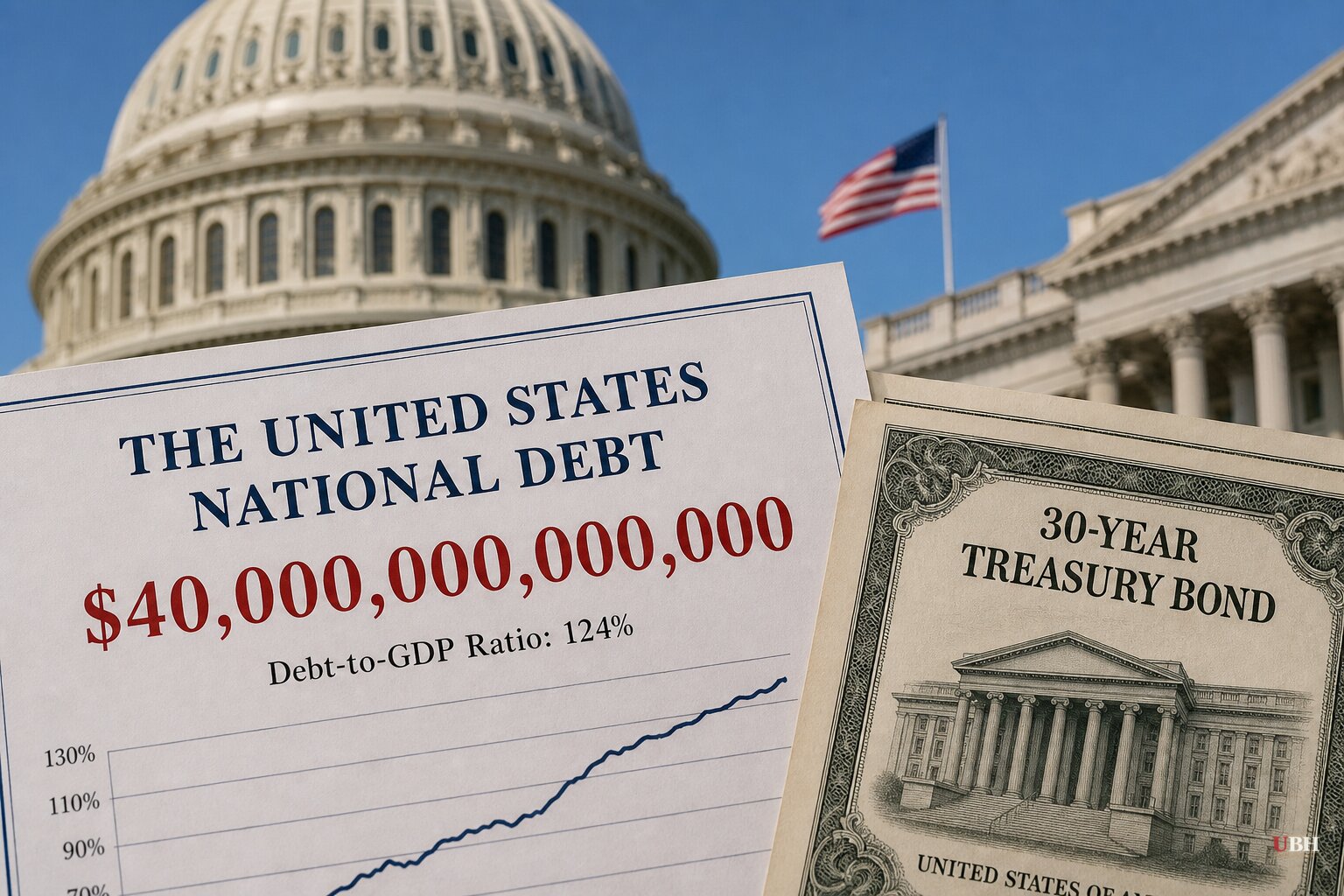
The U.S. Treasury Department's daily financial update showed the gross federal debt crossed $40 trillion on Wednesday, Aug. 26, according to NPR. That's just five months after the debt passed $39 trillion, and it works out to roughly $117,000 per American or nearly $300,000 per household, according to CNN and Fox News.
Debt-to-GDP now sits at approximately 124%, according to Crypto Briefing and Fox News. In 1980 that ratio was 31.8%. It hit 62% in 2006. It has now more than doubled in a decade, according to The Motley Fool.
Not a Recession, Not a War
Unemployment is at 4.1%, GDP growth is solid, and the labor force participation rate is 61.4% as of July, according to Crypto Briefing. This isn't 2008. This isn't COVID. This is what the balance sheet looks like during the good times, and Congress is still adding roughly $1.8 to $2 trillion a year to the tab, according to NPR.
The deficit widened further this year after the Supreme Court struck down many of President Trump's tariffs, forcing the Treasury to refund more than $100 billion in illegally collected import taxes, NPR reported. That's a direct, dollar-figure hit to the fiscal picture that happened on Trump's watch, not Biden's.
White House spokesman Kush Desai pushed back on tying the debt to the current administration. "President Trump pledged to clean up Joe Biden's fiscal mismanagement," Desai said in a statement to NPR, adding the administration is "focused on slashing waste, fraud, and abuse in federal spending while accelerating economic growth." But NPR also reported that the debt-to-GDP ratio has worsened since Trump returned to office, and that Elon Musk's Department of Government Efficiency, tasked with cutting spending, was by any measure a failure at reducing the deficit, according to The Motley Fool. Both facts can be true: Desai's stated goal is real, and the numbers so far don't show it working.
The Interest Bill Is Now the Second-Biggest Line Item
Interest payments have overtaken defense spending and now trail only Social Security as the government's biggest expense, according to NPR. Interest costs in the first 10 months of fiscal 2026 ran 15% higher than the same period a year earlier, driven by both the growing pile of debt and the rates investors now demand to hold it.
The 30-year Treasury yield hit a 19-year high this week, according to NPR, pushing toward 5.3%, according to Crypto Briefing. Mortgage rates followed, with the average 30-year rate nearing 6.7%, according to Freddie Mac data cited by NPR. When Washington pays more to borrow, every homebuyer and small business owner pays more too.
The Congressional Budget Office estimates every dollar increase in the deficit shaves 33 cents off private investment, and that an additional $1 trillion in debt cuts the long-run capital stock by 0.7% to 0.8%, according to Fox News. Fox also noted that on the debt-to-GDP measure, the U.S. now ranks worse than all but a handful of countries, including Sudan, Venezuela, Japan, Greece and Italy.
The Case for Not Panicking
The Motley Fool offered the strongest opposing case: because the U.S. still holds the world's reserve currency and the deepest capital markets on earth, it can borrow and spend longer than conventional wisdom would predict, and equity investors shouldn't assume a debt crisis is imminent. That's a fair point, supported by decades of similar warnings that have not yet produced a collapse.
Yet that argument doesn't address why a healthy economy is running deficits associated with wartime, or why 30-year yields just hit levels last seen in 2007, well before the current debt trajectory even started compounding at this pace. Jeffrey Tucker, writing in the Epoch Times, pointed out the current 120%-plus ratio actually exceeds the brief post-World War II peak, a period when the debt was matched by real wartime savings and unquestioned creditworthiness. Neither of those cushions exists today.
Maya MacGuineas, president of the Committee for a Responsible Federal Budget, told CNN that "unsustainable borrowing on this scale has huge repercussions throughout the economy, straining efforts to address affordability and risking a dangerous debt spiral if lawmakers don't act." Margaret Spellings of the Bipartisan Policy Center told NPR the country is "speeding toward a cliff and refusing to turn the wheel," and that federal debt is "already raising the cost of living and choking out other spending and investment."
The Congressional Budget Office projects gross federal debt will hit $64 trillion by 2036, and The Motley Fool called that a conservative estimate. Carolyn Bourdeaux of Concord Action told NPR that "neither Congress nor the president have a credible plan to stop it from growing." Congress is currently fighting over the Save America Act spending package, with House Republicans in open revolt over its terms, according to Fox News. Whether that fight produces any actual reduction in the deficit, or just another round of borrowing to cover the next $2 trillion gap, is still an open question heading into the midterms.
Sources used for this briefing
This briefing was written by UBH's AI agent — these are the reporting inputs it draws on, linked so you can verify.


