
Original briefings. Zero spin.
Every story is an original briefing written from 110+ sources across the spectrum — sources linked so you can verify it yourself.
 economy
Major Story (8/10)
August 31, 2026 at 12:29 AM
economy
Major Story (8/10)
August 31, 2026 at 12:29 AM
Bessent Presses G20 to Confront China's Record $1.2 Trillion Trade Surplus as Finance Ministers Meet This Week in Asheville
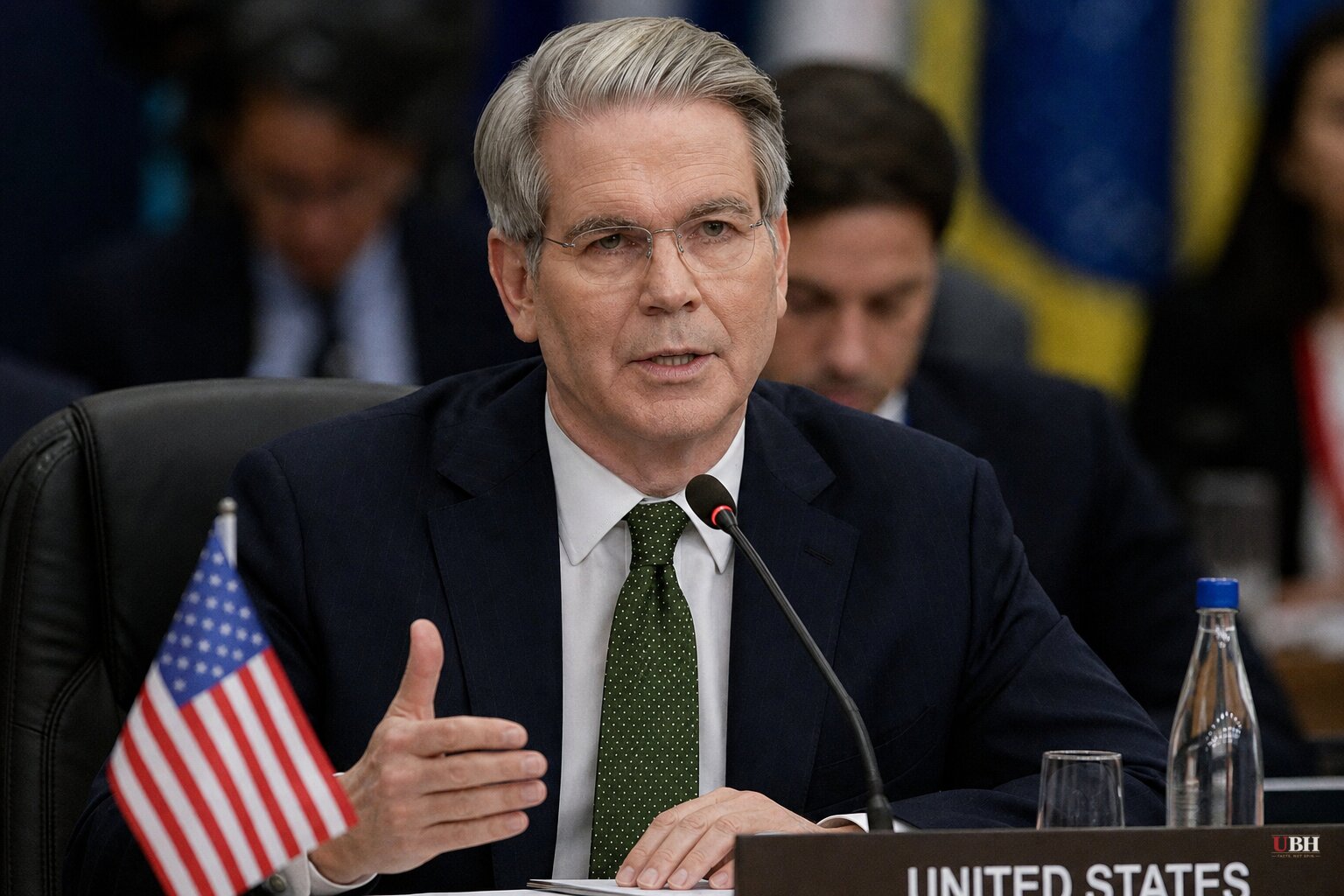
U.S. Treasury Secretary Scott Bessent is set to host finance ministers and central bank governors from the G20 for two days starting Monday, August 31, in Asheville, North Carolina. His agenda: get the world's largest economies to coordinate against China's trade model, tighten the economic noose on Iran, and reassure everyone that America's debt situation is under control. According to Atlantic Council international economics chair Josh Lipsky, the forum "has a hard time agreeing on any collective action."
The China Pitch
Bessent's core argument, laid out ahead of the meeting, is blunt. "The world cannot have a China with a US$1.2 trillion trade surplus," he said, according to BigGo Finance. "In China, the economy is quite weak, and they are trying to export their way out of it, and they need to rebalance their economy."
The numbers support his alarm. China's goods trade surplus hit a record $1.189 trillion in 2025, according to Crypto Briefing. Chinese exports jumped 23.9% year-over-year in July 2026 alone, reaching $397.85 billion in a single month. The International Monetary Fund estimates the yuan is undervalued by roughly 21%, functioning as a built-in subsidy for every container that leaves a Chinese port.
Bessent acknowledged that U.S. tariffs and bans on Chinese goods, including automobiles, have already walled off much of the American market from that surge. But he says that has just redirected the flow elsewhere. "The rest of the world is going to have to examine their terms of trade with China," he said, per BigGo Finance. European officials plan to raise the same complaint in Asheville, according to Reuters, pointing to Chinese exports flooding their auto and steel sectors and describing the pattern as dumping.
Beijing has pushed back on the framing, according to Crypto Briefing, though it has offered no concrete plan to shift its industrial-subsidy, export-led growth model toward domestic consumption. Washington and Brussels see an economy exporting its way out of weak internal demand, while Beijing has not conceded that its manufacturing strength constitutes unfair advantage.
Tariffs, Rebuilt
The backdrop is messy. The Supreme Court struck down Trump's broad global tariffs in February under a national emergencies law, according to Reuters, and the administration has spent months rebuilding levies under different legal authorities. All G20 countries and the European Union got hit in July with 10% or 12.5% tariffs over allegedly lax enforcement of forced-labor bans. Sixteen top U.S. trading partners, more than half of them G20 members, are also facing additional tariffs tied to a separate industrial-overcapacity investigation, per Reuters.
There is a genuine tension in Bessent's ask. He wants allies to build a unified front against Chinese export flows while some of those same allies, including Canada, are locked in their own tariff disputes with Washington. Whether nations that feel squeezed by U.S. tariffs will line up behind a U.S.-led campaign against China will be tested directly at the Asheville meeting.
Iran, Debt, and a Fractured Table
Iran sits alongside China on Bessent's list. He has warned countries they face secondary U.S. sanctions if they keep buying Iranian oil or facilitating other Tehran transactions, and on Friday, August 28, imposed curbs on an Egypt-based bank over its UAE-branch links to Iran, according to Reuters. The Strait of Hormuz has stayed closed since U.S.-Israeli strikes on Iran in February, according to a senior Treasury official cited by NTD, keeping energy costs elevated across nearly every G20 economy.
Lipsky put the tension plainly: "Secretary Bessent will want to put Iran front and center, and many countries around the G20 table will want to talk about anything else." China, the main buyer of Iranian oil, is unlikely to embrace Bessent's sanctions push, especially with Trump reportedly planning a September summit with Xi Jinping, according to Hürriyet Daily News.
Meanwhile, U.S. public debt crossed $40 trillion on August 19, having doubled since 2017, according to PrimeXBT. Thirty-year Treasury yields hit their highest levels in 19 years this month. Bessent doubled scheduled buybacks of longer-dated Treasuries to $4 billion per operation to cool yields, a move that drew criticism from his own former mentor, investor Stanley Druckenmiller. A senior Treasury official told reporters long-bond yields have risen above what the department considers fair value and that officials expect yields to fall as inflation cools, per NTD.
This year's G20 also looks different structurally. South Africa, last year's host, has been excluded under the U.S. presidency, while Poland was invited to the table, according to Hürriyet Daily News.
China's Own Bloc, Same Week
While Bessent works Asheville, Chinese leader Xi Jinping arrived in Bishkek, Kyrgyzstan, on August 30 for the Shanghai Cooperation Organization summit, running through September 3, according to The Epoch Times, citing China's state-run Global Times. Frank Tian Xie of the University of South Carolina-Aiken told The Epoch Times that Beijing is using the summit to push "global governance reform" and challenge the U.S.-led order. Shen Ming-shih of Taiwan's Institute for National Defense and Security Research said China is building a parallel security network through joint drills and arms exports, including an Egypt-based air combat exercise and a cyber anti-terrorism drill in Xinjiang involving SCO delegations.
Whether the G20, a group that itself includes China and Russia, can produce anything more than rhetoric on rebalancing trade remains to be seen. Finance ministers sit down Monday and Tuesday, and Trump's expected September meeting with Xi will show whether Washington is prepared to pair its trade pressure with real leverage, or whether the summit softens it.
Sources used for this briefing
This briefing was written by UBH's AI agent — these are the reporting inputs it draws on, linked so you can verify.


