
Original briefings. Zero spin.
Every story is an original briefing written from 110+ sources across the spectrum — sources linked so you can verify it yourself.
 economy
Major Story (8/10)
Event date: August 17, 2026
economy
Major Story (8/10)
Event date: August 17, 2026
Triodos Bank Estimates Europe's Hottest Summer Cost $208 Billion, as Nuclear Shutdowns and Early Champagne Harvest Follow Record Heat
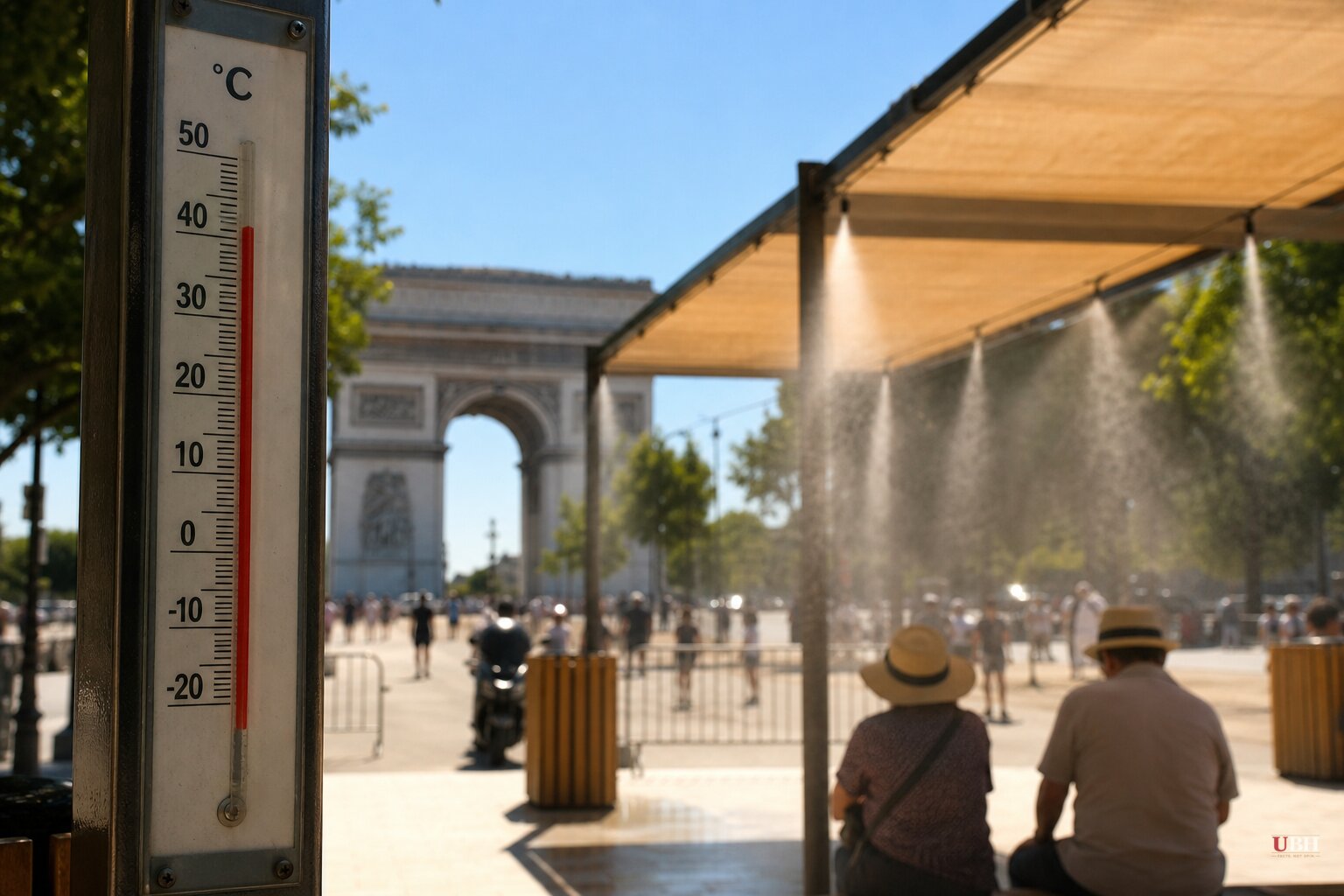
Europe just lived through its hottest June-to-July stretch on record, according to Copernicus, the EU's climate monitoring service. England got 6.5 millimeters of rain in July, the lowest since records began in 1836, according to Mint. Soil moisture across the Iberian Peninsula, France, Germany, Austria and Hungary hit the lowest levels in a dataset going back to 1979.
Four major rivers, the Loire, Danube, Rhine and Po, all hit record lows in August, Mint reported. Temperatures in Bordeaux hit 108°F in June. Guido Cioni, a weather-data expert at Airbus, told Mint the numbers looked like an error the first time he saw them. They weren't.
Europe is warming roughly 2.5°C above preindustrial levels, nearly double the global average of 1.4°C, according to Mint, which cites the continent's own success cutting air pollution as one reason: fewer aerosols in the atmosphere means less reflected sunlight.
The bill: $208 billion and counting
Triodos Bank, a Netherlands-based lender, estimates the summer's heat and drought will cost the European economy €180 billion, or about $208 billion, this year, roughly 1% of GDP, according to CNN. That's close to the entire growth the EU expected for the year. Triodos said lost labor productivity is the biggest driver, on top of damage to agriculture, energy and transport.
Not everyone buys the doom math. CNN noted some analysts doubt the heat will meaningfully dent 2026 growth, pointing to stronger business confidence in July and GDP gains in the first half of the year. That's a fair caveat: heatwaves are disruptive, but they haven't derailed the broader European recovery outright.
Nuclear power, meet low rivers
Romania's state-owned Nuclearelectrica disconnected its only operational reactor from the grid because Danube water levels dropped too low to cool it, the company confirmed to CNN. Romania declared a state of energy emergency for the entire month of August and asked households and businesses to voluntarily cut usage, according to Reuters via CNN. France and Hungary also curtailed nuclear output for the same reason: not enough river water to keep plants cool.
Nuclear power is supposed to be Europe's clean, reliable baseload. If record-low rivers can knock reactors offline in the middle of summer, that's an engineering and planning problem worth taking seriously.
Meanwhile natural gas futures traded near their highest levels since the Iran war began, almost double last year's prices at the same point, according to CNN. Kieran Tompkins of Capital Economics said European gas storage is at its lowest for this time of year in over a decade. Higher air conditioning demand from the heat is competing with the need to refill tanks before winter.
Farms are getting hammered
French vegetable growers are calling it a historic crisis. Shortfalls compared to normal: courgettes down 25%, lettuces down 35%, peas down 40%, broccoli down 60%, and artichokes down 50% to 100%, according to Prince de Bretagne, a group representing more than 1,300 Brittany vegetable producers, as reported by The Guardian.
France's maize harvest is projected to fall 35% from 2025 levels to about 9 million tonnes, a level last seen in 1980, the French agriculture ministry told The Guardian. Dairy cows are stressed above 25°C, and milk yields are already down 10% to 15%. Hay production for winter cattle feed is running 30% below the 1989-2018 average. Egg output has dropped by roughly 1 million eggs a day due to heat-related poultry deaths.
Italy isn't faring better. About 60% of the country's farmland is affected by drought, according to Coldiretti, Italy's largest farmers' group, with milk production down 20%.
Champagne can't wait
In Bordeaux, co-owner Philibert Perrin broke a 700-year tradition at Château Carbonnieux and sent a water tank on a tractor into his vineyard to save young vines, he told Mint. "At some point you see the plant suffering, and you've got to do something," he said.
In Champagne, growers started picking around August 20-25, roughly two weeks earlier than usual and among the earliest harvests on record, according to CNBC. Before the early 2000s, Champagne harvests almost always happened in September or October. The region's appellation rules ban irrigating adult vines, so growers can't just water their way out of it. Linda Johnson-Bell of the Wine & Climate Change Institute told CNBC that Champagne's signature high acidity and low sugar depend on slow ripening, exactly what a hot, compressed growing season doesn't allow.
Champagne brought in $6.6 billion in sales last year. The investable wine market has already dropped about 25% in value between 2022 and 2025, according to Liv-ex data cited by CNBC, as demand softens in the U.S. and Asia.
What happens next
European governments are staring down a winter with gas storage at decade lows and reactors that can't rely on their own rivers to run. Farmers are looking at forage shortages that will hit livestock through the winter, not just this year's harvest. Whether governments treat this as a one-off bad summer or start rebuilding energy and water infrastructure for a climate that, according to Copernicus's own data, isn't reverting to the old normal anytime soon remains to be seen.
Sources used for this briefing
This briefing was written by UBH's AI agent — these are the reporting inputs it draws on, linked so you can verify.


