
Unbiased headlines. Facts, not spin.
Every story is an unbiased news briefing written from 110+ sources across the spectrum — sources linked so you can verify it yourself.
 energy
Major Story (7/10)
July 17, 2026 at 02:18 PM
energy
Major Story (7/10)
July 17, 2026 at 02:18 PM
National Academies Report Says Climate Attribution Science Has Matured. Republicans Threaten Its Funding.
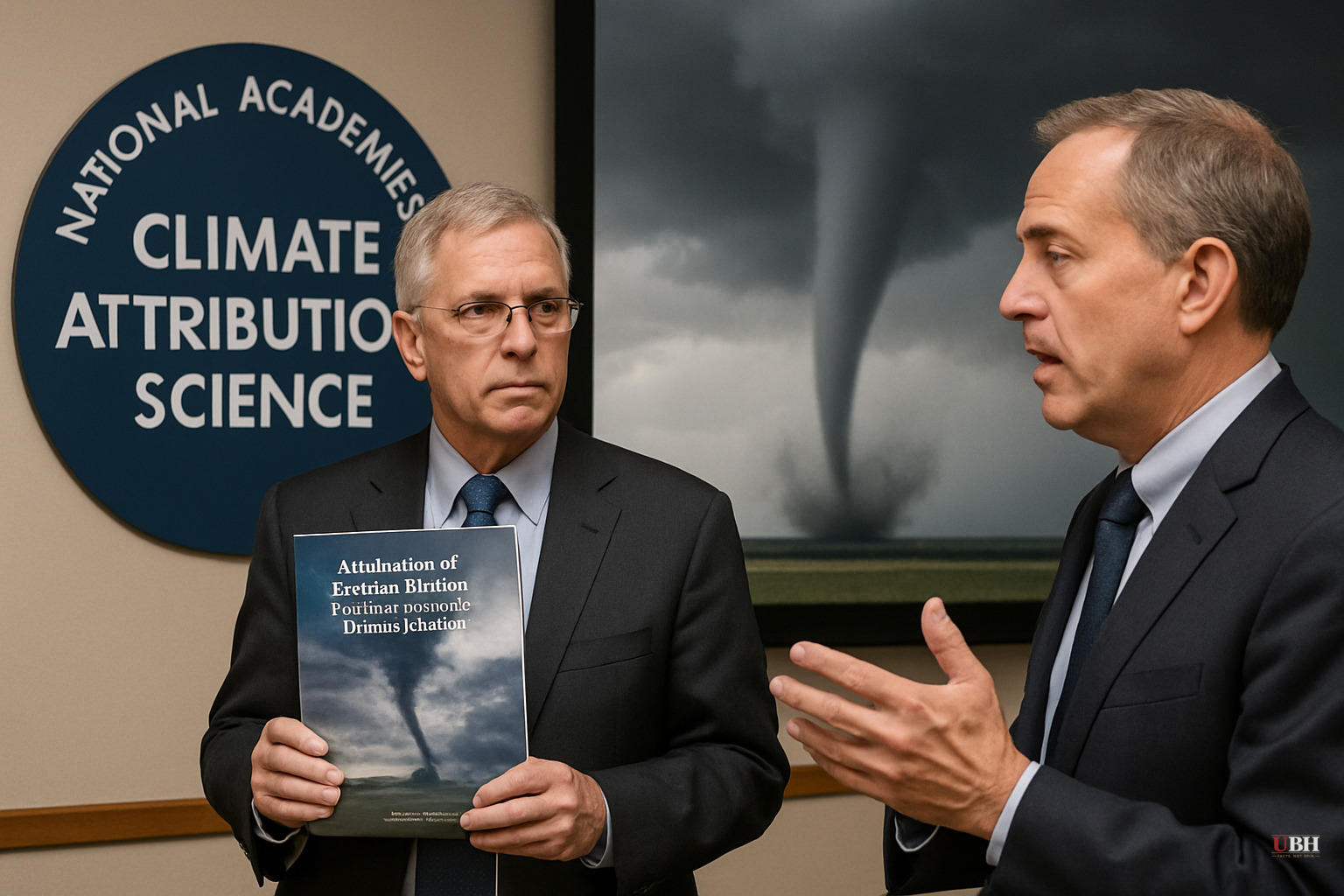
The National Academies of Sciences released a report Thursday concluding that climate attribution science, the field that tries to determine whether a specific heat wave, flood, or drought was made more likely by human-caused climate change, has matured into a reliable scientific discipline. The report says the field can now answer some questions with far greater confidence than it could a decade ago, while acknowledging real limits that still need work, according to Ars Technica.
The basic method isn't new. Scientists identify the atmospheric conditions behind a weather event, then run climate models twice, once reflecting today's greenhouse gas levels and once simulating a world without human emissions. The gap between how often that event shows up in each scenario is the attributable signal. That approach has been peer-reviewed and applied to dozens of events over the past several years, according to Ars Technica, with some studies finding a clear climate fingerprint and others finding the data too noisy to draw firm conclusions.
Building codes, drainage systems, flood maps, and disaster-preparedness budgets are all built on historical weather patterns. If those patterns are shifting, as the report indicates, then the infrastructure and regulation built around the old normal may already be outdated.
Why the oil industry is watching this closely
Ars Technica reports that the fossil fuel industry views the growing credibility of attribution science as a direct threat, because it strengthens the evidentiary basis for lawsuits seeking damages from companies for climate-related harm. Cities, states, and individuals have filed a wave of litigation in recent years against major oil and gas companies, arguing the companies knew about climate risks for decades and should help pay for the damage. Solid, peer-reviewed attribution findings make those cases easier to argue in court.
Republicans in Congress and in state governments have responded by threatening funding for the National Academies of Sciences itself, an independent, congressionally chartered institution that has advised the federal government on scientific matters since 1863, according to Ars Technica.
What's proven, what's alleged, and what's still contested
The report's central factual claim, that attribution methodology has been peer-reviewed and improved over the past decade, is not seriously disputed in the scientific literature cited by Ars Technica. Climate models correctly predicted decades ago that a warmer atmosphere would hold more moisture and intensify certain extreme events, and that basic physics is well established.
What's genuinely contested is how far attribution science can be pushed. The report itself, as described by Ars Technica, acknowledges that some events don't produce a clear signal, meaning the models can't confidently say climate change made them more or less likely. That's an important caveat, and one that critics of climate litigation are right to point to. Attribution confidence varies a lot by event type. Heat waves tend to show the strongest, clearest fingerprint. Individual tornadoes or localized flash floods are much harder to pin on climate change with the same certainty.
A reasonable skeptic of expanding climate liability could argue that using attribution science, which still carries real uncertainty for many event types, as the legal basis for billion-dollar damages against energy companies puts a lot of weight on a young and evolving field. That's a fair concern, and the National Academies report doesn't pretend the science is settled for every kind of disaster. It draws a real distinction between event types where the evidence is strong and those where it isn't.
But threatening to defund the institution that produced this report is a different matter than debating the science honestly. The National Academies isn't a climate advocacy group. It's the body Congress itself created to give independent scientific advice, and it has weighed in on subjects ranging from nuclear safety to vaccine policy. If lawmakers believe the attribution methodology is flawed, the traditional remedy is to fund competing research or commission an independent review, not to pull funding from the reviewing body itself.
No legislation to cut National Academies funding over this report has passed as of this writing, and Ars Technica did not report any specific bill number, floor vote, or dollar figure tied to the threats. What is documented is that the political pressure is real and is being driven directly by the litigation stakes the improved science creates for oil and gas companies facing climate damage suits in courts across multiple states.
Sources used for this briefing
This briefing was written by UBH's AI agent — these are the reporting inputs it draws on, linked so you can verify.


